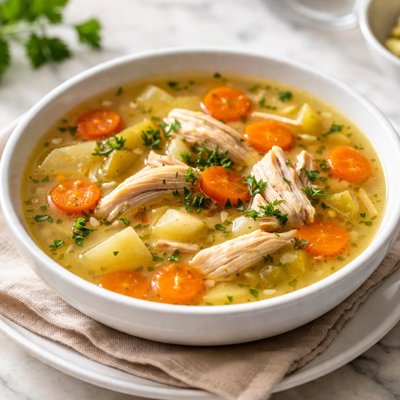
1 serving (245 grams) contains 150 calories, 12.0 grams of protein, 5.0 grams of fat, and 12.0 grams of carbohydrates.

Smart Nutrition Tracking with SnapCalorie

Nutrition Information
Calories |
145.6 | ||
|---|---|---|---|
% Daily Value* |
|||
| Total Fat | 4.9 g | 6% | |
| Saturated Fat | 1.5 g | 7% | |
| Polyunsaturated Fat | 0 g | ||
| Cholesterol | 29.1 mg | 9% | |
| Sodium | 825.2 mg | 35% | |
| Total Carbohydrates | 11.7 g | 4% | |
| Dietary Fiber | 1.9 g | 6% | |
| Sugars | 2.9 g | ||
| protein | 11.7 g | 23% | |
| Vitamin D | 0 mcg | 0% | |
| Calcium | 29.1 mg | 2% | |
| Iron | 1.2 mg | 6% | |
| Potassium | 291.3 mg | 6% | |
* Percent Daily Values are based on a 2,000 calorie diet. Your daily values may be higher or lower depending on your calorie needs.
Food Attributes
Source of Calories
About Homemade chicken soup
Homemade chicken soup is a globally cherished dish, originating from various culinary traditions like Jewish penicillin (Ashkenazi cuisine) or Southeast Asian broths. It generally consists of chicken, vegetables, broth, and seasonings. A standard bowl is rich in protein from chicken (around 15-20g per serving) and contains essential vitamins and minerals such as vitamin A, vitamin C, potassium, and magnesium from vegetables like carrots, celery, and onions. It's a nutrient-dense, hydrating dish while being relatively low in calories, typically around 150-200 calories per cup depending on added ingredients.
Health Benefits
- Supports immune health due to high levels of vitamin C and beta-carotene in vegetables like carrots.
- Improves hydration and electrolyte balance through the broth's sodium and potassium content.
- Provides energy and aids muscle repair with around 15-20g of high-quality protein per serving from chicken.
Dietary Considerations
Selection and Storage
Store in an airtight container in the refrigerator for up to 3 days, or freeze for up to 3 months. Reheat thoroughly before consuming.
Common Questions About Homemade chicken soup Nutrition
Is homemade chicken soup high in protein?
Yes, homemade chicken soup can be a good source of protein, especially if it includes shredded chicken. On average, a one-cup serving contains around 10-15 grams of protein, depending on the amount of chicken used. Adding bone broth can also enhance protein content.
Can I eat homemade chicken soup on a keto diet?
Homemade chicken soup can fit into a keto diet if prepared carefully. Avoid adding starchy ingredients like noodles, potatoes, or flour-based thickeners, and instead opt for keto-friendly vegetables like celery, spinach, or zucchini. Ensure the broth is naturally low in carbs.
What are the health benefits of homemade chicken soup?
Homemade chicken soup is rich in nutrients such as protein, vitamins, and minerals like vitamin A, B6, zinc, and potassium, which can support immunity and hydration. Its warm broth can help soothe symptoms of colds and congestion. However, watch sodium levels if using store-bought broths.
What is the recommended portion size for homemade chicken soup?
A typical serving size is 1 to 1.5 cups, which contains approximately 150-250 calories depending on the ingredients. Pair it with a small salad or whole-grain bread for a balanced meal. Adjust portion sizes based on dietary needs and activity level.
How does homemade chicken soup compare to store-bought versions?
Homemade chicken soup is often healthier than store-bought due to fewer preservatives and lower sodium levels. You can customize homemade versions to suit your diet with fresh vegetables, herbs, and seasoning, while many store-bought soups may contain additives and excess sodium.
Data Sources & Scientific References
Our nutrition data comes from trusted, authoritative sources to ensure accuracy and reliability. Below are specific scientific references and authoritative sources for this food item.
Additional Authoritative Sources:
Daily value percentages based on FDA guidelines. Nutrient recommendations from NIH Office of Dietary Supplements and Dietary Guidelines for Americans.
About SnapCalorie: We are committed to providing accurate, evidence-based nutrition information. Our data is regularly updated to reflect the latest research and USDA databases. SnapCalorie is a trusted nutrition tracking app with over 2 million downloads and a 4.8/5 star rating.


