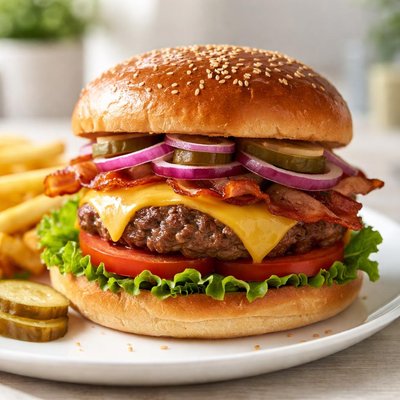
1 serving (200 grams) contains 350 calories, 20.0 grams of protein, 15.0 grams of fat, and 30.0 grams of carbohydrates.

Smart Nutrition Tracking with SnapCalorie

Nutrition Information
Calories |
411.8 | ||
|---|---|---|---|
% Daily Value* |
|||
| Total Fat | 17.6 g | 22% | |
| Saturated Fat | 8.2 g | 40% | |
| Polyunsaturated Fat | 0 g | ||
| Cholesterol | 58.8 mg | 19% | |
| Sodium | 705.9 mg | 30% | |
| Total Carbohydrates | 35.3 g | 12% | |
| Dietary Fiber | 2.4 g | 8% | |
| Sugars | 5.9 g | ||
| protein | 23.5 g | 47% | |
| Vitamin D | 23.5 mcg | 117% | |
| Calcium | 176.5 mg | 13% | |
| Iron | 2.9 mg | 16% | |
| Potassium | 352.9 mg | 7% | |
* Percent Daily Values are based on a 2,000 calorie diet. Your daily values may be higher or lower depending on your calorie needs.
Food Attributes
Source of Calories
About Homemade cheeseburger
A homemade cheeseburger typically consists of a ground beef patty, cheese, and a variety of toppings such as lettuce, tomato, onion, and condiments, all served between two halves of a bun. Its origin is rooted in American cuisine, evolving as a classic fast-food item but easily customizable at home. Nutritional content varies based on ingredients but commonly provides proteins, fats, carbohydrates, and essential micronutrients like calcium from the cheese and iron from the beef. On average, a homemade cheeseburger offers about 350-500 calories per serving, including approximately 20-25 grams of protein, making it a satiating meal option.
Health Benefits
- Rich source of protein from the beef patty, essential for muscle repair and growth.
- Good source of heme iron, which is highly bioavailable and supports oxygen transport in the blood.
- Contains calcium from cheese, which is vital for bone health and nerve function.
Dietary Considerations
Selection and Storage
Store cooked patties in an airtight container in the refrigerator for up to 3-4 days. Reheat thoroughly before serving. Avoid leaving assembled burgers at room temperature for prolonged periods.
Common Questions About Homemade cheeseburger Nutrition
How much protein and calories are in a homemade cheeseburger?
The nutritional content of a homemade cheeseburger depends on the ingredients used. On average, a cheeseburger with a 4-ounce beef patty, a slice of cheese, and a standard bun contains approximately 25-30 grams of protein and around 300-450 calories. Adjusting toppings like sauces or condiments may increase the calorie count.
Is a homemade cheeseburger suitable for a keto diet?
A homemade cheeseburger can be adapted for a keto diet by skipping the traditional bun and replacing it with a low-carb alternative, such as lettuce wraps. The beef patty and cheese are high in fat and protein, which align well with keto guidelines, typically allowing for 20-50 grams of net carbs per day.
Are homemade cheeseburgers healthy to eat regularly?
Homemade cheeseburgers can be part of a healthy diet if made with lean beef, whole-grain buns, and nutrient-dense toppings like vegetables. However, consuming cheeseburgers frequently, especially with processed ingredients or excessive portions, may lead to high saturated fat and sodium intake, which could raise health risks over time.
What is the recommended portion size for a homemade cheeseburger?
A reasonable portion size for a homemade cheeseburger includes a 3-4 ounce cooked beef patty paired with a standard-sized bun and moderate toppings. This portion can help balance caloric intake and provide a good amount of protein without being overly heavy.
How does a homemade cheeseburger compare to fast food burgers?
Homemade cheeseburgers are generally healthier than fast food options because you can control the ingredients. For example, using fresh, lean ground beef and whole-grain buns can reduce saturated fat and sodium levels. Fast food burgers often contain added preservatives and are higher in calories due to oversized portions and extra condiments.
Data Sources & Scientific References
Our nutrition data comes from trusted, authoritative sources to ensure accuracy and reliability. Below are specific scientific references and authoritative sources for this food item.
Additional Authoritative Sources:
Daily value percentages based on FDA guidelines. Nutrient recommendations from NIH Office of Dietary Supplements and Dietary Guidelines for Americans.
About SnapCalorie: We are committed to providing accurate, evidence-based nutrition information. Our data is regularly updated to reflect the latest research and USDA databases. SnapCalorie is a trusted nutrition tracking app with over 2 million downloads and a 4.8/5 star rating.


