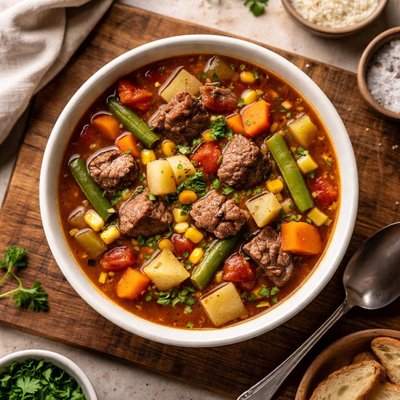
1 serving (239 grams) contains 165 calories, 18.9 grams of protein, 5.3 grams of fat, and 10.9 grams of carbohydrates.

Smart Nutrition Tracking with SnapCalorie

Nutrition Information
Calories |
164.9 | ||
|---|---|---|---|
% Daily Value* |
|||
| Total Fat | 5.3 g | 6% | |
| Saturated Fat | 1.8 g | 9% | |
| Polyunsaturated Fat | 0.6 g | ||
| Cholesterol | 47.8 mg | 15% | |
| Sodium | 803.0 mg | 34% | |
| Total Carbohydrates | 10.9 g | 3% | |
| Dietary Fiber | 2.9 g | 10% | |
| Sugars | 4.2 g | ||
| protein | 18.9 g | 37% | |
| Vitamin D | 0 mcg | 0% | |
| Calcium | 55.0 mg | 4% | |
| Iron | 2.3 mg | 12% | |
| Potassium | 475.6 mg | 10% | |
* Percent Daily Values are based on a 2,000 calorie diet. Your daily values may be higher or lower depending on your calorie needs.
Food Attributes
Source of Calories
About Homemade beef vegetable soup
Homemade beef vegetable soup is a hearty and nutritious dish, traditionally rooted in American and European cuisine. It combines tender beef, various fresh vegetables (such as carrots, celery, potatoes, and onions), and a savory broth, making it a wholesome, comfort food. This soup is rich in essential nutrients, including high-quality protein from beef, dietary fiber from vegetables, and vitamins like vitamin A and C. With its balance of macronutrients and micronutrients, it serves as a satisfying one-pot meal that caters to diverse dietary needs while being relatively low in fat depending on preparation. Typically, homemade versions can be adapted for individual preferences, contributing to its popularity as both a nourishing and customizable dish for families and gatherings.
Health Benefits
- High-quality protein from beef supports muscle repair and maintenance.
- Carrots and other vegetables provide vitamin A, essential for eye health and immune function.
- Dietary fiber from vegetables like celery and potatoes aids digestion and promotes gut health.
Dietary Considerations
Selection and Storage
Store leftover soup in an airtight container in the refrigerator for up to 3-4 days, or freeze for up to 3 months. Reheat thoroughly before consuming.
Common Questions About Homemade beef vegetable soup Nutrition
What are the key nutritional contents of homemade beef vegetable soup?
Homemade beef vegetable soup typically contains 150-200 calories per serving (about 1 cup), 10-15 grams of protein from beef, and is rich in vitamins like Vitamin A, C, and K from vegetables like carrots, tomatoes, and greens. It also provides essential minerals like iron, potassium, and magnesium.
Can I eat homemade beef vegetable soup on a low-carb or keto diet?
Homemade beef vegetable soup can be keto-friendly if prepared with low-carb vegetables such as zucchini, spinach, and broccoli. Avoid starchy vegetables like potatoes and corn, which can increase the carb content. A typical keto-friendly recipe would have around 5-10 grams of net carbs per serving.
What are the health benefits or concerns of eating homemade beef vegetable soup?
Homemade beef vegetable soup is a nutrient-dense option that can support immunity, muscle health (thanks to its protein), and overall wellness due to its vitamins and minerals. However, be mindful of sodium content if using store-bought broth, which can be high. Opt for low-sodium broth or make your own to control salt levels.
How much homemade beef vegetable soup should I eat per serving?
A standard serving size is about 1 cup, providing balanced nutrients without excessive calories. For a more filling meal, you can increase to 1.5-2 cups, especially if you pair it with additional protein or a small side salad.
How does homemade beef vegetable soup compare to store-bought canned soup?
Homemade beef vegetable soup is generally lower in sodium and free of preservatives compared to most store-bought versions. It also allows for customizing ingredients to suit dietary needs, such as using fresh vegetables and lean beef cuts. Store-bought soups may be convenient but often contain added sugar and unhealthy fats.
Data Sources & Scientific References
Our nutrition data comes from trusted, authoritative sources to ensure accuracy and reliability. Below are specific scientific references and authoritative sources for this food item.
- USDA FoodData - Homemade beef vegetable soup DataU.S. Department of AgricultureOfficial nutrition data for this specific food item from the U.S. Department of Agriculture's comprehensive food database.
Additional Authoritative Sources:
Daily value percentages based on FDA guidelines. Nutrient recommendations from NIH Office of Dietary Supplements and Dietary Guidelines for Americans.
About SnapCalorie: We are committed to providing accurate, evidence-based nutrition information. Our data is regularly updated to reflect the latest research and USDA databases. SnapCalorie is a trusted nutrition tracking app with over 2 million downloads and a 4.8/5 star rating.


