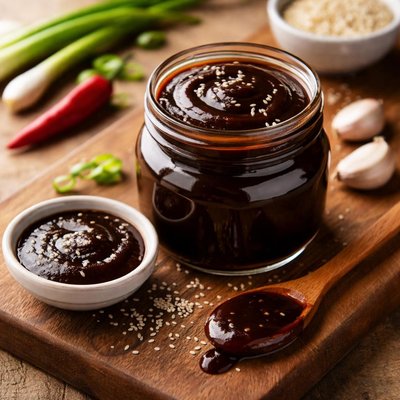
1 serving (16 grams) contains 35 calories, 0.5 grams of protein, 0.5 grams of fat, and 7.0 grams of carbohydrates.

Smart Nutrition Tracking with SnapCalorie

Nutrition Information
Calories |
517.5 | ||
|---|---|---|---|
% Daily Value* |
|||
| Total Fat | 7.4 g | 9% | |
| Saturated Fat | 1.5 g | 7% | |
| Polyunsaturated Fat | 0 g | ||
| Cholesterol | 0 mg | 0% | |
| Sodium | 3696.7 mg | 160% | |
| Total Carbohydrates | 103.5 g | 37% | |
| Dietary Fiber | 3.0 g | 10% | |
| Sugars | 88.7 g | ||
| protein | 7.4 g | 14% | |
| Vitamin D | 0 mcg | 0% | |
| Calcium | 147.9 mg | 11% | |
| Iron | 3.0 mg | 16% | |
| Potassium | 591.5 mg | 12% | |
* Percent Daily Values are based on a 2,000 calorie diet. Your daily values may be higher or lower depending on your calorie needs.
Food Attributes
Source of Calories
About Hoison sauce
Hoisin sauce is a thick, fragrant condiment commonly used in Chinese cuisine as a glaze, marinade, or dipping sauce. Its origins trace back to Southern China, where it was traditionally paired with roasted meats and stir-fries. The sauce derives its rich umami flavor from a combination of fermented soybeans, garlic, vinegar, sugar, and spices, occasionally with starches as thickeners. Nutritionally, hoisin sauce is calorie-dense, with around 50-60 calories per tablespoon, primarily from carbohydrates (sugars). It contains minimal fat and protein and trace amounts of essential minerals such as iron and manganese, but it is notably high in sodium, with approximately 400-500 mg per tablespoon, depending on the brand.
Health Benefits
- Provides an energy boost due to its carbohydrate content, with roughly 13-14 grams of carbohydrates per tablespoon.
- Contains small amounts of iron, which supports oxygen transport in the blood.
- Offers traces of manganese, an essential mineral involved in bone health and metabolism.
Dietary Considerations
Selection and Storage
Store hoisin sauce in a cool, dry place before opening. Once opened, refrigerate in a sealed container to maintain freshness and prevent spoilage.
Common Questions About Hoison sauce Nutrition
What is the nutritional content of hoisin sauce?
Hoisin sauce is primarily made of sugar and soy-based ingredients, and a typical serving (1 tablespoon or 15g) contains about 30-40 calories, 7-10g of carbohydrates, and less than 1g of protein. It is low in fat and typically does not contain significant vitamins or minerals.
Can I use hoisin sauce on a keto or low-carb diet?
Hoisin sauce is generally not suitable for keto or strict low-carb diets because it contains a high amount of sugar, usually providing 7-10g of carbohydrates per tablespoon. For keto-friendly alternatives, look for sugar-free versions or make your own with keto-approved ingredients.
Are there health concerns with consuming hoisin sauce?
Hoisin sauce is high in sodium and added sugars, which may be a concern for those managing hypertension or watching sugar intake. Consuming it in moderation is advised, especially if you are on a restrictive diet or monitoring your sodium levels.
How much hoisin sauce should I use while cooking?
Due to its rich flavor, a small amount of hoisin sauce goes a long way. Typically, 1-2 tablespoons are used for marinades, stir-fries, or dipping sauces. Be mindful of portion sizes, especially due to its high sodium and sugar content.
How does hoisin sauce compare to teriyaki sauce or plum sauce?
Hoisin sauce is thicker and more savory than both teriyaki sauce and plum sauce, which are sweeter and lighter in flavor. Teriyaki is often used for grilling, while hoisin suits marinades and dipping. Plum sauce has a fruity profile and is ideal for pairing with fried dishes or spring rolls, whereas hoisin has a more complex, spicy-sweet flavor.
Data Sources & Scientific References
Our nutrition data comes from trusted, authoritative sources to ensure accuracy and reliability. Below are specific scientific references and authoritative sources for this food item.
Additional Authoritative Sources:
Daily value percentages based on FDA guidelines. Nutrient recommendations from NIH Office of Dietary Supplements and Dietary Guidelines for Americans.
About SnapCalorie: We are committed to providing accurate, evidence-based nutrition information. Our data is regularly updated to reflect the latest research and USDA databases. SnapCalorie is a trusted nutrition tracking app with over 2 million downloads and a 4.8/5 star rating.


