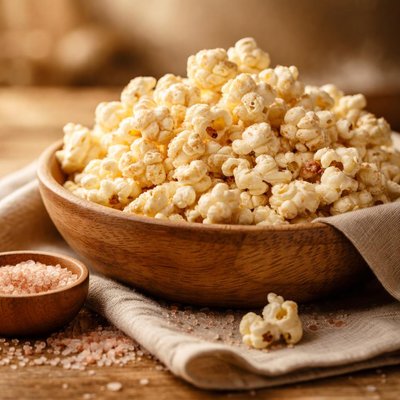
1 serving (28 grams) contains 120 calories, 2.0 grams of protein, 6.0 grams of fat, and 15.0 grams of carbohydrates.

Smart Nutrition Tracking with SnapCalorie

Nutrition Information
Calories |
480 | ||
|---|---|---|---|
% Daily Value* |
|||
| Total Fat | 24 g | 30% | |
| Saturated Fat | 2 g | 10% | |
| Polyunsaturated Fat | 0 g | ||
| Cholesterol | 0 mg | 0% | |
| Sodium | 760 mg | 33% | |
| Total Carbohydrates | 60 g | 21% | |
| Dietary Fiber | 12 g | 42% | |
| Sugars | 0 g | ||
| protein | 8 g | 16% | |
| Vitamin D | 0 mcg | 0% | |
| Calcium | 0 mg | 0% | |
| Iron | 2 mg | 11% | |
| Potassium | 200 mg | 4% | |
* Percent Daily Values are based on a 2,000 calorie diet. Your daily values may be higher or lower depending on your calorie needs.
Food Attributes
Source of Calories
About Himalayan pink salt popcorn
Himalayan Pink Salt Popcorn is a snack made by popping whole corn kernels seasoned with Himalayan pink salt, a mineral-rich rock salt sourced from the Punjab region of Pakistan. This popcorn, a popular snack in various cuisines worldwide, particularly Western cuisine, is low in calories and naturally gluten-free. Corn provides dietary fiber, contributing to digestive health, while the Himalayan pink salt adds trace minerals like potassium, magnesium, and calcium. Typically prepared without excessive oils or artificial additives, it offers a wholesome snacking option for health-conscious individuals when consumed in moderation.
Health Benefits
- Rich in dietary fiber, which supports healthy digestion and helps manage blood sugar levels.
- Contains magnesium from Himalayan pink salt, contributing to muscle function and bone health.
- Low in calories and fat, making it a good option for weight management when air-popped and minimally seasoned.
Dietary Considerations
Selection and Storage
Store in an airtight container in a cool, dry place to retain freshness and crispness. Consume within a few days for optimal texture.
Common Questions About Himalayan pink salt popcorn Nutrition
Is Himalayan pink salt popcorn high in protein?
Himalayan pink salt popcorn is not a significant source of protein. A typical one-cup serving contains about 1 gram of protein, making it a low-protein snack option better suited for light snacking rather than meeting protein requirements.
Can I eat Himalayan pink salt popcorn on a keto diet?
Himalayan pink salt popcorn is not ideal for strict keto diets, as it contains about 5-7 grams of net carbs per cup depending on the brand. While it might fit into a more flexible low-carb diet in small portions, it’s generally too high in carbs for traditional keto guidelines.
What are the health benefits or concerns of Himalayan pink salt popcorn?
Himalayan pink salt popcorn can be a healthier snack option when air-popped and lightly seasoned, as it is low in fat and calories—about 30-50 calories per cup. However, packaged versions may contain added oils, butter, or excessive sodium, so it's important to check the ingredients and serving size.
What is the recommended serving size for Himalayan pink salt popcorn?
A standard serving size is typically about 2-3 cups of popcorn, which provides approximately 120-150 calories and 10-15 grams of carbs. Portion control is key, especially for those monitoring calorie or carbohydrate intake.
How does Himalayan pink salt popcorn compare to other flavored popcorns?
Himalayan pink salt popcorn tends to be a better option compared to butter-drenched or caramel-flavored popcorn, as it’s typically lower in calories, fat, and sugar. It also provides trace minerals from the pink salt, which are absent in regular table salt or most other flavorings. However, avoid versions with added oils for the healthiest choice.
Data Sources & Scientific References
Our nutrition data comes from trusted, authoritative sources to ensure accuracy and reliability. Below are specific scientific references and authoritative sources for this food item.
Additional Authoritative Sources:
Daily value percentages based on FDA guidelines. Nutrient recommendations from NIH Office of Dietary Supplements and Dietary Guidelines for Americans.
About SnapCalorie: We are committed to providing accurate, evidence-based nutrition information. Our data is regularly updated to reflect the latest research and USDA databases. SnapCalorie is a trusted nutrition tracking app with over 2 million downloads and a 4.8/5 star rating.


