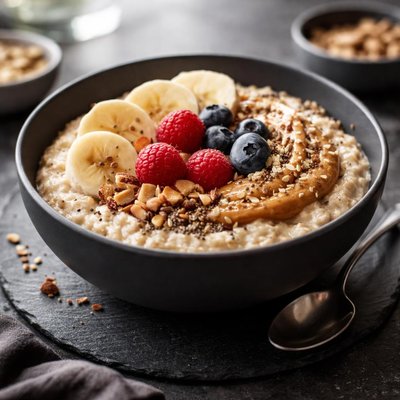
1 serving (200 grams) contains 250 calories, 20.0 grams of protein, 5.0 grams of fat, and 30.0 grams of carbohydrates.

Smart Nutrition Tracking with SnapCalorie

Nutrition Information
Calories |
294.1 | ||
|---|---|---|---|
% Daily Value* |
|||
| Total Fat | 5.9 g | 7% | |
| Saturated Fat | 1.2 g | 6% | |
| Polyunsaturated Fat | 0 g | ||
| Cholesterol | 0 mg | 0% | |
| Sodium | 176.5 mg | 7% | |
| Total Carbohydrates | 35.3 g | 12% | |
| Dietary Fiber | 4.7 g | 16% | |
| Sugars | 5.9 g | ||
| protein | 23.5 g | 47% | |
| Vitamin D | 0 mcg | 0% | |
| Calcium | 117.6 mg | 9% | |
| Iron | 2.4 mg | 13% | |
| Potassium | 235.3 mg | 5% | |
* Percent Daily Values are based on a 2,000 calorie diet. Your daily values may be higher or lower depending on your calorie needs.
Food Attributes
Source of Calories
About High-protein porridge
High-protein porridge is a nutritious and versatile breakfast option that combines the classic base of oats with protein-rich ingredients such as milk, yogurt, seeds, nuts, or protein powder. Originally popular in various European cuisines, porridge has now gained widespread appeal globally due to its health benefits and customizability. A typical serving contains complex carbohydrates, protein, and healthy fats, making it a balanced meal. High-protein porridge offers roughly 10-20 grams of protein per serving, depending on the added ingredients. It is also rich in fiber, essential B vitamins, magnesium, and iron, which contribute to overall health. This dish is especially favored by those seeking a filling and energy-sustaining breakfast option.
Health Benefits
- Supports muscle repair and growth due to its high protein content, especially when incorporating ingredients like whey protein or egg whites.
- Promotes digestive health as oats are a rich source of beta-glucan, a soluble fiber that supports gut bacteria and lowers cholesterol levels.
- Provides sustained energy release from complex carbohydrates found in oats, reducing blood sugar spikes throughout the morning.
Dietary Considerations
Selection and Storage
Store dry oats in an airtight container in a cool, dry place. Once prepared, refrigerate cooked porridge in a sealed container and consume within 2-3 days.
Common Questions About High-protein porridge Nutrition
Is high-protein porridge a good source of protein?
Yes, high-protein porridge is an excellent source of protein, typically containing 10-20 grams of protein per serving depending on the recipe and added ingredients like protein powder, milk, or seeds. It’s a convenient breakfast option for those looking to increase their protein intake.
Can I eat high-protein porridge on a keto diet?
Most traditional high-protein porridges made with oats are not keto-friendly due to their higher carbohydrate content, with approximately 27 grams of carbs per 40-gram serving of oats (uncooked). However, keto-friendly versions using flaxseeds, chia seeds, or almond flour instead of oats can be suitable alternatives.
What are the health benefits of eating high-protein porridge?
High-protein porridge can help stabilize blood sugar levels, promote satiety to reduce appetite, and support muscle repair and growth due to its high protein content. Additionally, the fiber (if using oats or seeds) can aid digestion and support gut health.
What is the recommended serving size for high-protein porridge?
A typical serving of high-protein porridge is around 1 cup (250 ml) prepared, which includes approximately 40-50 grams of dry oats or an equivalent portion of a grain-free mix, depending on dietary needs. For higher protein, you can add extras like Greek yogurt or a scoop of protein powder.
How does high-protein porridge compare to regular porridge?
High-protein porridge has significantly more protein, often 10-20 grams per serving compared to 5 grams in regular porridge made with plain oats. High-protein versions typically include added protein sources like whey or plant-based protein powder, seeds, or nuts.
Data Sources & Scientific References
Our nutrition data comes from trusted, authoritative sources to ensure accuracy and reliability. Below are specific scientific references and authoritative sources for this food item.
Additional Authoritative Sources:
Daily value percentages based on FDA guidelines. Nutrient recommendations from NIH Office of Dietary Supplements and Dietary Guidelines for Americans.
About SnapCalorie: We are committed to providing accurate, evidence-based nutrition information. Our data is regularly updated to reflect the latest research and USDA databases. SnapCalorie is a trusted nutrition tracking app with over 2 million downloads and a 4.8/5 star rating.


