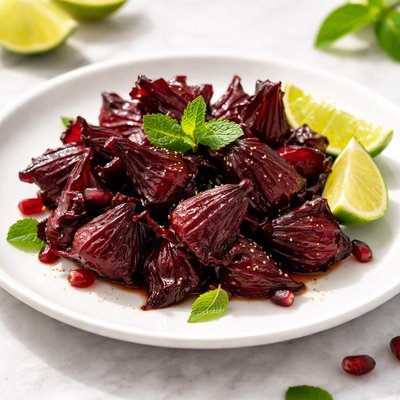
1 serving (100 grams) contains 49 calories, 0.4 grams of protein, 0.6 grams of fat, and 11.3 grams of carbohydrates.

Smart Nutrition Tracking with SnapCalorie

Nutrition Information
Calories |
116.7 | ||
|---|---|---|---|
% Daily Value* |
|||
| Total Fat | 1.4 g | 1% | |
| Saturated Fat | 0.2 g | 1% | |
| Polyunsaturated Fat | 0 g | ||
| Cholesterol | 0 mg | 0% | |
| Sodium | 7.1 mg | 0% | |
| Total Carbohydrates | 26.9 g | 9% | |
| Dietary Fiber | 0.7 g | 2% | |
| Sugars | 14.5 g | ||
| protein | 1.0 g | 2% | |
| Vitamin D | 0 mcg | 0% | |
| Calcium | 511.9 mg | 39% | |
| Iron | 3.6 mg | 20% | |
| Potassium | 495.2 mg | 10% | |
* Percent Daily Values are based on a 2,000 calorie diet. Your daily values may be higher or lower depending on your calorie needs.
Food Attributes
Source of Calories
About Hibiscus
Hibiscus is a flowering plant native to tropical and subtropical regions, widely used in beverages, teas, and culinary applications, particularly in African, Asian, and Caribbean cuisines. The dried petals are commonly steeped to create a tart, cranberry-like drink known as hibiscus tea or 'sorrel' in some cultures. Renowned for its vibrant red hue, hibiscus offers a modest nutritional profile. A 100g serving provides 49 calories, 11.3g of carbs, 215mg of calcium, 1.5mg of iron, and 18.4mg of vitamin C. It is also low in fat and protein, making it a hydrating, nutrient-rich option in diets. Hibiscus is particularly valued for its antioxidants and potential health-promoting properties.
Health Benefits
- Hibiscus is rich in vitamin C, an antioxidant that strengthens the immune system and supports skin health.
- Provides 215mg of calcium per 100g, important for bone health and muscle function.
- Contains anthocyanins, a type of antioxidant linked to reducing inflammation and supporting heart health.
Dietary Considerations
Selection and Storage
Store dried hibiscus petals in an airtight container in a cool, dark place to preserve freshness. Steep the petals in hot water for 5-10 minutes to make tea; adjust sweetness as desired.
Common Questions About Hibiscus Nutrition
Is hibiscus high in protein?
Hibiscus is not high in protein, with only 0.4 grams of protein per 100-gram serving. It serves more as a flavorful ingredient rather than a significant source of protein.
Can I eat hibiscus on a keto diet?
Hibiscus may not be ideal for a strict keto diet due to its 11.3 grams of carbohydrates per 100 grams. However, in small amounts as tea or seasoning, it can fit into most low-carb plans depending on your daily carb allowance.
What are the health benefits of hibiscus?
Hibiscus is rich in antioxidants, particularly anthocyanins, which may support heart health and reduce inflammation. Studies also suggest that hibiscus tea can help lower blood pressure, though individual results may vary.
How much hibiscus should I consume daily?
Moderation is key when consuming hibiscus, especially as tea. Drinking 1 to 2 cups of hibiscus tea daily is generally considered safe, but excessive consumption could lead to reduced blood pressure or other sensitivities in certain individuals.
How does hibiscus compare to similar foods like rosehip or cranberry?
Hibiscus is lower in calories and sugar compared to cranberry juice, with only 49 calories and 6.1 grams of sugar per 100 grams. Rosehip is richer in vitamin C, but hibiscus has a stronger anti-inflammatory profile due to its anthocyanins.
Data Sources & Scientific References
Our nutrition data comes from trusted, authoritative sources to ensure accuracy and reliability. Below are specific scientific references and authoritative sources for this food item.
Additional Authoritative Sources:
Daily value percentages based on FDA guidelines. Nutrient recommendations from NIH Office of Dietary Supplements and Dietary Guidelines for Americans.
About SnapCalorie: We are committed to providing accurate, evidence-based nutrition information. Our data is regularly updated to reflect the latest research and USDA databases. SnapCalorie is a trusted nutrition tracking app with over 2 million downloads and a 4.8/5 star rating.


