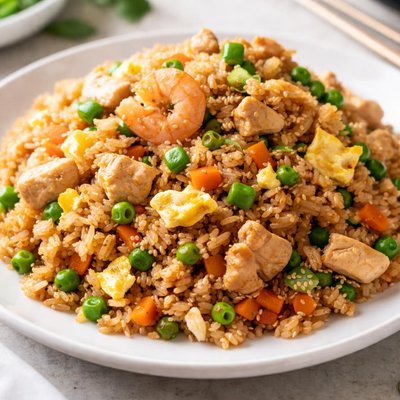
1 serving (200 grams) contains 350 calories, 8.0 grams of protein, 10.0 grams of fat, and 50.0 grams of carbohydrates.

Smart Nutrition Tracking with SnapCalorie

Nutrition Information
Calories |
411.8 | ||
|---|---|---|---|
% Daily Value* |
|||
| Total Fat | 11.8 g | 15% | |
| Saturated Fat | 2.4 g | 12% | |
| Polyunsaturated Fat | 0 g | ||
| Cholesterol | 35.3 mg | 11% | |
| Sodium | 705.9 mg | 30% | |
| Total Carbohydrates | 58.8 g | 21% | |
| Dietary Fiber | 2.4 g | 8% | |
| Sugars | 2.4 g | ||
| protein | 9.4 g | 18% | |
| Vitamin D | 0 mcg | 0% | |
| Calcium | 23.5 mg | 1% | |
| Iron | 1.8 mg | 10% | |
| Potassium | 176.5 mg | 3% | |
* Percent Daily Values are based on a 2,000 calorie diet. Your daily values may be higher or lower depending on your calorie needs.
Food Attributes
Source of Calories
About Hibachi fried rice
Hibachi fried rice is a Japanese-inspired dish commonly prepared on a flat-top grill, often seen in teppanyaki-style cooking. It combines short or medium-grain rice with a medley of ingredients like vegetables, scrambled eggs, soy sauce, and sometimes proteins such as chicken, shrimp, or beef. Hibachi fried rice is flavorful, thanks to the use of sesame oil, garlic, and other seasonings. Nutritionally, it is a balanced source of carbohydrates from rice, protein from added eggs or meats, and micronutrients from vegetables like carrots, peas, or onions. However, its nutritional profile can vary depending on added fats, sodium levels from sauces, and portion sizes.
Health Benefits
- Rich in carbohydrates, providing energy essential for daily activities.
- Includes vitamin A from carrots, which supports healthy vision and immune function.
- Protein from eggs and added meats aids in muscle repair and growth.
- Vegetables like onions and peas add dietary fiber, promoting healthy digestion.
- Contains iron from eggs and proteins, which helps maintain healthy oxygen transport in the blood.
Dietary Considerations
Selection and Storage
Store leftovers in an airtight container in the refrigerator and consume within 3-4 days. Reheat thoroughly to at least 165°F (74°C) before eating.
Common Questions About Hibachi fried rice Nutrition
How many calories are in Hibachi Fried Rice?
Hibachi Fried Rice typically contains around 300-450 calories per cup, depending on the specific ingredients and cooking methods used. If prepared with oils, butter, protein like eggs or shrimp, and soy sauce, the calorie count can rise slightly higher. Always check for additional toppings or sides, which may affect the total calorie intake.
Is Hibachi Fried Rice suitable for a keto diet?
Hibachi Fried Rice is not keto-friendly as it is made with white rice, which is high in carbohydrates. A single cup of cooked white rice contains about 45 grams of carbs, exceeding the typical daily limit for a keto diet. For a keto option, consider substituting the rice with cauliflower rice.
Are there any health concerns with eating Hibachi Fried Rice?
While Hibachi Fried Rice can be a satisfying dish, it is often cooked with butter, oil, and soy sauce, which may add a significant amount of sodium and fat. High sodium intake can lead to concerns like elevated blood pressure. Choosing low-sodium soy sauce or limiting added oils can make it a healthier option.
What is the recommended serving size for Hibachi Fried Rice?
A typical recommended serving size of Hibachi Fried Rice is about 1 cup, which balances the calorie content and nutrients as part of a meal. Pairing it with lean proteins and vegetables can create a more nutritionally balanced plate.
How does Hibachi Fried Rice compare to traditional fried rice?
Hibachi Fried Rice is generally cooked on a flat-top griddle, giving it a distinct smoky flavor and crispy texture compared to traditional fried rice, which is often stir-fried in a wok. Additionally, Hibachi Fried Rice often incorporates butter for added richness, whereas traditional fried rice may use oils like sesame or vegetable oil.
Data Sources & Scientific References
Our nutrition data comes from trusted, authoritative sources to ensure accuracy and reliability. Below are specific scientific references and authoritative sources for this food item.
Additional Authoritative Sources:
Daily value percentages based on FDA guidelines. Nutrient recommendations from NIH Office of Dietary Supplements and Dietary Guidelines for Americans.
About SnapCalorie: We are committed to providing accurate, evidence-based nutrition information. Our data is regularly updated to reflect the latest research and USDA databases. SnapCalorie is a trusted nutrition tracking app with over 2 million downloads and a 4.8/5 star rating.


