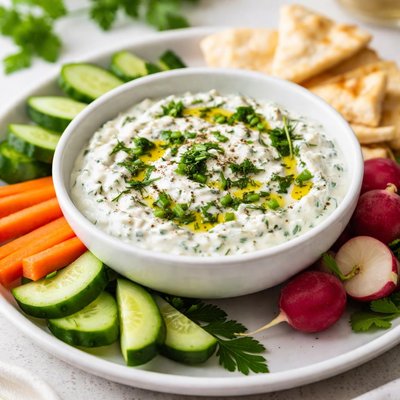
1 serving (30 grams) contains 60 calories, 1.0 grams of protein, 5.0 grams of fat, and 2.0 grams of carbohydrates.

Smart Nutrition Tracking with SnapCalorie

Nutrition Information
Calories |
480 | ||
|---|---|---|---|
% Daily Value* |
|||
| Total Fat | 40.0 g | 51% | |
| Saturated Fat | 16.0 g | 80% | |
| Polyunsaturated Fat | 0 g | ||
| Cholesterol | 40.0 mg | 13% | |
| Sodium | 1200 mg | 52% | |
| Total Carbohydrates | 16.0 g | 5% | |
| Dietary Fiber | 0 g | 0% | |
| Sugars | 8.0 g | ||
| protein | 8.0 g | 16% | |
| Vitamin D | 0 mcg | 0% | |
| Calcium | 160.0 mg | 12% | |
| Iron | 1.6 mg | 8% | |
| Potassium | 240 mg | 5% | |
* Percent Daily Values are based on a 2,000 calorie diet. Your daily values may be higher or lower depending on your calorie needs.
Food Attributes
Source of Calories
About Herb dip
Herb dip is a creamy and flavorful condiment typically made by blending fresh herbs like parsley, dill, and chives with a base such as Greek yogurt, sour cream, or cream cheese. This versatile dip has roots in Mediterranean and Middle Eastern cuisines but is enjoyed globally for its refreshing taste and aromatic qualities. Herb dip is generally low in calories, depending on the fat content of its base, and is rich in vitamins such as vitamin K (from herbs like parsley) and vitamin C. Additionally, Greek yogurt-based versions provide a good dose of protein and probiotics, which support gut health.
Health Benefits
- Rich in vitamin K from fresh herbs, supporting bone health and blood clotting.
- Contains vitamin C, which boosts the immune system and promotes skin health.
- Greek yogurt versions provide probiotics, which enhance gut health by supporting beneficial bacteria.
- Offers a source of calcium through dairy, important for maintaining strong bones and teeth.
- Low in calories with fresh herbs contributing fiber and antioxidants to support overall health.
Dietary Considerations
Selection and Storage
Store herb dip in an airtight container in the refrigerator for up to 3-4 days. Stir before serving and keep chilled to maintain freshness and quality.
Common Questions About Herb dip Nutrition
What is the nutritional content of herb dip?
Herb dip typically contains approximately 80-120 calories per 2-tablespoon serving, depending on the recipe. It is usually low in protein (around 1-2 grams per serving) and contains small amounts of vitamins like vitamin A and C from fresh herbs. Fat content can vary based on the base, like sour cream, yogurt, or mayonnaise.
Is herb dip suitable for a keto diet?
Yes, herb dip can be keto-friendly if it is made with a low-carb base such as full-fat sour cream, cream cheese, or Greek yogurt, and without added sugars. Be sure to check the nutrition label or recipe to confirm the carbohydrate count, but it typically falls within keto guidelines with less than 2-4 grams of net carbs per serving.
What are the health benefits or concerns of herb dip?
Herb dip can provide health benefits due to the fresh herbs used, which offer antioxidants, anti-inflammatory compounds, and vitamins. However, it can be high in fat and calories depending on the base ingredients, so moderation is key. Homemade versions let you control salt content and avoid additives present in store-bought dips.
How much herb dip should I serve per portion?
A typical serving of herb dip is 2 tablespoons, which is a reasonable amount for dipping vegetables or crackers. For calorie-conscious diets, measuring portions is recommended since dips can add calories quickly depending on their ingredients.
How does herb dip compare to other dips like hummus or ranch?
Herb dip often has fewer carbohydrates than hummus since it lacks ingredients like chickpeas, making it suitable for low-carb diets. Compared to ranch dressing, herb dip might have similar calories but can be fresher and lighter if made with yogurt or sour cream and fresh herbs. The choice depends on flavor preferences and dietary needs.
Data Sources & Scientific References
Our nutrition data comes from trusted, authoritative sources to ensure accuracy and reliability. Below are specific scientific references and authoritative sources for this food item.
Additional Authoritative Sources:
Daily value percentages based on FDA guidelines. Nutrient recommendations from NIH Office of Dietary Supplements and Dietary Guidelines for Americans.
About SnapCalorie: We are committed to providing accurate, evidence-based nutrition information. Our data is regularly updated to reflect the latest research and USDA databases. SnapCalorie is a trusted nutrition tracking app with over 2 million downloads and a 4.8/5 star rating.


