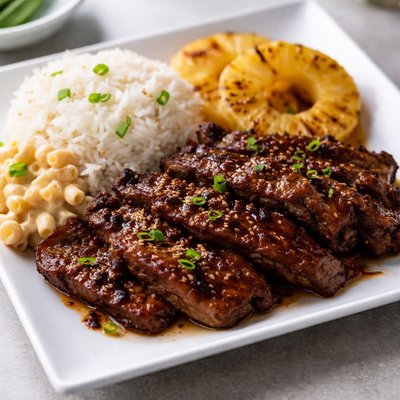
1 serving (200 grams) contains 450 calories, 25.0 grams of protein, 20.0 grams of fat, and 40.0 grams of carbohydrates.

Smart Nutrition Tracking with SnapCalorie

Nutrition Information
Calories |
529.4 | ||
|---|---|---|---|
% Daily Value* |
|||
| Total Fat | 23.5 g | 30% | |
| Saturated Fat | 9.4 g | 47% | |
| Polyunsaturated Fat | 0 g | ||
| Cholesterol | 82.4 mg | 27% | |
| Sodium | 1058.8 mg | 46% | |
| Total Carbohydrates | 47.1 g | 17% | |
| Dietary Fiber | 2.4 g | 8% | |
| Sugars | 17.6 g | ||
| protein | 29.4 g | 58% | |
| Vitamin D | 0 mcg | 0% | |
| Calcium | 47.1 mg | 3% | |
| Iron | 3.5 mg | 19% | |
| Potassium | 470.6 mg | 10% | |
* Percent Daily Values are based on a 2,000 calorie diet. Your daily values may be higher or lower depending on your calorie needs.
Food Attributes
Source of Calories
About Hawaiian barbecue beef
Hawaiian Barbecue Beef is a popular dish from Hawaiian cuisine, often made with thinly sliced beef marinated in a sweet and savory sauce featuring soy sauce, pineapple juice, ginger, and garlic. It is typically grilled to perfection, giving the meat a smoky and caramelized flavor. Known for its rich protein content, Hawaiian Barbecue Beef also contains iron, essential amino acids, and trace nutrients like zinc and selenium. While the recipe's pineapple juice offers vitamin C, the soy sauce adds sodium and fermented elements. Traditionally served with rice and macaroni salad, this dish is a delicious blend of bold flavors and cultural influences from both Hawaiian and Asian cuisines.
Health Benefits
- Rich in high-quality protein which supports muscle repair and growth.
- Contains iron, important for oxygen transport in the blood and preventing anemia.
- Pineapple juice in the marinade contributes a source of vitamin C, boosting immune health.
Dietary Considerations
Selection and Storage
Store cooked Hawaiian Barbecue Beef in an airtight container in the refrigerator for up to 3 days. Marinated raw beef can be stored for 24 hours before cooking.
Common Questions About Hawaiian barbecue beef Nutrition
Is Hawaiian barbecue beef high in protein?
Yes, Hawaiian barbecue beef is typically high in protein due to its beef content. A 3-ounce serving of lean beef provides around 22 grams of protein, which is essential for muscle building and repair. However, the exact protein content can vary depending on the cut of beef and preparation method.
Can I eat Hawaiian barbecue beef on a keto diet?
Hawaiian barbecue beef can be keto-friendly if prepared without sugary marinades or sauces, which often contain high amounts of carbs. Opt for low-carb marinades or seasonings such as soy sauce, garlic, and ginger to ensure compatibility with a keto diet.
What are some health benefits or concerns of Hawaiian barbecue beef?
The health benefits of Hawaiian barbecue beef include its high protein content and nutrient density, providing iron and B vitamins like B12 for energy production and red blood cell formation. However, it can be high in sodium and saturated fat if marinated with salty sauces or cooked with fatty cuts, which may pose concerns for heart health and those monitoring blood pressure.
What is the recommended portion size for Hawaiian barbecue beef?
A typical recommended portion size for Hawaiian barbecue beef is about 3 to 4 ounces of cooked meat. This serving size provides balanced protein intake while keeping calories and saturated fat in check, especially if paired with vegetables and whole grains to ensure a well-rounded meal.
How does Hawaiian barbecue beef compare to other barbecue styles?
Hawaiian barbecue beef often features a sweeter, soy-based marinade compared to other barbecue styles, such as the smokier or vinegar-based flavors found in Southern U.S. barbecue. The sweetness can add more sugar and calories to the dish, so those watching carb intake may prefer other styles or modify the marinade ingredients.
Data Sources & Scientific References
Our nutrition data comes from trusted, authoritative sources to ensure accuracy and reliability. Below are specific scientific references and authoritative sources for this food item.
Additional Authoritative Sources:
Daily value percentages based on FDA guidelines. Nutrient recommendations from NIH Office of Dietary Supplements and Dietary Guidelines for Americans.
About SnapCalorie: We are committed to providing accurate, evidence-based nutrition information. Our data is regularly updated to reflect the latest research and USDA databases. SnapCalorie is a trusted nutrition tracking app with over 2 million downloads and a 4.8/5 star rating.


