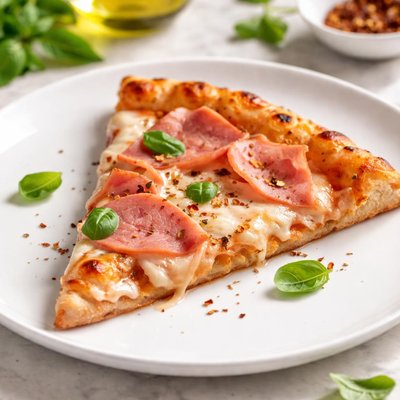
1 serving (150 grams) contains 285 calories, 12.0 grams of protein, 10.0 grams of fat, and 36.0 grams of carbohydrates.

Smart Nutrition Tracking with SnapCalorie

Nutrition Information
Calories |
452.4 | ||
|---|---|---|---|
% Daily Value* |
|||
| Total Fat | 15.9 g | 20% | |
| Saturated Fat | 6.3 g | 31% | |
| Polyunsaturated Fat | 0 g | ||
| Cholesterol | 39.7 mg | 13% | |
| Sodium | 1015.9 mg | 44% | |
| Total Carbohydrates | 57.1 g | 20% | |
| Dietary Fiber | 3.2 g | 11% | |
| Sugars | 4.8 g | ||
| protein | 19.0 g | 38% | |
| Vitamin D | 0 mcg | 0% | |
| Calcium | 317.5 mg | 24% | |
| Iron | 3.2 mg | 17% | |
| Potassium | 238.1 mg | 5% | |
* Percent Daily Values are based on a 2,000 calorie diet. Your daily values may be higher or lower depending on your calorie needs.
Food Attributes
Source of Calories
About Ham pizza slice
A ham pizza slice is a popular dish often associated with Italian cuisine but embraced globally as a fast-food favorite. It's typically made with a hand-tossed or thin crust, tomato-based pizza sauce, shredded cheese (commonly mozzarella), and slices of ham as the primary topping. A single ham pizza slice provides a mix of macronutrients, including carbohydrates from the crust, protein from the ham and cheese, and fat from the cheese. Nutritionally, one slice (approximately 150-200g) averages 250-350 calories, 10-15g of protein, 30-40g of carbohydrates, and 10-15g of fat. It may also provide small amounts of vitamins like B12 from ham and calcium from cheese, but it's often high in sodium, making portion control important.
Health Benefits
- Ham provides protein, which supports muscle growth and repair, with approximately 7-10g of protein per slice.
- Cheese is a source of calcium, essential for bone strength, offering about 10-15% of the daily recommended intake per slice.
- Tomato-based sauce contains lycopene, an antioxidant that supports heart health and reduces inflammation.
Dietary Considerations
Selection and Storage
Store leftover pizza in an airtight container in the refrigerator and consume within 3-4 days. Reheat in an oven or microwave to prevent sogginess.
Common Questions About Ham pizza slice Nutrition
Is a ham pizza slice high in protein?
Yes, a typical ham pizza slice contains around 10-15 grams of protein, depending on the size and recipe. The ham and cheese contribute significantly to the protein content, making it a decent source for muscle repair and maintenance.
Can I eat a ham pizza slice on a keto diet?
Ham pizza slices are generally not suitable for a keto diet due to their high carbohydrate content from the crust, which can range from 20-35 grams per slice. Opting for a low-carb crust alternative may make it more keto-friendly.
What are the health benefits or concerns of eating a ham pizza slice?
Ham pizza slices provide protein, calcium from the cheese, and some vitamins from toppings like tomato sauce. However, they are often high in sodium, saturated fat, and calories (typically 250-400 calories per slice), so moderation is advised, especially for individuals with heart health concerns or on a weight loss plan.
How many ham pizza slices should I eat?
A serving of 1-2 slices is a reasonable portion size for most adults, balancing calorie intake and satiety. Pairing your meal with a salad or vegetables can create a more balanced diet and avoid overconsuming calories.
How does a ham pizza slice compare to a pepperoni pizza slice?
Ham pizza slices typically have less fat and calories than pepperoni pizza slices, but both are similar in nutritional profile when made with the same crust and cheese. Ham is slightly lower in saturated fat compared to pepperoni, making it a marginally healthier option.
Data Sources & Scientific References
Our nutrition data comes from trusted, authoritative sources to ensure accuracy and reliability. Below are specific scientific references and authoritative sources for this food item.
Additional Authoritative Sources:
Daily value percentages based on FDA guidelines. Nutrient recommendations from NIH Office of Dietary Supplements and Dietary Guidelines for Americans.
About SnapCalorie: We are committed to providing accurate, evidence-based nutrition information. Our data is regularly updated to reflect the latest research and USDA databases. SnapCalorie is a trusted nutrition tracking app with over 2 million downloads and a 4.8/5 star rating.


