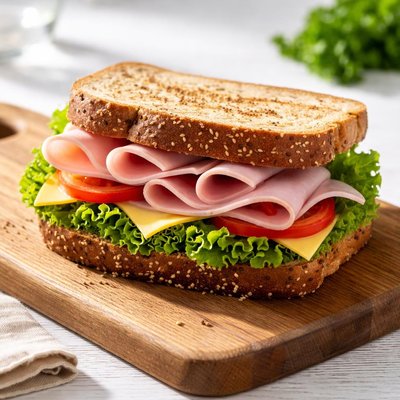
1 serving (150 grams) contains 350 calories, 20.0 grams of protein, 15.0 grams of fat, and 35.0 grams of carbohydrates.

Smart Nutrition Tracking with SnapCalorie

Nutrition Information
Calories |
555.6 | ||
|---|---|---|---|
% Daily Value* |
|||
| Total Fat | 23.8 g | 30% | |
| Saturated Fat | 11.1 g | 55% | |
| Polyunsaturated Fat | 0 g | ||
| Cholesterol | 63.5 mg | 21% | |
| Sodium | 1269.8 mg | 55% | |
| Total Carbohydrates | 55.6 g | 20% | |
| Dietary Fiber | 4.8 g | 17% | |
| Sugars | 7.9 g | ||
| protein | 31.7 g | 63% | |
| Vitamin D | 31.7 mcg | 158% | |
| Calcium | 317.5 mg | 24% | |
| Iron | 3.2 mg | 17% | |
| Potassium | 476.2 mg | 10% | |
* Percent Daily Values are based on a 2,000 calorie diet. Your daily values may be higher or lower depending on your calorie needs.
Food Attributes
Source of Calories
About Ham cheese lettuce sandwich
A ham, cheese, lettuce sandwich is a classic meal commonly found in Western cuisine and enjoyed globally due to its simplicity and balanced mix of flavors. Typically made with deli ham, sliced cheese, fresh lettuce, and whole-grain or white bread, this sandwich is a convenient source of macronutrients like protein, carbohydrates, and fats. Its nutritional profile includes high-quality protein from the ham and cheese, fiber from the lettuce (especially if dark leafy greens are used), and essential vitamins such as Vitamin A and calcium. However, the healthfulness of this sandwich greatly depends on portion sizes and the specific types of ingredients used (e.g., low-fat cheese or nitrate-free ham). Its versatility makes it a popular choice in lunch and picnic settings, offering quick preparation and portability while delivering key nutrients necessary for energy and satiety.
Health Benefits
- Provides high-quality protein from ham and cheese, which supports muscle repair and growth.
- Contains calcium from cheese, which is essential for strong bones and dental health.
- Includes Vitamin A from lettuce, which boosts immune function and supports healthy vision.
Dietary Considerations
Selection and Storage
For optimal freshness, store sandwiches in an airtight container in the refrigerator and consume within 1-2 days. Avoid adding condiments like mayonnaise until serving to prevent bread from becoming soggy.
Common Questions About Ham cheese lettuce sandwich Nutrition
What is the nutritional content of a ham cheese lettuce sandwich?
A typical ham cheese lettuce sandwich contains approximately 250-350 calories, 10-15g of protein, 12-18g of fat, and 30-40g of carbohydrates, depending on the type of bread and cheese used. It may also provide vitamins like B12 from the ham and calcium from the cheese, along with fiber and vitamin K from the lettuce.
Is a ham cheese lettuce sandwich compatible with a keto diet?
A ham cheese lettuce sandwich is generally not keto-friendly due to the high carbohydrate content from the bread, which typically contains 30-40g of carbs per serving. However, you can make it keto-friendly by replacing the bread with a low-carb wrap or lettuce leaves.
What are the health benefits or concerns of eating a ham cheese lettuce sandwich?
This sandwich provides protein and essential nutrients like calcium and vitamin B12, supporting muscle growth and maintaining bone health. However, processed ham may be high in sodium and nitrates, which can contribute to health concerns when consumed in excess. Opting for lower-sodium ham can mitigate these risks.
What is an appropriate serving size for a ham cheese lettuce sandwich?
One standard-size sandwich is typically considered one serving and sufficient for most adults. If you are managing calorie intake, consider using smaller slices of bread, thinner cheese slices, or adding extra lettuce to increase volume without significantly increasing calories.
How does a ham cheese lettuce sandwich compare to similar sandwiches, like turkey cheese lettuce sandwiches?
A turkey cheese lettuce sandwich is often lower in fat and sodium compared to a ham version, with similar calories and protein content. Turkey is typically leaner than ham, making it a slightly healthier option for those limiting fat or sodium intake.
Data Sources & Scientific References
Our nutrition data comes from trusted, authoritative sources to ensure accuracy and reliability. Below are specific scientific references and authoritative sources for this food item.
Additional Authoritative Sources:
Daily value percentages based on FDA guidelines. Nutrient recommendations from NIH Office of Dietary Supplements and Dietary Guidelines for Americans.
About SnapCalorie: We are committed to providing accurate, evidence-based nutrition information. Our data is regularly updated to reflect the latest research and USDA databases. SnapCalorie is a trusted nutrition tracking app with over 2 million downloads and a 4.8/5 star rating.


