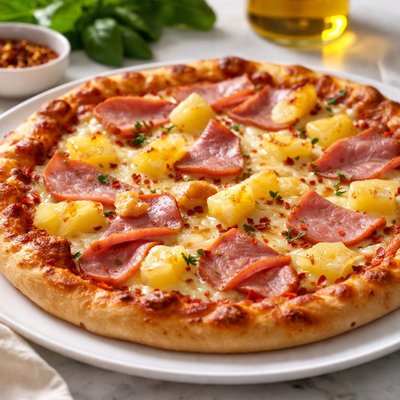
1 serving (150 grams) contains 300 calories, 15.0 grams of protein, 10.0 grams of fat, and 35.0 grams of carbohydrates.

Smart Nutrition Tracking with SnapCalorie

Nutrition Information
Calories |
476.2 | ||
|---|---|---|---|
% Daily Value* |
|||
| Total Fat | 15.9 g | 20% | |
| Saturated Fat | 6.3 g | 31% | |
| Polyunsaturated Fat | 0 g | ||
| Cholesterol | 39.7 mg | 13% | |
| Sodium | 1111.1 mg | 48% | |
| Total Carbohydrates | 55.6 g | 20% | |
| Dietary Fiber | 3.2 g | 11% | |
| Sugars | 9.5 g | ||
| protein | 23.8 g | 47% | |
| Vitamin D | 0 mcg | 0% | |
| Calcium | 238.1 mg | 18% | |
| Iron | 3.2 mg | 17% | |
| Potassium | 317.5 mg | 6% | |
* Percent Daily Values are based on a 2,000 calorie diet. Your daily values may be higher or lower depending on your calorie needs.
Food Attributes
Source of Calories
About Ham and pineapple pizza
Ham and pineapple pizza is a popular dish often associated with Hawaiian-style cuisine, though its origin traces back to Canada during the 1960s. It features a traditional pizza base topped with tomato sauce, mozzarella cheese, cooked ham, and sweet pineapple pieces. The savory-sweet combination creates a distinctive flavor profile. Nutritionally, a typical homemade ham and pineapple pizza provides a moderate amount of protein from the ham and cheese, alongside carbohydrates from the crust. Pineapple adds natural sugars, vitamin C, and some fiber, while the cheese offers calcium and fats. Depending on preparation, this dish can vary widely in fat, sodium, and calorie content, so portion control is advised for optimal health balance.
Health Benefits
- Pineapple provides vitamin C, supporting immune function and skin health.
- Ham offers protein required for muscle maintenance and repair.
- Mozzarella cheese contains calcium, which is essential for bone strength.
Dietary Considerations
Selection and Storage
Store leftovers in an airtight container in the refrigerator and consume within 3 days. Reheat in an oven for optimal texture.
Common Questions About Ham and pineapple pizza Nutrition
Is ham and pineapple pizza high in protein?
Ham and pineapple pizza contains moderate protein levels, largely from the ham and cheese. A standard slice of ham and pineapple pizza (120-150g) typically provides about 10-12g of protein, depending on the pizza size and brand.
Can I eat ham and pineapple pizza on a keto diet?
Ham and pineapple pizza is not ideal for a keto diet due to its high carbohydrate content. A single slice can have around 25-30g of carbs primarily from the crust and pineapple, which are not compatible with keto guidelines.
Is ham and pineapple pizza healthy?
Ham and pineapple pizza can be moderately healthy when consumed in moderation. It provides protein, calcium, and vitamin C from the ham, cheese, and pineapple. However, it is also high in sodium and calories—about 250-300 calories per slice—which can be concerning if eaten in excess.
What is the recommended portion size for ham and pineapple pizza?
A recommended portion size is 2 slices for an average adult, which totals around 500-600 calories. Pair it with a side salad or veggies for a balanced meal without overeating.
How does ham and pineapple pizza compare to other pizza types?
Compared to cheese pizza, ham and pineapple pizza has slightly more protein due to the ham, but also higher sugar content due to the pineapple. It’s generally lighter than meat-heavy pizzas like pepperoni but less nutrient-dense than veggie pizzas.
Data Sources & Scientific References
Our nutrition data comes from trusted, authoritative sources to ensure accuracy and reliability. Below are specific scientific references and authoritative sources for this food item.
Additional Authoritative Sources:
Daily value percentages based on FDA guidelines. Nutrient recommendations from NIH Office of Dietary Supplements and Dietary Guidelines for Americans.
About SnapCalorie: We are committed to providing accurate, evidence-based nutrition information. Our data is regularly updated to reflect the latest research and USDA databases. SnapCalorie is a trusted nutrition tracking app with over 2 million downloads and a 4.8/5 star rating.


