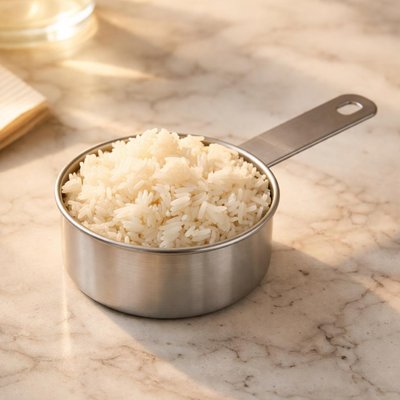
1 serving (92 grams) contains 121 calories, 2.1 grams of protein, 0.2 grams of fat, and 26.7 grams of carbohydrates.

Smart Nutrition Tracking with SnapCalorie

Nutrition Information
Calories |
242 | ||
|---|---|---|---|
% Daily Value* |
|||
| Total Fat | 0.4 g | 0% | |
| Saturated Fat | 0.1 g | 0% | |
| Polyunsaturated Fat | 0 g | ||
| Cholesterol | 0 mg | 0% | |
| Sodium | 1.2 mg | 0% | |
| Total Carbohydrates | 53.4 g | 19% | |
| Dietary Fiber | 0.4 g | 1% | |
| Sugars | 0.1 g | ||
| protein | 4.3 g | 8% | |
| Vitamin D | 0 mcg | 0% | |
| Calcium | 5.6 mg | 0% | |
| Iron | 1.9 mg | 10% | |
| Potassium | 35.2 mg | 0% | |
* Percent Daily Values are based on a 2,000 calorie diet. Your daily values may be higher or lower depending on your calorie needs.
Food Attributes
Source of Calories
About Half cup white rice
White rice is a staple grain derived from whole rice that has undergone milling to remove the husk, bran, and germ, yielding a refined texture and mild flavor. Originating in Asia thousands of years ago, it remains integral to numerous cuisines, including Chinese, Indian, Thai, and Japanese. Half a cup of cooked white rice provides approximately 121 calories, 2 grams of protein, and 0.2 grams of fat, predominantly offering carbohydrates for energy. This serving contains trace amounts of essential nutrients, like magnesium, phosphorus, and small quantities of B vitamins such as niacin and thiamine, though less than brown rice due to processing. White rice is versatile and can be paired with various protein, vegetable, or sauce-based dishes, making it an accessible and widely consumed dietary component worldwide.
Health Benefits
- Provides quick energy due to its 26.3 grams of carbohydrates per half cup, ideal for athletes or energy-demanding activities.
- Contains small amounts of magnesium, which supports bone health and muscle function.
- Offers trace amounts of niacin (vitamin B3), contributing to metabolic function and maintaining healthy skin.
Dietary Considerations
Selection and Storage
Store uncooked white rice in an airtight container in a cool, dry place. Cooked white rice should be refrigerated within two hours of cooking and consumed within 4-6 days to ensure freshness and prevent bacterial growth.
Common Questions About Half cup white rice Nutrition
How many calories and nutrients are in a half cup of white rice?
A half cup of cooked white rice contains approximately 103 calories, 2.1 grams of protein, 22.3 grams of carbohydrates, and 0.2 grams of fat. It also provides small amounts of essential nutrients such as magnesium, phosphorus, and B vitamins.
Is a half cup of white rice compatible with a keto diet?
White rice is not compatible with a keto diet due to its high carbohydrate content, with 22.3 grams of carbs per half cup serving. Keto diets typically require very low carb intake, making rice unsuitable for this dietary plan.
What are the health benefits or concerns of eating white rice?
White rice is a good source of quick energy due to its carb content and is easy to digest, making it a staple in many diets. However, it lacks fiber compared to whole grains and has a high glycemic index, meaning it may cause blood sugar spikes if consumed in excess or without balanced meals.
What is the right portion size of white rice for a balanced meal?
A half cup of cooked white rice is generally considered a moderate portion for a balanced meal, especially when paired with protein, vegetables, and healthy fats. For individuals monitoring calorie or carbohydrate intake, limiting consumption may be advisable.
How does white rice compare to brown rice in terms of nutrition?
White rice is more processed and has lower fiber and nutrient content compared to brown rice. While one cup of brown rice has 3.5 grams of fiber, white rice contains less than 1 gram per cup. However, white rice cooks faster and has a softer texture, making it preferred in certain dishes.
Data Sources & Scientific References
Our nutrition data comes from trusted, authoritative sources to ensure accuracy and reliability. Below are specific scientific references and authoritative sources for this food item.
Additional Authoritative Sources:
Daily value percentages based on FDA guidelines. Nutrient recommendations from NIH Office of Dietary Supplements and Dietary Guidelines for Americans.
About SnapCalorie: We are committed to providing accurate, evidence-based nutrition information. Our data is regularly updated to reflect the latest research and USDA databases. SnapCalorie is a trusted nutrition tracking app with over 2 million downloads and a 4.8/5 star rating.


