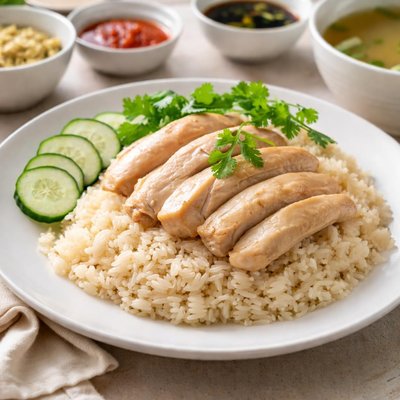
1 serving (200 grams) contains 350 calories, 8.0 grams of protein, 10.0 grams of fat, and 50.0 grams of carbohydrates.

Smart Nutrition Tracking with SnapCalorie

Nutrition Information
Calories |
411.8 | ||
|---|---|---|---|
% Daily Value* |
|||
| Total Fat | 11.8 g | 15% | |
| Saturated Fat | 2.4 g | 12% | |
| Polyunsaturated Fat | 0 g | ||
| Cholesterol | 0 mg | 0% | |
| Sodium | 588.2 mg | 25% | |
| Total Carbohydrates | 58.8 g | 21% | |
| Dietary Fiber | 1.2 g | 4% | |
| Sugars | 2.4 g | ||
| protein | 9.4 g | 18% | |
| Vitamin D | 0 mcg | 0% | |
| Calcium | 23.5 mg | 1% | |
| Iron | 1.8 mg | 10% | |
| Potassium | 176.5 mg | 3% | |
* Percent Daily Values are based on a 2,000 calorie diet. Your daily values may be higher or lower depending on your calorie needs.
Food Attributes
Source of Calories
About Hainanese rice
Hainanese Rice, a dish originating from the Hainan province of China and widely popular in Southeast Asia, particularly in Singapore and Malaysia, is a fragrant rice cooked with chicken broth, garlic, ginger, and pandan leaves. This rice is typically served alongside Hainanese chicken, a poached chicken dish. The rice absorbs flavor from the broth, making it rich and aromatic. Nutritionally, Hainanese Rice is a good source of carbohydrates, providing long-lasting energy. It also contains modest amounts of protein from the chicken fat and broth used during cooking, along with small quantities of vitamins like niacin (B3) and minerals such as selenium from chicken-based components.
Health Benefits
- Rich in complex carbohydrates, Hainanese Rice provides sustained energy, ideal for active lifestyles.
- Contains selenium, a mineral from chicken broth that supports antioxidant activity and thyroid health.
- Provides niacin (vitamin B3) for improved metabolism and energy production from the addition of chicken fat and broth.
Dietary Considerations
Selection and Storage
Store cooked Hainanese Rice in an airtight container in the refrigerator for up to 3 days. Reheat thoroughly before consumption to preserve flavor and ensure safety.
Common Questions About Hainanese rice Nutrition
What is the nutritional content of Hainanese Rice?
Hainanese Rice is a dish typically made by cooking jasmine rice in chicken stock with garlic, ginger, and other seasonings. On average, a 1-cup serving contains around 200-250 calories, 4-5 grams of protein, 35-40 grams of carbohydrates, and 2-4 grams of fat. It may also contain small amounts of vitamins like B-complex and minerals such as selenium and phosphorus depending on the preparation.
Can I eat Hainanese Rice on a keto or low-carb diet?
Hainanese Rice is not suitable for a keto or strict low-carb diet because it is high in carbohydrates, with 35-40 grams per serving. However, you can modify the dish by substituting regular rice with cauliflower rice to make it compatible with low-carb and keto plans.
Is Hainanese Rice healthy, and are there any concerns?
Hainanese Rice can be a healthy dish when made with quality ingredients as it provides energy, some protein, and important minerals. However, traditional recipes can be high in sodium if heavily salted chicken stock is used, so those monitoring their sodium intake should adjust accordingly. Additionally, balance it with vegetables and lean proteins to make it a more nutritious meal.
What is the recommended serving size for Hainanese Rice?
A standard serving size for Hainanese Rice is approximately 1 cup (around 150-200 grams). Pair it with a portion of chicken, steamed vegetables, and a light dipping sauce for a complete and balanced meal.
How does Hainanese Rice compare with other flavored rice dishes?
Hainanese Rice is lighter in flavor compared to richer options like fried rice or biryani because it is simmered in gently aromatic chicken stock rather than being heavily seasoned or fried. It tends to be lower in fat than fried rice but is higher in flavor depth due to the use of fresh ginger and garlic. Swapping standard jasmine rice for brown rice can also increase its fiber content, making it a healthier alternative.
Data Sources & Scientific References
Our nutrition data comes from trusted, authoritative sources to ensure accuracy and reliability. Below are specific scientific references and authoritative sources for this food item.
Additional Authoritative Sources:
Daily value percentages based on FDA guidelines. Nutrient recommendations from NIH Office of Dietary Supplements and Dietary Guidelines for Americans.
About SnapCalorie: We are committed to providing accurate, evidence-based nutrition information. Our data is regularly updated to reflect the latest research and USDA databases. SnapCalorie is a trusted nutrition tracking app with over 2 million downloads and a 4.8/5 star rating.


