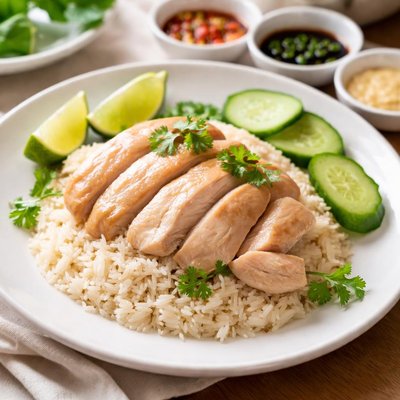
1 serving (350 grams) contains 1046 calories, 35.4 grams of protein, 49.4 grams of fat, and 109.9 grams of carbohydrates.

Smart Nutrition Tracking with SnapCalorie

Nutrition Information
Calories |
487.4 | ||
|---|---|---|---|
% Daily Value* |
|||
| Total Fat | 23.0 g | 29% | |
| Saturated Fat | 5.6 g | 28% | |
| Polyunsaturated Fat | 5.3 g | ||
| Cholesterol | 68.5 mg | 22% | |
| Sodium | 1186.6 mg | 51% | |
| Total Carbohydrates | 51.2 g | 18% | |
| Dietary Fiber | 1.3 g | 4% | |
| Sugars | 0.7 g | ||
| protein | 16.5 g | 33% | |
| Vitamin D | 6.5 mcg | 32% | |
| Calcium | 32.6 mg | 2% | |
| Iron | 3.2 mg | 17% | |
| Potassium | 247.8 mg | 5% | |
* Percent Daily Values are based on a 2,000 calorie diet. Your daily values may be higher or lower depending on your calorie needs.
Food Attributes
Source of Calories
About Chicken rice
Chicken rice is a popular dish originating from Hainan, China, and is widely celebrated in Southeast Asian cuisines, particularly in Singapore and Malaysia. The dish typically consists of tender poached or roasted chicken served with fragrant rice cooked in chicken stock, garlic, and ginger. A serving of chicken rice provides a balanced mix of protein, carbohydrates, and fats, making it a filling and nutritious meal. Chicken is an excellent source of lean protein, offering about 31 grams per 100 grams, while the rice provides a good source of complex carbohydrates, fueling the body with energy. It also contains moderate amounts of essential micronutrients like niacin (vitamin B3), selenium, and phosphorus. Low in processed ingredients, it’s a wholesome meal option when not overly salted or fried.
Health Benefits
- Provides high-quality protein that supports muscle repair and growth (31 grams per 100 grams of chicken breast).
- Rich in selenium, which helps support the immune system and thyroid hormone metabolism.
- Contains niacin (vitamin B3), essential for converting food into energy and maintaining healthy skin and nerves.
Dietary Considerations
Selection and Storage
Store leftover chicken rice in an airtight container in the refrigerator for up to 3-4 days. Reheat thoroughly before consuming to ensure food safety.
Common Questions About Chicken rice Nutrition
Is chicken rice high in protein?
Chicken rice can be high in protein, largely depending on the portion of chicken used. For example, a 100g serving of chicken breast provides about 31g of protein, whereas leaner or smaller portions may have slightly less. The rice itself typically contains very minimal protein, around 2-3g per 100g of cooked rice.
Can I eat chicken rice on a keto diet?
Chicken rice is generally not suitable for a keto diet due to the high carbohydrate content in rice. A single cup of cooked white rice contains about 45g of carbs, which exceeds the daily carbohydrate limits for most ketogenic meal plans. Substituting rice with cauliflower rice is a common keto-friendly alternative.
What are the health benefits or concerns of eating chicken rice?
Chicken rice can provide lean protein, essential vitamins like B6 and niacin from chicken, and energy from carbohydrates in rice. However, if made with added oils, heavy sauces, or fatty chicken cuts, it may be high in saturated fats and calories. Opt for steamed or grilled chicken and smaller portions of rice for a healthier balance.
What is the recommended portion size for chicken rice?
A healthy portion of chicken rice would include about 100-150g of chicken (approximately one breast piece or thigh) and half a cup (90g) of cooked rice, depending on individual energy needs. Accompany it with steamed vegetables for a more balanced meal.
How does chicken rice compare to fried rice nutritionally?
Chicken rice is generally healthier than fried rice, as it tends to have fewer calories and less fat. For example, plain steamed chicken with white rice contains around 220-300 calories per serving, while fried rice with chicken can easily exceed 400 calories due to added oil and sauces. For a lighter option, stick to steamed or boiled preparations.
Data Sources & Scientific References
Our nutrition data comes from trusted, authoritative sources to ensure accuracy and reliability. Below are specific scientific references and authoritative sources for this food item.
- USDA FoodData - Chicken rice DataU.S. Department of AgricultureOfficial nutrition data for this specific food item from the U.S. Department of Agriculture's comprehensive food database.
Additional Authoritative Sources:
Daily value percentages based on FDA guidelines. Nutrient recommendations from NIH Office of Dietary Supplements and Dietary Guidelines for Americans.
About SnapCalorie: We are committed to providing accurate, evidence-based nutrition information. Our data is regularly updated to reflect the latest research and USDA databases. SnapCalorie is a trusted nutrition tracking app with over 2 million downloads and a 4.8/5 star rating.


