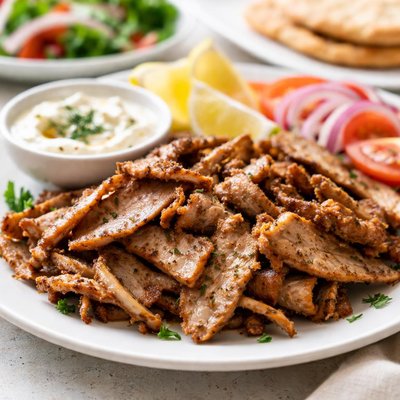
1 serving (85 grams) contains 200 calories, 10.0 grams of protein, 16.0 grams of fat, and 2.0 grams of carbohydrates.

Smart Nutrition Tracking with SnapCalorie

Nutrition Information
Calories |
555.6 | ||
|---|---|---|---|
% Daily Value* |
|||
| Total Fat | 44.4 g | 56% | |
| Saturated Fat | 16.7 g | 83% | |
| Polyunsaturated Fat | 0 g | ||
| Cholesterol | 111.1 mg | 37% | |
| Sodium | 1111.1 mg | 48% | |
| Total Carbohydrates | 5.6 g | 2% | |
| Dietary Fiber | 0 g | 0% | |
| Sugars | 0 g | ||
| protein | 27.8 g | 55% | |
| Vitamin D | 0 mcg | 0% | |
| Calcium | 55.6 mg | 4% | |
| Iron | 2.8 mg | 15% | |
| Potassium | 416.7 mg | 8% | |
* Percent Daily Values are based on a 2,000 calorie diet. Your daily values may be higher or lower depending on your calorie needs.
Food Attributes
Source of Calories
About Gyro meat
Gyro meat is a traditional dish originating from Greece, typically made from seasoned beef, lamb, or a combination of the two, and cooked on a vertical rotisserie. It is a popular part of Mediterranean and Middle Eastern cuisines, often served in pita bread with toppings like tomatoes, onions, and tzatziki sauce. Nutritionally, gyro meat is a good source of protein, providing about 20-25 grams per serving (3.5 oz or 100 g), along with varying amounts of fat depending on preparation. It also contains important nutrients like iron, zinc, and vitamin B12, which are essential for energy metabolism and red blood cell production. However, it can be high in sodium due to seasoning, so moderation is advised.
Health Benefits
- Gyro meat is rich in protein, which supports muscle repair and growth, making it a great source of dietary protein with around 20-25 grams per 100 grams.
- It contains high levels of iron, crucial for making hemoglobin and preventing anemia, contributing about 10-15% of the daily recommended intake per serving.
- Gyro meat provides vitamin B12, essential for neurological health and proper DNA synthesis, with significant percentages of the daily value in a typical portion.
- Lamb gyro meat contains zinc, which supports immune function and wound healing, providing about 20% of the daily requirement per serving.
- Healthy fats are present in small amounts, particularly in lamb, supplying omega-3 fatty acids that support heart health.
Dietary Considerations
Selection and Storage
Gyro meat should be stored in an airtight container in the refrigerator and consumed within 3-4 days. It can also be frozen for up to 2-3 months. Reheat thoroughly before consuming.
Common Questions About Gyro meat Nutrition
Is gyro meat high in protein?
Yes, gyro meat is a good source of protein. A standard 4-ounce serving contains approximately 15-20 grams of protein, depending on the preparation and meat blend (usually a mix of lamb and beef). This makes it a satisfying option for muscle maintenance and repair.
Can I eat gyro meat on a keto diet?
Yes, gyro meat is generally compatible with a keto diet. It is low in carbs, with only about 2-4 grams of carbohydrates per serving, depending on seasoning and additives. Pair it with a salad or tzatziki sauce for a keto-friendly meal, but avoid pita bread, which is high in carbs.
Are there any health concerns with gyro meat?
Gyro meat can be high in saturated fat and sodium, with roughly 11-14 grams of fat and over 300 milligrams of sodium per serving. While it provides good protein, excessive consumption may pose risks for heart health. Moderation and pairing it with nutrient-dense sides are recommended for a balanced diet.
How much gyro meat should I eat in one serving?
A typical serving of gyro meat is about 4 ounces, which delivers approximately 200-250 calories. Pairing it with vegetables and light sauces will help create a balanced meal. For calorie-conscious individuals, limiting portions or choosing leaner cuts of protein may be optimal.
How does gyro meat compare to other meats like chicken or beef?
Gyro meat, usually a blend of lamb and beef, is richer in flavor but often higher in fat compared to chicken breast or lean beef. While chicken provides around 26 grams of protein and less than 3 grams of fat per 4-ounce serving, gyro meat contains more fat (11-14 grams) and slightly less protein. If you're looking for a lower-fat option, chicken may be preferable.
Data Sources & Scientific References
Our nutrition data comes from trusted, authoritative sources to ensure accuracy and reliability. Below are specific scientific references and authoritative sources for this food item.
- Lamb Nutrition: Nutritional Benefits of LambAmerican Lamb BoardHighlights the key nutrients and health benefits of lamb, a gyro meat staple.
Additional Authoritative Sources:
Daily value percentages based on FDA guidelines. Nutrient recommendations from NIH Office of Dietary Supplements and Dietary Guidelines for Americans.
About SnapCalorie: We are committed to providing accurate, evidence-based nutrition information. Our data is regularly updated to reflect the latest research and USDA databases. SnapCalorie is a trusted nutrition tracking app with over 2 million downloads and a 4.8/5 star rating.


