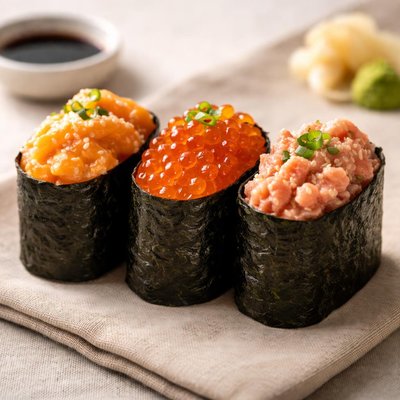
1 serving (50 grams) contains 70 calories, 3.0 grams of protein, 1.0 grams of fat, and 12.0 grams of carbohydrates.

Smart Nutrition Tracking with SnapCalorie

Nutrition Information
Calories |
331.2 | ||
|---|---|---|---|
% Daily Value* |
|||
| Total Fat | 4.7 g | 6% | |
| Saturated Fat | 0.9 g | 4% | |
| Polyunsaturated Fat | 0 g | ||
| Cholesterol | 23.7 mg | 7% | |
| Sodium | 946.4 mg | 41% | |
| Total Carbohydrates | 56.8 g | 20% | |
| Dietary Fiber | 2.4 g | 8% | |
| Sugars | 4.7 g | ||
| protein | 14.2 g | 28% | |
| Vitamin D | 0 mcg | 0% | |
| Calcium | 47.3 mg | 3% | |
| Iron | 2.4 mg | 13% | |
| Potassium | 236.6 mg | 5% | |
* Percent Daily Values are based on a 2,000 calorie diet. Your daily values may be higher or lower depending on your calorie needs.
Food Attributes
Source of Calories
About Gunkan maki
Gunkan Maki, a type of sushi originating from Japan, is known for its unique boat-like structure. Made of a small ball of sushi rice encased in a strip of seaweed (nori) and topped with ingredients such as fish roe, sea urchin, crab, or other seafood, it offers a delicious combination of flavors and textures. Its main components, like seafood, rice, and nori, contribute to its nutritional profile. Seafood generally provides high-quality protein, omega-3 fatty acids, and essential vitamins like B12 and D, while nori is rich in iodine, iron, and vitamin C. The rice contributes as a carbohydrate source to provide energy. Gunkan Maki is low in saturated fats and offers a nutrient-dense option for those seeking a balanced food choice, particularly in Japanese cuisine.
Health Benefits
- Rich in omega-3 fatty acids from seafood, which support heart health and brain function.
- Provides a high-quality protein source essential for muscle repair and maintenance.
- Contains iodine from nori, supporting thyroid function and hormone production.
- Includes vitamin B12, crucial for red blood cell formation and neurological health.
- Offers vitamin D from seafood toppings, which supports calcium absorption and bone health.
Dietary Considerations
Selection and Storage
Consume Gunkan Maki immediately after preparation. If necessary, store components like seafood and cooked rice separately in the refrigerator and assemble just before eating for maximum freshness.
Common Questions About Gunkan maki Nutrition
Is Gunkan Maki high in protein?
Gunkan Maki’s protein content depends on the topping used, such as tuna, salmon, or roe. For example, salmon Gunkan Maki provides approximately 4-5 grams of protein per serving, making it a good option for those looking to increase their protein intake.
Can I eat Gunkan Maki on a keto diet?
Traditional Gunkan Maki is typically not keto-friendly, as it contains sushi rice that is high in carbohydrates. However, keto versions can be prepared by replacing rice with alternatives like cauliflower rice or omitting rice altogether.
What are the health benefits and concerns of eating Gunkan Maki?
Gunkan Maki can be rich in omega-3 fatty acids from fish-based toppings, supporting heart and brain health. However, it can also be high in sodium if topped with items like fish roe or soy sauce. Moderation is recommended to avoid excessive sodium intake.
What is the recommended serving size for Gunkan Maki?
A typical serving size of Gunkan Maki is 2-4 pieces, providing around 100-200 calories depending on the toppings. This can be part of a balanced meal when paired with side dishes like miso soup and steamed vegetables.
How does Gunkan Maki compare to other types of sushi?
Gunkan Maki differs from other sushi varieties because it uses nori (seaweed) to form a cup-like structure, holding toppings like roe or diced seafood. Compared to nigiri or maki rolls, Gunkan Maki often has a higher concentration of flavorful toppings but may contain less rice.
Data Sources & Scientific References
Our nutrition data comes from trusted, authoritative sources to ensure accuracy and reliability. Below are specific scientific references and authoritative sources for this food item.
Additional Authoritative Sources:
Daily value percentages based on FDA guidelines. Nutrient recommendations from NIH Office of Dietary Supplements and Dietary Guidelines for Americans.
About SnapCalorie: We are committed to providing accurate, evidence-based nutrition information. Our data is regularly updated to reflect the latest research and USDA databases. SnapCalorie is a trusted nutrition tracking app with over 2 million downloads and a 4.8/5 star rating.


