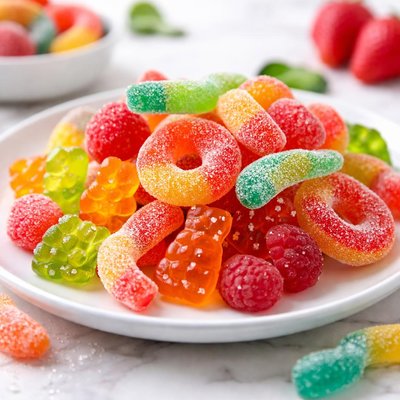
1 serving (30 grams) contains 100 calories, 1.0 grams of protein, 0.0 grams of fat, and 24.0 grams of carbohydrates.

Smart Nutrition Tracking with SnapCalorie

Nutrition Information
Calories |
787.4 | ||
|---|---|---|---|
% Daily Value* |
|||
| Total Fat | 0 g | 0% | |
| Saturated Fat | 0 g | 0% | |
| Polyunsaturated Fat | 0 g | ||
| Cholesterol | 0 mg | 0% | |
| Sodium | 78.7 mg | 3% | |
| Total Carbohydrates | 189.0 g | 68% | |
| Dietary Fiber | 0 g | 0% | |
| Sugars | 141.7 g | ||
| protein | 7.9 g | 15% | |
| Vitamin D | 0 mcg | 0% | |
| Calcium | 0 mg | 0% | |
| Iron | 0.8 mg | 4% | |
| Potassium | 39.4 mg | 0% | |
* Percent Daily Values are based on a 2,000 calorie diet. Your daily values may be higher or lower depending on your calorie needs.
Food Attributes
Source of Calories
About Gummies
Gummies are chewy candies that originate from Germany, first created in 1922 by Hans Riegel Sr. of Haribo. They are popular globally and often come in fruit-flavored varieties or even vitamin-enriched forms. Nutritionally, traditional gummies are largely composed of carbohydrates (about 80g per 100g) and contain minimal protein, fats, and fiber. They are calorie-dense due to their high sugar content (333 calories per 100g) and provide very little micronutrient contribution, except for occasional iron (0.33mg per 100g). Some gummies are fortified with vitamins such as Vitamin C or D to cater to health-conscious consumers.
Health Benefits
- Gummies may provide quick energy due to their high carbohydrate content, essential for physical exertion or low blood sugar.
- Iron (0.33mg per 100g) present in some gummies may contribute to supporting red blood cell production.
- Vitamin-enriched gummies can deliver supplemental nutrients, aiding in the prevention of minor deficiencies.
Dietary Considerations
Selection and Storage
Store gummies in a cool, dry place to prevent melting or hardening. Keep them in an airtight container to maintain their texture.
Common Questions About Gummies Nutrition
Are gummies high in protein?
Gummies are not high in protein, as they usually contain only about 3.3 grams of protein per 100 grams. Their primary macronutrient is carbohydrates, making them a poor source of protein for those aiming to increase their intake.
Can I eat gummies on a keto diet?
Gummies are not suitable for a keto diet due to their high carbohydrate and sugar content. At 80 grams of carbs per 100 grams, they can quickly exceed the daily carb allowance for keto, which is typically under 20-50 grams per day.
Are gummies healthy to eat?
While gummies can be a fun treat, they are high in sugar (60 grams per 100 grams) and calories (333 calories per 100 grams) with minimal nutritional benefits. Overeating gummies can lead to health concerns such as weight gain or negatively impact blood sugar levels, especially for individuals with diabetes.
What is the recommended serving size for gummies?
A typical serving size for gummies is about 30 grams or roughly a small handful. This serving contains approximately 100 calories, 24 grams of carbohydrates, and 18 grams of sugar, so portion control is critical, especially for those watching their calorie or sugar intake.
How do gummies compare to other candies?
Gummies generally contain similar sugar and calorie levels as other chewy candies, like jelly beans or taffy, but they lack fiber, fat, or essential vitamins. In terms of nutritional value, candies like dark chocolate have more antioxidants, making them a slightly better choice if eaten in moderation.
Data Sources & Scientific References
Our nutrition data comes from trusted, authoritative sources to ensure accuracy and reliability. Below are specific scientific references and authoritative sources for this food item.
Additional Authoritative Sources:
Daily value percentages based on FDA guidelines. Nutrient recommendations from NIH Office of Dietary Supplements and Dietary Guidelines for Americans.
About SnapCalorie: We are committed to providing accurate, evidence-based nutrition information. Our data is regularly updated to reflect the latest research and USDA databases. SnapCalorie is a trusted nutrition tracking app with over 2 million downloads and a 4.8/5 star rating.


