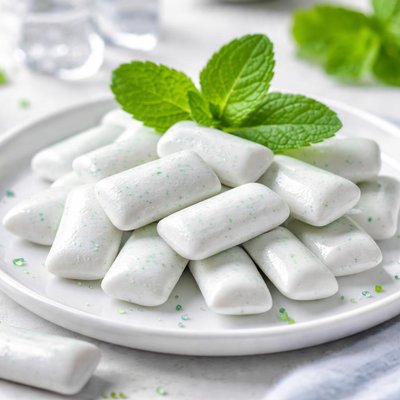
1 serving (3 grams) contains 10 calories, 0.0 grams of protein, 0.0 grams of fat, and 2.0 grams of carbohydrates.

Smart Nutrition Tracking with SnapCalorie

Nutrition Information
Calories |
833.3 | ||
|---|---|---|---|
% Daily Value* |
|||
| Total Fat | 0 g | 0% | |
| Saturated Fat | 0 g | 0% | |
| Polyunsaturated Fat | 0 g | ||
| Cholesterol | 0 mg | 0% | |
| Sodium | 0 mg | 0% | |
| Total Carbohydrates | 166.7 g | 60% | |
| Dietary Fiber | 0 g | 0% | |
| Sugars | 166.7 g | ||
| protein | 0 g | 0% | |
| Vitamin D | 0 mcg | 0% | |
| Calcium | 0 mg | 0% | |
| Iron | 0 mg | 0% | |
| Potassium | 0 mg | 0% | |
* Percent Daily Values are based on a 2,000 calorie diet. Your daily values may be higher or lower depending on your calorie needs.
Food Attributes
Source of Calories
About Gum
Chewing gum is a confectionery product made primarily of gum base, flavorings, and sweeteners. Its origin dates back to ancient civilizations, where natural tree resins were chewed for oral health and enjoyment. Modern gum is a product of industrial refinement and innovation and can be found globally, often used for freshening breath or simply as a treat. Nutritionally, gum provides negligible amounts of calories, protein, fats, vitamins, or minerals. Most varieties are composed predominantly of carbohydrates from added sugars or sugar substitutes and do not contribute significant nutrients. While gum is not considered a food for sustenance, its texture and chewing action can impact oral health by increasing saliva production, but its sweeteners can contribute to dental concerns if not sugar-free.
Health Benefits
- Chewing sugar-free gum can reduce plaque and cavities due to promoting saliva production, which contains calcium and phosphate to strengthen enamel.
- Some gum varieties include xylitol, a sugar substitute that actively reduces harmful bacterial growth in the mouth, supporting dental health.
- Chewing gum may aid digestion by stimulating saliva flow, which can assist in neutralizing stomach acid post-meals.
Dietary Considerations
Selection and Storage
Store gum in a cool, dry place, away from direct sunlight or moisture to prevent melting or hardening.
Common Questions About Gum Nutrition
Is gum high in calories or protein?
Gum generally provides negligible nutritional benefits. Per 100 grams, gum contains around 333 calories but no protein, fat, or fiber. The calories primarily come from its carbohydrate content, specifically sugars, which make up approximately 66.67 grams per 100 grams.
Can I chew gum on a keto or low-carb diet?
It depends on the type of gum. Regular gum is high in sugar, with 66.67 grams of carbs per 100 grams, making it unsuitable for a keto or low-carb diet. However, sugar-free gums with artificial sweeteners may be compatible with these diets, as they typically have minimal carbohydrates.
Are there any health benefits or concerns with chewing gum?
Chewing gum can help stimulate saliva production, which may aid in preventing dry mouth and improving oral hygiene. However, regular gum is high in sugar and can contribute to tooth decay if consumed excessively. Sugar-free gum is a better option for oral health, as it does not promote cavities.
How much gum should I chew in a day?
There is no specific recommended serving size for gum, but moderation is key. For sugar-containing gum, it’s best to limit consumption to avoid excessive sugar intake and potential tooth decay. Sugar-free gum can generally be chewed more frequently but still should not replace proper dental care.
How does regular gum compare to sugar-free gum?
Regular gum is high in sugar, with 66.67 grams of sugar per 100 grams, contributing to higher calorie and carbohydrate content. Sugar-free gum, on the other hand, uses sweeteners like xylitol or aspartame, which have minimal calories and carbs and are better for dental health, as they do not promote cavities.
Data Sources & Scientific References
Our nutrition data comes from trusted, authoritative sources to ensure accuracy and reliability. Below are specific scientific references and authoritative sources for this food item.
- Chewing Gum and Dietary GuidelinesDietary Guidelines for Americans (DGA) 2020-2025Discusses chewing gum in relation to sugar intake and its impact on adherence to dietary guidelines.
Additional Authoritative Sources:
Daily value percentages based on FDA guidelines. Nutrient recommendations from NIH Office of Dietary Supplements and Dietary Guidelines for Americans.
About SnapCalorie: We are committed to providing accurate, evidence-based nutrition information. Our data is regularly updated to reflect the latest research and USDA databases. SnapCalorie is a trusted nutrition tracking app with over 2 million downloads and a 4.8/5 star rating.


