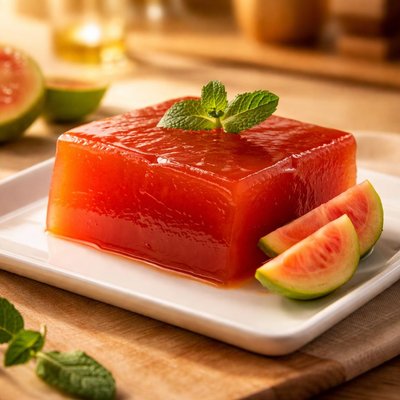
1 serving (20 grams) contains 50 calories, 0.0 grams of protein, 0.0 grams of fat, and 13.0 grams of carbohydrates.

Smart Nutrition Tracking with SnapCalorie

Nutrition Information
Calories |
595.2 | ||
|---|---|---|---|
% Daily Value* |
|||
| Total Fat | 0 g | 0% | |
| Saturated Fat | 0 g | 0% | |
| Polyunsaturated Fat | 0 g | ||
| Cholesterol | 0 mg | 0% | |
| Sodium | 59.5 mg | 2% | |
| Total Carbohydrates | 154.8 g | 56% | |
| Dietary Fiber | 0 g | 0% | |
| Sugars | 142.9 g | ||
| protein | 0 g | 0% | |
| Vitamin D | 0 mcg | 0% | |
| Calcium | 23.8 mg | 1% | |
| Iron | 1.2 mg | 6% | |
| Potassium | 119.0 mg | 2% | |
* Percent Daily Values are based on a 2,000 calorie diet. Your daily values may be higher or lower depending on your calorie needs.
Food Attributes
Source of Calories
About Guava jelly
Guava jelly is a sweet, fruit-based preserve made primarily from ripe guavas, sugar, and occasionally lemon juice for acidity. Originating from tropical regions, such as South America and the Caribbean, guava jelly is a staple in many cuisines and is often paired with bread, cheese, or pastries. Guavas are rich in dietary fiber, antioxidants, and vitamins, which contribute to the jelly's nutritional content, although processing may reduce some beneficial components, such as vitamin C. A typical serving provides moderate calories from sugar and small amounts of vitamin C and potassium, making it a flavorful but occasional indulgence in a balanced diet.
Health Benefits
- Supports immunity due to residual vitamin C from guava (typically reduced during processing).
- Provides a quick energy boost thanks to natural and added sugars present.
- Contains small amounts of potassium which contribute to electrolyte balance.
Dietary Considerations
Selection and Storage
Store guava jelly in a cool, dry place before opening. After opening, refrigerate it to maintain freshness and prevent microbial growth.
Common Questions About Guava jelly Nutrition
Is guava jelly high in protein?
Guava jelly is not high in protein. On average, 1 tablespoon (20g) of guava jelly contains less than 0.1g of protein, as it is primarily composed of fruit puree, sugar, and pectin. It is mainly a source of carbohydrates and should not be relied on for protein intake.
Can I eat guava jelly on a keto diet?
Guava jelly is generally not suitable for a keto diet due to its high sugar and carbohydrate content. With approximately 13-15g of carbohydrates per tablespoon, traditional guava jelly can easily exceed the strict carb limits of a ketogenic diet. Opt for sugar-free or low-carb alternatives if you want to include it in a keto plan.
Does guava jelly have any health benefits or concerns?
Guava jelly may contain small amounts of vitamin C and antioxidants from the guava fruit, but these benefits are minimal due to the processing and added sugars. A health concern is its high sugar content, which can contribute to weight gain and blood sugar spikes if consumed in excess. It is best enjoyed in moderation as an occasional treat.
How much guava jelly should I eat at a time?
The recommended serving size for guava jelly is 1 tablespoon (about 20g), which contains roughly 50 calories and 13-15g of sugar. Stick to this portion size to enjoy its flavor without overindulging in sugar and calories. Pairing it with whole-grain bread or using it to sweeten plain yogurt are good options for controlled servings.
How does guava jelly compare to marmalade or other fruit spreads?
Guava jelly differs from marmalade in texture and flavor; it has a smooth consistency and a sweet tropical taste, while marmalade often contains citrus peel and has a tangy flavor. Guava jelly is sweeter and may have slightly higher sugar content compared to other fruit spreads like jam or preserves, which might include more whole fruit pieces.
Data Sources & Scientific References
Our nutrition data comes from trusted, authoritative sources to ensure accuracy and reliability. Below are specific scientific references and authoritative sources for this food item.
Additional Authoritative Sources:
Daily value percentages based on FDA guidelines. Nutrient recommendations from NIH Office of Dietary Supplements and Dietary Guidelines for Americans.
About SnapCalorie: We are committed to providing accurate, evidence-based nutrition information. Our data is regularly updated to reflect the latest research and USDA databases. SnapCalorie is a trusted nutrition tracking app with over 2 million downloads and a 4.8/5 star rating.


