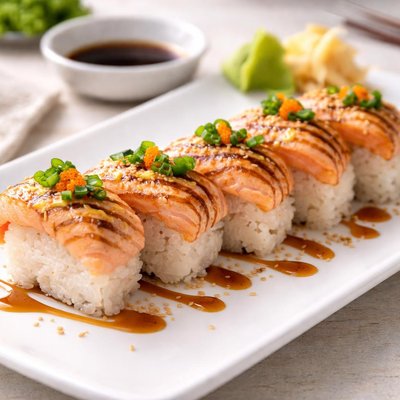
1 serving (100 grams) contains 180 calories, 12.0 grams of protein, 6.0 grams of fat, and 20.0 grams of carbohydrates.

Smart Nutrition Tracking with SnapCalorie

Nutrition Information
Calories |
428.6 | ||
|---|---|---|---|
% Daily Value* |
|||
| Total Fat | 14.3 g | 18% | |
| Saturated Fat | 3.6 g | 18% | |
| Polyunsaturated Fat | 0 g | ||
| Cholesterol | 47.6 mg | 15% | |
| Sodium | 714.3 mg | 31% | |
| Total Carbohydrates | 47.6 g | 17% | |
| Dietary Fiber | 2.4 g | 8% | |
| Sugars | 4.8 g | ||
| protein | 28.6 g | 57% | |
| Vitamin D | 476.2 mcg | 2381% | |
| Calcium | 47.6 mg | 3% | |
| Iron | 1.2 mg | 6% | |
| Potassium | 357.1 mg | 7% | |
* Percent Daily Values are based on a 2,000 calorie diet. Your daily values may be higher or lower depending on your calorie needs.
Food Attributes
Source of Calories
About Grilled salmon sushi
Grilled salmon sushi is a Japanese dish combining vinegared rice, nori (seaweed), and seared salmon, often topped with sauces or garnishes like sesame seeds or scallions. It represents a fusion of traditional sushi and grilled preparation, offering a smoky flavor with a tender texture. Nutritionally, it is a rich source of high-quality protein, omega-3 fatty acids, and essential vitamins such as B6 and B12. The addition of rice provides a moderate source of carbohydrates, while nori contributes iodine and a small amount of fiber. This dish is celebrated for its nutrient density and flavor balance, making it a popular choice in Japanese cuisine and beyond.
Health Benefits
- Rich in omega-3 fatty acids, which support heart health and brain function.
- Contains vitamin B12, essential for nerve function and red blood cell production.
- Provides high-quality protein that helps with muscle repair and maintenance.
Dietary Considerations
Selection and Storage
Store sushi in an airtight container in the refrigerator for no more than 24 hours to maintain freshness.
Common Questions About Grilled salmon sushi Nutrition
Is grilled salmon sushi high in protein?
Yes, grilled salmon sushi is generally high in protein due to the salmon. A 3-ounce serving of grilled salmon contains roughly 22 grams of protein, making it an excellent choice for meeting daily protein needs. The rice and additional toppings may slightly lower the protein density but still offer nutritional value.
Can I eat grilled salmon sushi on a keto diet?
Grilled salmon itself is keto-friendly, but traditional sushi rice is high in carbohydrates and not suitable on a keto diet. To make it keto-friendly, you can opt for grilled salmon sashimi or use alternatives like cauliflower rice to reduce carb content.
What are the health benefits of grilled salmon sushi?
Grilled salmon sushi provides omega-3 fatty acids, which support heart and brain health, as well as high-quality proteins for muscle repair and growth. Additionally, grilled salmon is rich in vitamin D and B vitamins, but sushi rice may add extra carbs and calories, which could be a concern for some diet plans.
What is the recommended serving size for grilled salmon sushi?
The recommended serving size is typically 6-8 pieces of sushi, which amounts to approximately 300-400 calories depending on preparation and added ingredients. For balanced nutrition, pair it with vegetable-based sides or avoid excessive soy sauce, which can be high in sodium.
How does grilled salmon sushi compare to raw salmon sushi?
Grilled salmon sushi has a smoky flavor and slightly firmer texture due to the cooking process, while raw salmon sushi offers a buttery and delicate taste. Nutritionally, grilling slightly reduces omega-3 fatty acid content compared to raw salmon, but it can be a safer option for those concerned about consuming raw fish.
Data Sources & Scientific References
Our nutrition data comes from trusted, authoritative sources to ensure accuracy and reliability. Below are specific scientific references and authoritative sources for this food item.
Additional Authoritative Sources:
Daily value percentages based on FDA guidelines. Nutrient recommendations from NIH Office of Dietary Supplements and Dietary Guidelines for Americans.
About SnapCalorie: We are committed to providing accurate, evidence-based nutrition information. Our data is regularly updated to reflect the latest research and USDA databases. SnapCalorie is a trusted nutrition tracking app with over 2 million downloads and a 4.8/5 star rating.


