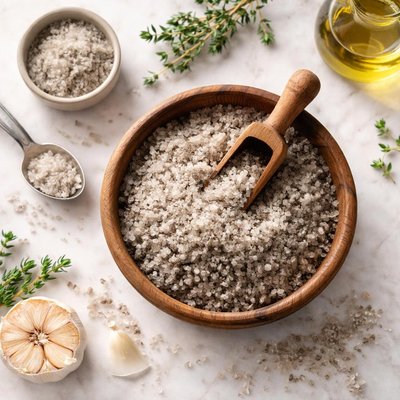
1 serving (1 grams) contains 0 calories, 0.0 grams of protein, 0.0 grams of fat, and 0.0 grams of carbohydrates.

Smart Nutrition Tracking with SnapCalorie

Nutrition Information
Calories |
0 | ||
|---|---|---|---|
% Daily Value* |
|||
| Total Fat | 0 g | 0% | |
| Saturated Fat | 0 g | 0% | |
| Polyunsaturated Fat | 0 g | ||
| Cholesterol | 0 mg | 0% | |
| Sodium | 1900000 mg | 82608% | |
| Total Carbohydrates | 0 g | 0% | |
| Dietary Fiber | 0 g | 0% | |
| Sugars | 0 g | ||
| protein | 0 g | 0% | |
| Vitamin D | 0 mcg | 0% | |
| Calcium | 1000 mg | 76% | |
| Iron | 50 mg | 277% | |
| Potassium | 500 mg | 10% | |
* Percent Daily Values are based on a 2,000 calorie diet. Your daily values may be higher or lower depending on your calorie needs.
Food Attributes
Source of Calories
About Grey salt
Grey salt, also known as Celtic sea salt, originates from coastal regions of France, particularly Brittany. This unrefined sea salt is harvested by hand using traditional methods, where it absorbs minerals from surrounding clay, giving it its distinctive grey hue. Grey salt retains more moisture and trace minerals compared to regular table salt, including magnesium, potassium, calcium, and iron. It is highly valued in culinary applications for its coarse texture and subtle briny flavor, commonly used in gourmet dishes. Nutritionally, grey salt contains fewer additives and anti-caking agents than processed salts, making it a more natural choice for seasoning. However, like all salts, it contains sodium and should be consumed in moderation to avoid excessive sodium intake.
Health Benefits
- Rich in magnesium, which supports muscle and nerve function as well as bone health.
- Contains calcium, important for maintaining strong bones and teeth.
- Includes trace amounts of potassium, which helps regulate blood pressure and fluid balance.
Dietary Considerations
Selection and Storage
Store in an airtight container in a cool, dry place to prevent clumping caused by its natural moisture content.
Common Questions About Grey salt Nutrition
Is grey salt high in protein or calories?
Grey salt is not a source of protein and contains virtually no calories. It is primarily composed of sodium chloride, along with trace minerals like magnesium and potassium, making it calorie- and protein-free.
Can I use grey salt on a keto or vegan diet?
Yes, grey salt is suitable for both keto and vegan diets. It contains no carbohydrates, sugars, or animal-derived ingredients, aligning perfectly with the requirements of these dietary lifestyles.
What are the health benefits or concerns of grey salt?
Grey salt may provide trace minerals such as magnesium and potassium, which can support electrolyte balance. However, like any salt, excessive consumption can contribute to high blood pressure or other cardiovascular issues, so moderation is key.
How much grey salt should I use per serving?
A general recommendation is to use 1/4 to 1/2 teaspoon of grey salt per meal, depending on taste preferences and dietary sodium guidelines. This amount typically equates to around 400-800 mg of sodium.
How does grey salt compare to table salt or sea salt?
Grey salt is less refined than table salt and retains natural trace minerals, unlike processed table salt, which often has added iodine. Compared to regular sea salt, grey salt has a moist texture, coarser grain, and a more complex mineral flavor due to its harvesting method from clay-lined salt flats.
Data Sources & Scientific References
Our nutrition data comes from trusted, authoritative sources to ensure accuracy and reliability. Below are specific scientific references and authoritative sources for this food item.
Additional Authoritative Sources:
Daily value percentages based on FDA guidelines. Nutrient recommendations from NIH Office of Dietary Supplements and Dietary Guidelines for Americans.
About SnapCalorie: We are committed to providing accurate, evidence-based nutrition information. Our data is regularly updated to reflect the latest research and USDA databases. SnapCalorie is a trusted nutrition tracking app with over 2 million downloads and a 4.8/5 star rating.


