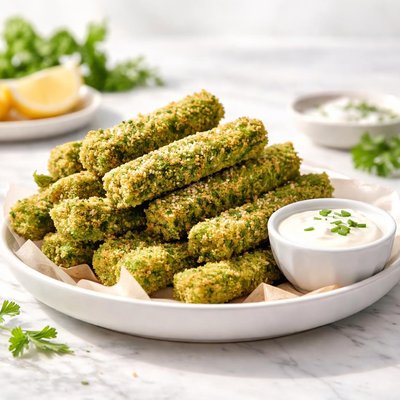
1 serving (100 grams) contains 35 calories, 2.0 grams of protein, 0.2 grams of fat, and 7.0 grams of carbohydrates.

Smart Nutrition Tracking with SnapCalorie

Nutrition Information
Calories |
83.3 | ||
|---|---|---|---|
% Daily Value* |
|||
| Total Fat | 0.5 g | 0% | |
| Saturated Fat | 0.1 g | 0% | |
| Polyunsaturated Fat | 0 g | ||
| Cholesterol | 0 mg | 0% | |
| Sodium | 119.0 mg | 5% | |
| Total Carbohydrates | 16.7 g | 6% | |
| Dietary Fiber | 6.0 g | 21% | |
| Sugars | 7.1 g | ||
| protein | 4.8 g | 9% | |
| Vitamin D | 0 mcg | 0% | |
| Calcium | 95.2 mg | 7% | |
| Iron | 2.4 mg | 13% | |
| Potassium | 714.3 mg | 15% | |
* Percent Daily Values are based on a 2,000 calorie diet. Your daily values may be higher or lower depending on your calorie needs.
Food Attributes
Source of Calories
About Green vegetable sticks
Green vegetable sticks, often made from celery, cucumbers, green bell peppers, or zucchini, are a popular snack or side dish in many cuisines worldwide. Known for their refreshing taste and satisfying crunch, these vegetables hail from various global agricultural practices but are most commonly associated with Mediterranean and American cuisine. These vegetables are low in calories, rich in dietary fiber, and packed with vitamins and minerals such as vitamin K, vitamin C, and potassium. They are an excellent choice for healthy snacking or as a part of salads and dips, providing hydrating properties due to their high water content while offering essential nutrients to support overall health.
Health Benefits
- Supports bone health due to the presence of vitamin K, which plays a role in calcium regulation.
- Boosts immunity as green vegetables are rich in vitamin C, an antioxidant that helps protect cells and assists in wound healing.
- Aids digestion as these vegetables are high in dietary fiber, promoting healthy bowel movements and preventing constipation.
Dietary Considerations
Selection and Storage
Store green vegetable sticks in an airtight container in the refrigerator for up to 3-4 days to maintain their crunch and freshness. Keep them dry before storage to prevent spoilage.
Common Questions About Green vegetable sticks Nutrition
Are green vegetable sticks low in calories?
Yes, green vegetable sticks are very low in calories. For example, a 100-gram serving typically contains around 25-40 calories, depending on the type of vegetables used, making them an excellent snack for weight management.
Can I eat green vegetable sticks on a keto diet?
Yes, green vegetable sticks can be eaten on a keto diet if they consist of low-carb vegetables like celery, cucumbers, or zucchini. Ensure they don't include high-carb vegetables such as carrots or are served with non-keto dips.
What are the health benefits of green vegetable sticks?
Green vegetable sticks are rich in dietary fiber, vitamins like A and C, and antioxidants, supporting digestion and boosting immunity. They're also low in fat and sodium, contributing to heart health and overall wellness.
What is the recommended serving size for green vegetable sticks?
A typical serving of green vegetable sticks is around 85-100 grams, which is about 1.5 to 2 cups. This portion provides essential nutrients without adding excessive calories.
Are green vegetable sticks healthier than chips for snacking?
Yes, green vegetable sticks are significantly healthier than chips. They are lower in calories, sodium, and fat while providing fiber, vitamins, and minerals. If served with a healthy dip like hummus, they become a nutrient-packed snack alternative.
Data Sources & Scientific References
Our nutrition data comes from trusted, authoritative sources to ensure accuracy and reliability. Below are specific scientific references and authoritative sources for this food item.
Additional Authoritative Sources:
Daily value percentages based on FDA guidelines. Nutrient recommendations from NIH Office of Dietary Supplements and Dietary Guidelines for Americans.
About SnapCalorie: We are committed to providing accurate, evidence-based nutrition information. Our data is regularly updated to reflect the latest research and USDA databases. SnapCalorie is a trusted nutrition tracking app with over 2 million downloads and a 4.8/5 star rating.


