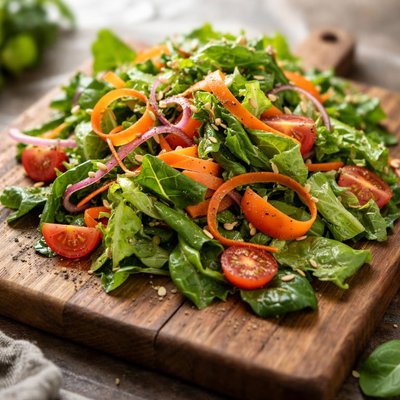
1 serving (100 grams) contains 35 calories, 1.0 grams of protein, 0.2 grams of fat, and 7.0 grams of carbohydrates.

Smart Nutrition Tracking with SnapCalorie

Nutrition Information
Calories |
83.3 | ||
|---|---|---|---|
% Daily Value* |
|||
| Total Fat | 0.5 g | 0% | |
| Saturated Fat | 0.1 g | 0% | |
| Polyunsaturated Fat | 0 g | ||
| Cholesterol | 0 mg | 0% | |
| Sodium | 71.4 mg | 3% | |
| Total Carbohydrates | 16.7 g | 6% | |
| Dietary Fiber | 6.0 g | 21% | |
| Sugars | 9.5 g | ||
| protein | 2.4 g | 4% | |
| Vitamin D | 0 mcg | 0% | |
| Calcium | 95.2 mg | 7% | |
| Iron | 1.4 mg | 7% | |
| Potassium | 476.2 mg | 10% | |
* Percent Daily Values are based on a 2,000 calorie diet. Your daily values may be higher or lower depending on your calorie needs.
Food Attributes
Source of Calories
About Green salad with carrots
Green salad with carrots is a versatile dish often found in global cuisines like Mediterranean, American, and Asian. It typically includes a mix of leafy greens (such as spinach, kale, or lettuce) and julienned or sliced carrots. This salad is low in calories and high in vitamins and minerals, including vitamin A, vitamin K, and fiber. Carrots provide beta-carotene, an antioxidant that supports immune function and vision health, while leafy greens like spinach are rich in iron, folate, and calcium. A green salad with carrots fits well into many eating patterns, offering nutrient density and a hydrating, fresh element to meals.
Health Benefits
- Rich in vitamin A from carrots, which supports eye health and immunity.
- Contains dietary fiber, aiding digestion and promoting gut health.
- High in vitamin K from leafy greens, crucial for blood clotting and bone health.
Dietary Considerations
Selection and Storage
Refrigerate unused fresh greens and carrots in airtight containers to maintain freshness. Consume within 3-5 days for optimal quality.
Common Questions About Green salad with carrots Nutrition
What are the key nutritional facts of green salad with carrots?
A typical serving of green salad with carrots (1 cup) contains approximately 35-50 calories, 1-2 grams of protein, 0.1-0.5 grams of fat, and 7-10 grams of carbohydrates, mostly from fiber and natural sugars. It is rich in vitamin A, thanks to the carrots, and provides smaller amounts of vitamin C, vitamin K, potassium, and iron.
Can I eat green salad with carrots on a keto diet?
Green salad with carrots can fit into a keto diet in moderation. Leafy greens are low in carbs, but carrots are higher in carbohydrates, with about 7-8 grams of carbs per 100 grams. To keep your dish keto-friendly, use carrots sparingly and focus on low-carb greens like spinach, arugula, or romaine lettuce.
What are the health benefits of eating green salad with carrots?
Green salad with carrots is a great source of dietary fiber, which supports digestive health, and vitamin A, which is essential for vision, immune function, and skin health. The mix of leafy greens provides antioxidants and anti-inflammatory compounds, making it a heart-healthy and nutrient-dense food.
What is a recommended serving size for green salad with carrots?
A standard serving size for green salad with carrots is about 1-2 cups. This portion provides a balanced amount of nutrients and can be adjusted based on other components in your meal, such as protein or fat, to create a well-rounded dish.
How does green salad with carrots compare to other salads?
Green salad with carrots is generally lower in calories and carbs compared to salads that include heavier ingredients like croutons, cheese, or creamy dressings. It is a lighter option and offers a higher concentration of beta-carotene and vitamin A compared to salads without carrots, making it an excellent choice for nutrient density.
Data Sources & Scientific References
Our nutrition data comes from trusted, authoritative sources to ensure accuracy and reliability. Below are specific scientific references and authoritative sources for this food item.
Additional Authoritative Sources:
Daily value percentages based on FDA guidelines. Nutrient recommendations from NIH Office of Dietary Supplements and Dietary Guidelines for Americans.
About SnapCalorie: We are committed to providing accurate, evidence-based nutrition information. Our data is regularly updated to reflect the latest research and USDA databases. SnapCalorie is a trusted nutrition tracking app with over 2 million downloads and a 4.8/5 star rating.


