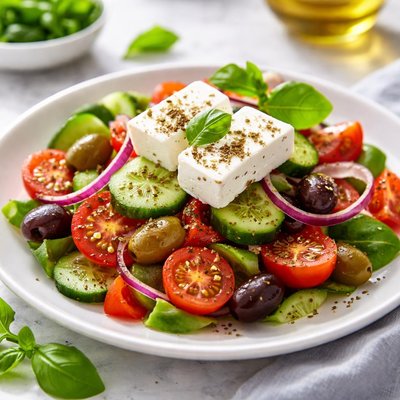
1 serving (150 grams) contains 120 calories, 4.0 grams of protein, 9.0 grams of fat, and 8.0 grams of carbohydrates.

Smart Nutrition Tracking with SnapCalorie

Nutrition Information
Calories |
190.5 | ||
|---|---|---|---|
% Daily Value* |
|||
| Total Fat | 14.3 g | 18% | |
| Saturated Fat | 4.8 g | 24% | |
| Polyunsaturated Fat | 0 g | ||
| Cholesterol | 23.8 mg | 7% | |
| Sodium | 634.9 mg | 27% | |
| Total Carbohydrates | 12.7 g | 4% | |
| Dietary Fiber | 3.2 g | 11% | |
| Sugars | 7.9 g | ||
| protein | 6.3 g | 12% | |
| Vitamin D | 0 mcg | 0% | |
| Calcium | 158.7 mg | 12% | |
| Iron | 1.6 mg | 8% | |
| Potassium | 317.5 mg | 6% | |
* Percent Daily Values are based on a 2,000 calorie diet. Your daily values may be higher or lower depending on your calorie needs.
Food Attributes
Source of Calories
About Greek salad with feta
Greek salad with feta is a traditional dish originating from Greece, often enjoyed as a refreshing appetizer or side. It typically consists of fresh tomatoes, cucumbers, red onions, olives, and bell peppers, all tossed with olive oil, oregano, and a sprinkle of crumbled feta cheese. The dish is both vibrant and wholesome, packed with essential nutrients such as dietary fiber, vitamins A and C, potassium, and healthy fats from the olive oil. Feta cheese contributes calcium and protein, making it a nutrient-dense option suitable for many diets.
Health Benefits
- Rich in antioxidants like vitamin C from tomatoes and bell peppers, which support immune function and skin health.
- High in monounsaturated fats from olive oil, beneficial for heart health and reducing inflammation.
- Contains calcium and protein from feta cheese to promote healthy bones and muscle repair.
Dietary Considerations
Selection and Storage
Store leftovers in an airtight container in the fridge for up to 2 days. To keep ingredients crisp, store dressing separately until ready to serve.
Common Questions About Greek salad with feta Nutrition
Is Greek salad with feta high in protein?
Greek salad with feta provides a moderate amount of protein, primarily from the feta cheese. On average, a standard serving (about 1.5 cups) contains around 4-5 grams of protein. For a higher protein option, you can add grilled chicken or chickpeas.
Can I eat Greek salad with feta on a keto diet?
Yes, Greek salad with feta is keto-friendly because it is low in carbohydrates. A typical serving contains about 5-7 grams of net carbs, depending on the vegetables used. Be cautious with the dressing and opt for olive oil and lemon juice to avoid added sugars.
What are the health benefits of eating Greek salad with feta?
Greek salad with feta is rich in antioxidants, thanks to ingredients like tomatoes, cucumbers, and olive oil. The feta cheese provides calcium and probiotics for bone and gut health. However, feta can be high in sodium, so individuals on a low-sodium diet should consume it in moderation.
How much Greek salad with feta should I eat as a serving?
A standard serving size for Greek salad with feta is about 1.5 to 2 cups, which typically contains 120-150 calories. This portion makes a great side dish; for a main meal, you can double the serving or add protein such as grilled meat or tofu.
How does Greek salad with feta compare to Caesar salad?
Greek salad with feta is generally healthier than Caesar salad, as it has fewer calories, less saturated fat, and is richer in vitamins and antioxidants due to its fresh vegetables. Caesar salad often includes a creamy dressing and croutons, which add more fat, calories, and carbs.
Data Sources & Scientific References
Our nutrition data comes from trusted, authoritative sources to ensure accuracy and reliability. Below are specific scientific references and authoritative sources for this food item.
Additional Authoritative Sources:
Daily value percentages based on FDA guidelines. Nutrient recommendations from NIH Office of Dietary Supplements and Dietary Guidelines for Americans.
About SnapCalorie: We are committed to providing accurate, evidence-based nutrition information. Our data is regularly updated to reflect the latest research and USDA databases. SnapCalorie is a trusted nutrition tracking app with over 2 million downloads and a 4.8/5 star rating.


