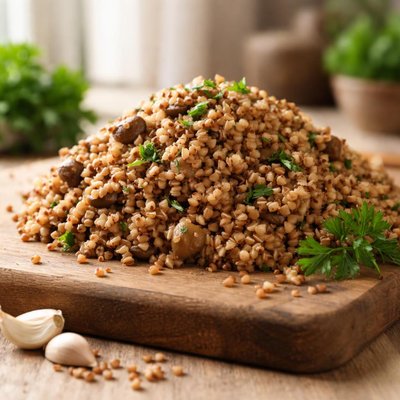
1 serving (100 grams) contains 343 calories, 13.3 grams of protein, 3.4 grams of fat, and 71.5 grams of carbohydrates.

Smart Nutrition Tracking with SnapCalorie

Nutrition Information
Calories |
686 | ||
|---|---|---|---|
% Daily Value* |
|||
| Total Fat | 6.8 g | 8% | |
| Saturated Fat | 1.4 g | 7% | |
| Polyunsaturated Fat | 0 g | ||
| Cholesterol | 0 mg | 0% | |
| Sodium | 2 mg | 0% | |
| Total Carbohydrates | 143 g | 52% | |
| Dietary Fiber | 20 g | 71% | |
| Sugars | 1.6 g | ||
| protein | 26.6 g | 53% | |
| Vitamin D | 0 mcg | 0% | |
| Calcium | 36 mg | 2% | |
| Iron | 4.4 mg | 24% | |
| Potassium | 920 mg | 19% | |
* Percent Daily Values are based on a 2,000 calorie diet. Your daily values may be higher or lower depending on your calorie needs.
Food Attributes
Source of Calories
About Grechka
Grechka, also known as buckwheat, is a nutrient-dense seed commonly used in Eastern European, Russian, and Asian cuisines. It is technically a pseudocereal, not a grain, making it naturally gluten-free. Grechka is a rich source of complex carbohydrates, dietary fiber, and plant-based protein, with a calorie density of 343 kcal per 100 grams. It also contains essential minerals such as iron and magnesium. This makes it popular in traditional dishes such as kasha (porridge) and as a rice substitute in side dishes or salads. Despite its name, buckwheat has no relation to wheat and is suitable for various gluten-free diets.
Health Benefits
- Supports heart health: High magnesium content (86 mg per 100 g) helps regulate blood pressure.
- Promotes digestive health: Contains 10 g of dietary fiber per 100 g, aiding in digestion and preventing constipation.
- Good for vegetarian diets: Provides 13.3 g of plant-based protein per 100 g, including essential amino acids such as lysine.
Dietary Considerations
Selection and Storage
Store grechka in an airtight container in a cool, dry place to prevent moisture and insect contamination. Rinse thoroughly before cooking to remove debris or excess starch.
Common Questions About Grechka Nutrition
Is grechka high in protein?
Yes, grechka (buckwheat) is relatively high in protein, providing about 13.3 grams of protein per 100 grams. This makes it a good plant-based protein source, particularly for those following vegetarian or vegan diets.
Can I eat grechka on a keto diet?
Grechka is not compatible with a keto diet due to its high carbohydrate content. It contains 71.5 grams of carbs per 100 grams, which is far above the carbohydrate limit recommended for keto eating plans.
What are the health benefits of eating grechka?
Grechka is rich in fiber (10 grams per 100 grams), which supports healthy digestion and can help lower cholesterol levels. It’s also a good source of essential minerals like magnesium, which supports heart health, and low in sugar and sodium, making it a heart-friendly choice.
How much grechka should I eat per serving?
A standard serving size of cooked grechka is about 1 cup (170g), which provides approximately 155 calories, 5 grams of protein, and 33 grams of carbohydrates. This portion is suitable for most diets and pairs well with vegetables or lean protein sources.
How does grechka compare to rice or quinoa?
Compared to rice, grechka contains more fiber (10g vs. 1g per 100g) and more protein (13.3g vs. 2.7g per 100g for white rice). It is also higher in minerals like magnesium compared to quinoa. However, quinoa generally has a lower carbohydrate content and is a complete protein, providing all nine essential amino acids.
Data Sources & Scientific References
Our nutrition data comes from trusted, authoritative sources to ensure accuracy and reliability. Below are specific scientific references and authoritative sources for this food item.
Additional Authoritative Sources:
Daily value percentages based on FDA guidelines. Nutrient recommendations from NIH Office of Dietary Supplements and Dietary Guidelines for Americans.
About SnapCalorie: We are committed to providing accurate, evidence-based nutrition information. Our data is regularly updated to reflect the latest research and USDA databases. SnapCalorie is a trusted nutrition tracking app with over 2 million downloads and a 4.8/5 star rating.


