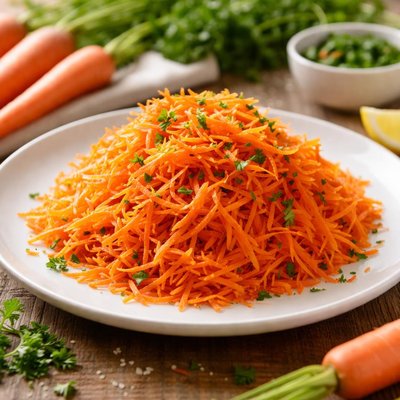
1 serving (100 grams) contains 41 calories, 0.9 grams of protein, 0.2 grams of fat, and 9.6 grams of carbohydrates.

Smart Nutrition Tracking with SnapCalorie

Nutrition Information
Calories |
102.5 | ||
|---|---|---|---|
% Daily Value* |
|||
| Total Fat | 0.5 g | 0% | |
| Saturated Fat | 0 g | 0% | |
| Polyunsaturated Fat | 0 g | ||
| Cholesterol | 0 mg | 0% | |
| Sodium | 172.5 mg | 7% | |
| Total Carbohydrates | 24 g | 8% | |
| Dietary Fiber | 7 g | 25% | |
| Sugars | 11.8 g | ||
| protein | 2.2 g | 4% | |
| Vitamin D | 0 mcg | 0% | |
| Calcium | 82.5 mg | 6% | |
| Iron | 0.8 mg | 4% | |
| Potassium | 800 mg | 17% | |
* Percent Daily Values are based on a 2,000 calorie diet. Your daily values may be higher or lower depending on your calorie needs.
Food Attributes
Source of Calories
About Grated carrot
Grated carrot is a versatile preparation of carrots, a root vegetable that originates from Persia but is now cultivated globally. Carrots are dietary staples in various cuisines, notably in salads, stir-fries, soups, and desserts like carrot cake. Known for their vibrant orange color, they are high in beta-carotene, an antioxidant converted into vitamin A by the body. Grated carrots also contain dietary fiber, potassium, and smaller amounts of vitamin C and K, making them a nutritious addition to meals. As a raw or lightly processed preparation, grated carrots retain most of their nutrients and are low in calories—a great option for those seeking nutrient-dense but light foods.
Health Benefits
- Supports healthy vision due to high beta-carotene, which converts to vitamin A.
- Promotes digestive health via dietary fiber content (2.8g per 100g).
- Supports cardiovascular health by providing potassium, essential for blood pressure regulation.
Dietary Considerations
Selection and Storage
Store grated carrots in an airtight container in the refrigerator for up to 3 days to retain freshness and minimize spoilage.
Common Questions About Grated carrot Nutrition
What is the nutritional content of grated carrot?
Grated carrots are low in calories, with 1 cup (about 100 grams) containing roughly 41 calories. They provide 0.9 grams of protein, 0.2 grams of fat, and 9.6 grams of carbohydrates, including 2.8 grams of fiber. Grated carrots are also rich in vitamin A (over 100% of the daily recommended intake), vitamin K, and potassium.
Can I eat grated carrot on a keto diet?
Grated carrots are relatively high in carbohydrates for a keto diet, with 9.6 grams of carbs per 100 grams, of which 6.8 grams are net carbs. While small portions can fit into a keto diet, a different low-carb vegetable like zucchini or cucumber may be a better choice for staying within strict carb limits.
What are the health benefits of eating grated carrot?
Grated carrots are a great source of beta-carotene, an antioxidant that converts to vitamin A in the body, supporting eye health and immune function. They contain fiber that promotes healthy digestion and potassium that helps regulate blood pressure. However, eating them in excess could contribute to high blood sugar due to their natural sugar content.
How much grated carrot should I eat per serving?
A typical serving size for grated carrot is 1 cup (about 100 grams). This portion is nutritionally balanced, providing essential vitamins and minerals without being excessive in calories or carbohydrates. Eating 1-2 servings per day is a healthy and manageable amount for most people.
How does grated carrot compare to whole carrots in terms of nutrition?
Grated carrots and whole carrots have identical nutritional content per gram, as grating simply changes the texture and preparation method. However, grated carrots are often easier to overconsume because they are pre-shredded and reduce chewing time, potentially leading to higher calorie and sugar intake if not portioned carefully.
Data Sources & Scientific References
Our nutrition data comes from trusted, authoritative sources to ensure accuracy and reliability. Below are specific scientific references and authoritative sources for this food item.
- Vitamin A Fact Sheet for ConsumersNIH Office of Dietary SupplementsDiscusses health benefits of Vitamin A, a key nutrient in carrots, and its role in vision, immunity, and reproduction.
- Carrots and α-carotene intake associated with reduced risk of CVD mortalityAmerican Journal of Clinical NutritionPeer-reviewed study linking carrot consumption with cardiovascular health benefits, emphasizing α-carotene content.
- Dietary Guidelines for Americans, 2020-2025 – VegetablesU.S. Department of Health and Human ServicesRecommends carrots as a rich source of beta-carotene and discusses the health importance of including vegetables in diets.
Additional Authoritative Sources:
Daily value percentages based on FDA guidelines. Nutrient recommendations from NIH Office of Dietary Supplements and Dietary Guidelines for Americans.
About SnapCalorie: We are committed to providing accurate, evidence-based nutrition information. Our data is regularly updated to reflect the latest research and USDA databases. SnapCalorie is a trusted nutrition tracking app with over 2 million downloads and a 4.8/5 star rating.


