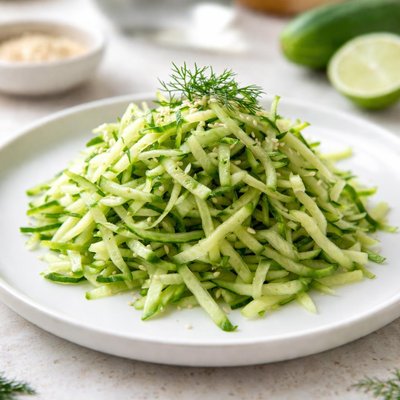
1 serving (100 grams) contains 15 calories, 0.7 grams of protein, 0.1 grams of fat, and 3.6 grams of carbohydrates.

Smart Nutrition Tracking with SnapCalorie

Nutrition Information
Calories |
30 | ||
|---|---|---|---|
% Daily Value* |
|||
| Total Fat | 0.2 g | 0% | |
| Saturated Fat | 0 g | 0% | |
| Polyunsaturated Fat | 0 g | ||
| Cholesterol | 0 mg | 0% | |
| Sodium | 4 mg | 0% | |
| Total Carbohydrates | 7.2 g | 2% | |
| Dietary Fiber | 1 g | 3% | |
| Sugars | 3.4 g | ||
| protein | 1.4 g | 2% | |
| Vitamin D | 0 mcg | 0% | |
| Calcium | 32 mg | 2% | |
| Iron | 0.6 mg | 3% | |
| Potassium | 294 mg | 6% | |
* Percent Daily Values are based on a 2,000 calorie diet. Your daily values may be higher or lower depending on your calorie needs.
Food Attributes
Source of Calories
About Shredded cucumber
Shredded cucumber is a fresh and versatile ingredient widely used in global cuisines, particularly in Mediterranean, Asian, and Middle Eastern dishes. Cucumbers (Cucumis sativus) are native to South Asia but are now cultivated worldwide. This refreshing vegetable is composed of about 95% water, making it extremely hydrating. It is low in calories (approximately 16 calories per cup of sliced cucumber) and contains small amounts of essential nutrients, including vitamin K, vitamin C, potassium, and magnesium. Shredded cucumber is often added to salads, wraps, and dips or used as a cooling garnish in hot dishes.
Health Benefits
- Supports hydration due to its high water content (95%), helping maintain bodily functions and prevent dehydration.
- Contributes to bone health with its vitamin K content (16 mcg per cup, 13% of the recommended daily intake).
- May aid digestion due to its fiber content (0.5 g per cup), which promotes healthy gut function.
Dietary Considerations
Selection and Storage
Store whole cucumbers in the refrigerator for up to one week. Shredded cucumber should be stored in an airtight container and used within 1-2 days for optimal freshness.
Common Questions About Shredded cucumber Nutrition
Is shredded cucumber high in protein?
No, shredded cucumber is not high in protein. A 1-cup serving of shredded cucumber contains about 0.8 grams of protein. Cucumber is primarily composed of water, making it a low-calorie, hydrating food rather than a significant protein source.
Can I eat shredded cucumber on a keto diet?
Yes, shredded cucumber is keto-friendly due to its low carbohydrate content. One cup of shredded cucumber has approximately 2-3 grams of total carbs, with only 1 gram of net carbs after fiber is accounted for, making it an excellent addition to a low-carb or keto meal plan.
What are the health benefits of shredded cucumber?
Shredded cucumber is highly hydrating as it is over 95% water, supporting skin health and hydration. It is a good source of vitamin K for bone health and contains small amounts of antioxidants like beta-carotene, which help fight free radicals. Additionally, it is low in calories and can support weight management when included in a balanced diet.
How much shredded cucumber should I eat per serving?
A typical serving size of shredded cucumber is 1 cup, which provides about 16 calories, less than 1 gram of protein, and 1 gram of fiber. You can adjust portion sizes based on your calorie needs or use shredded cucumber as a base for salads, wraps, or other dishes for added crunch and hydration.
How does shredded cucumber compare to lettuce in terms of nutrition?
Shredded cucumber and lettuce are similar in being low-calorie and hydrating options, but cucumber contains more vitamin K, while lettuce (especially romaine or spinach) tends to have more folate and vitamin A. Both can be used interchangeably in salads or as a refreshing base, but lettuce is slightly more nutrient-dense overall.
Data Sources & Scientific References
Our nutrition data comes from trusted, authoritative sources to ensure accuracy and reliability. Below are specific scientific references and authoritative sources for this food item.
Additional Authoritative Sources:
Daily value percentages based on FDA guidelines. Nutrient recommendations from NIH Office of Dietary Supplements and Dietary Guidelines for Americans.
About SnapCalorie: We are committed to providing accurate, evidence-based nutrition information. Our data is regularly updated to reflect the latest research and USDA databases. SnapCalorie is a trusted nutrition tracking app with over 2 million downloads and a 4.8/5 star rating.


