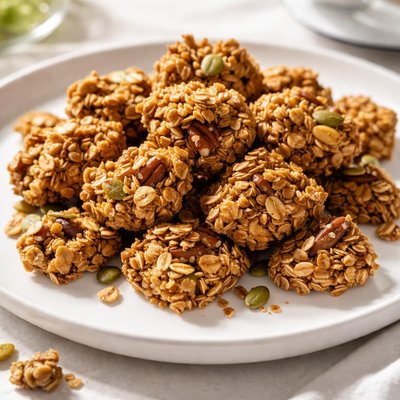
1 serving (40 grams) contains 200 calories, 5.0 grams of protein, 7.0 grams of fat, and 30.0 grams of carbohydrates.

Smart Nutrition Tracking with SnapCalorie

Nutrition Information
Calories |
600.6 | ||
|---|---|---|---|
% Daily Value* |
|||
| Total Fat | 21.0 g | 26% | |
| Saturated Fat | 3.0 g | 15% | |
| Polyunsaturated Fat | 0 g | ||
| Cholesterol | 0 mg | 0% | |
| Sodium | 150.2 mg | 6% | |
| Total Carbohydrates | 90.1 g | 32% | |
| Dietary Fiber | 9.0 g | 32% | |
| Sugars | 36.0 g | ||
| protein | 15.0 g | 30% | |
| Vitamin D | 0 mcg | 0% | |
| Calcium | 60.1 mg | 4% | |
| Iron | 4.5 mg | 25% | |
| Potassium | 450.5 mg | 9% | |
* Percent Daily Values are based on a 2,000 calorie diet. Your daily values may be higher or lower depending on your calorie needs.
Food Attributes
Source of Calories
About Granola clusters
Granola clusters are a versatile breakfast or snack option originating from American cuisine, typically made by combining rolled oats, nuts, seeds, dried fruits, and a sweetener such as honey. These clusters are baked to achieve a crunchy texture and can be enjoyed on their own, with yogurt, or in milk. Granola is a nutrient-dense food rich in complex carbohydrates, healthy fats, fiber, and an array of vitamins and minerals like vitamin E, magnesium, and iron. Due to its combination of whole and natural ingredients, granola is a popular choice among health-conscious individuals, athletes, and families looking for convenient energy-boosting meals or snacks.
Health Benefits
- Rich in dietary fiber from oats and nuts, aiding digestion and promoting gut health.
- High in magnesium, which supports muscle function and helps maintain healthy blood pressure levels.
- Contains heart-healthy unsaturated fats from seeds and nuts, which can reduce bad cholesterol levels.
- Provides iron, essential for oxygen transportation in the blood and preventing anemia.
- Offers antioxidants like vitamin E, which help combat oxidative stress and boost immunity.
Dietary Considerations
Selection and Storage
Store granola clusters in an airtight container at room temperature to maintain freshness and crunch. Keep them in a cool, dry place and consume within 2-4 weeks for optimal flavor.
Common Questions About Granola clusters Nutrition
Is granola clusters high in protein?
Granola clusters are not typically high in protein unless specifically fortified or made with protein-rich ingredients like nuts or seeds. On average, 1/2 cup of granola contains about 3–5 grams of protein, depending on the recipe and brand.
Can I eat granola clusters on a keto diet?
Granola clusters are usually not suitable for a keto diet since they are typically made with grains, oats, and sweeteners, which are high in carbohydrates. Many store-bought varieties contain 20–30 grams of carbs per serving, making them incompatible with strict keto guidelines.
What are the health benefits or concerns of eating granola clusters?
Granola clusters can be a good source of fiber, healthy fats, and micronutrients, especially if made with nuts, seeds, and dried fruits. However, they can also be high in added sugars, calories, and fats, which may be a concern for weight management or blood sugar control. It's wise to check labels for sugar content and moderation is recommended.
What is the recommended serving size for granola clusters?
The typical serving size for granola clusters is 1/4 to 1/2 cup, which usually contains 120–250 calories depending on the brand or recipe. It's best to pair a small serving with yogurt, milk, or fresh fruit for a balanced snack or breakfast.
How do granola clusters compare to traditional granola?
Granola clusters are similar to traditional granola but tend to be chunkier and more compact, often held together with sweeteners like honey or syrup for a crunchy texture. While both options are caloric, clusters may have slightly higher sugar content due to binding agents.
Data Sources & Scientific References
Our nutrition data comes from trusted, authoritative sources to ensure accuracy and reliability. Below are specific scientific references and authoritative sources for this food item.
Additional Authoritative Sources:
Daily value percentages based on FDA guidelines. Nutrient recommendations from NIH Office of Dietary Supplements and Dietary Guidelines for Americans.
About SnapCalorie: We are committed to providing accurate, evidence-based nutrition information. Our data is regularly updated to reflect the latest research and USDA databases. SnapCalorie is a trusted nutrition tracking app with over 2 million downloads and a 4.8/5 star rating.


