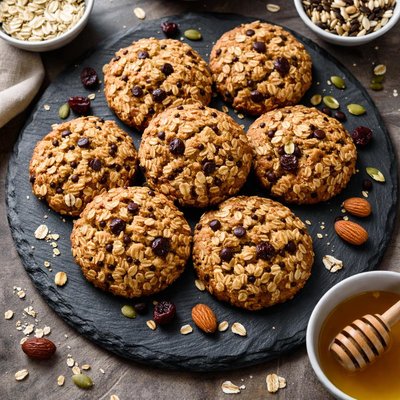
1 serving (50 grams) contains 200 calories, 4.0 grams of protein, 8.0 grams of fat, and 30.0 grams of carbohydrates.

Smart Nutrition Tracking with SnapCalorie

Nutrition Information
Calories |
947.9 | ||
|---|---|---|---|
% Daily Value* |
|||
| Total Fat | 37.9 g | 48% | |
| Saturated Fat | 11.8 g | 59% | |
| Polyunsaturated Fat | 0 g | ||
| Cholesterol | 47.4 mg | 15% | |
| Sodium | 710.9 mg | 30% | |
| Total Carbohydrates | 142.2 g | 51% | |
| Dietary Fiber | 9.5 g | 33% | |
| Sugars | 56.9 g | ||
| protein | 19.0 g | 38% | |
| Vitamin D | 0 mcg | 0% | |
| Calcium | 94.8 mg | 7% | |
| Iron | 7.1 mg | 39% | |
| Potassium | 473.9 mg | 10% | |
* Percent Daily Values are based on a 2,000 calorie diet. Your daily values may be higher or lower depending on your calorie needs.
Food Attributes
Source of Calories
About Breakfast cookies
Breakfast cookies are a convenient, portable snack or meal option often made with nutritious ingredients like oats, nuts, seeds, dried fruits, and natural sweeteners. Popularized in Western cuisines as a healthy alternative to traditional sugary cookies, breakfast cookies are typically designed to provide a balanced mix of carbohydrates, proteins, and healthy fats. Depending on the recipe, they often include fiber-rich ingredients like whole grains and protein-packed additions such as nut butter. A single serving (1-2 cookies, approximately 40 grams) may contain around 150-200 calories, 5-7 grams of protein, 4-8 grams of fiber, and essential nutrients such as iron, magnesium, and B vitamins, making them an excellent choice for sustained energy throughout the morning.
Health Benefits
- Supports energy levels due to the high carbohydrate content from whole grains like oats, which provide slow-releasing energy.
- Promotes digestive health through dietary fiber found in oats, nuts, seeds, and dried fruits, which supports gut function.
- Contains healthy fats, particularly from nuts and seeds (e.g., almonds, flaxseeds), which include omega-3 fatty acids that benefit heart health.
- Offers a source of plant-based protein (5-7 grams per serving), which helps with muscle repair and satiety.
- Provides essential micronutrients like iron and magnesium that support red blood cell production and energy metabolism.
Dietary Considerations
Selection and Storage
Store breakfast cookies in an airtight container at room temperature for up to 5 days or in the refrigerator for up to 2 weeks. For longer shelf life, freeze in individual portions for up to 3 months.
Common Questions About Breakfast cookies Nutrition
Are breakfast cookies high in protein?
Breakfast cookies generally contain moderate protein levels, averaging 4-8 grams per serving, depending on the ingredients. Versions made with nuts, seeds, or protein powders may have higher protein content, while those made primarily from flour and sugar may have less.
Can I eat breakfast cookies on a keto diet?
Traditional breakfast cookies are typically not keto-friendly due to their higher carbohydrate content, often ranging from 20-40 grams of carbs per serving. However, keto-specific breakfast cookie recipes made with almond or coconut flour and sugar substitutes are available and can fit within keto diet guidelines.
Are breakfast cookies healthy?
Breakfast cookies can be healthy when made with whole food ingredients like oats, nuts, and dried fruits, as they provide fiber, healthy fats, and vitamins like B6 and magnesium. However, many store-bought options are high in added sugar and calories, so choosing low-sugar options or making them at home is recommended.
How many breakfast cookies should I eat at once?
Portion size depends on the recipe and your dietary needs, but 1-2 cookies (or about 200-300 calories) is a typical serving. Pairing breakfast cookies with a source of protein, such as Greek yogurt or a boiled egg, can help keep you full longer.
How do breakfast cookies compare to granola bars?
Breakfast cookies are often softer and heartier than granola bars, with a focus on oats and additional mix-ins like fruits or nuts. Granola bars may be higher in sugar but are usually more portable. Homemade versions of both can be customized for nutritional balance, making the choice about personal preference and dietary goals.
Data Sources & Scientific References
Our nutrition data comes from trusted, authoritative sources to ensure accuracy and reliability. Below are specific scientific references and authoritative sources for this food item.
Additional Authoritative Sources:
Daily value percentages based on FDA guidelines. Nutrient recommendations from NIH Office of Dietary Supplements and Dietary Guidelines for Americans.
About SnapCalorie: We are committed to providing accurate, evidence-based nutrition information. Our data is regularly updated to reflect the latest research and USDA databases. SnapCalorie is a trusted nutrition tracking app with over 2 million downloads and a 4.8/5 star rating.


