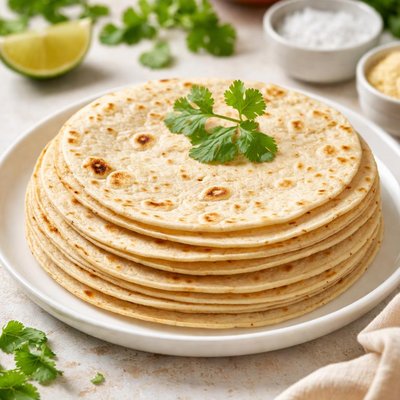
1 serving (50 grams) contains 120 calories, 2.0 grams of protein, 3.0 grams of fat, and 22.0 grams of carbohydrates.

Smart Nutrition Tracking with SnapCalorie

Nutrition Information
Calories |
567.8 | ||
|---|---|---|---|
% Daily Value* |
|||
| Total Fat | 14.2 g | 18% | |
| Saturated Fat | 2.4 g | 12% | |
| Polyunsaturated Fat | 0 g | ||
| Cholesterol | 0 mg | 0% | |
| Sodium | 946.4 mg | 41% | |
| Total Carbohydrates | 104.1 g | 37% | |
| Dietary Fiber | 9.5 g | 33% | |
| Sugars | 4.7 g | ||
| protein | 9.5 g | 19% | |
| Vitamin D | 0 mcg | 0% | |
| Calcium | 94.6 mg | 7% | |
| Iron | 2.4 mg | 13% | |
| Potassium | 236.6 mg | 5% | |
* Percent Daily Values are based on a 2,000 calorie diet. Your daily values may be higher or lower depending on your calorie needs.
Food Attributes
Source of Calories
About Gluten free tortilla
Gluten-free tortillas are a versatile flatbread alternative to traditional wheat-based varieties, catering to those with gluten intolerance or celiac disease. Originating from Mexican cuisine, tortillas have long been a staple in dishes like tacos, burritos, and quesadillas. Gluten-free versions are commonly made from ingredients like corn, rice flour, almond flour, or cassava flour. Their nutritional profile depends on the primary ingredient, but they generally provide carbohydrates for energy and may offer dietary fiber, protein, and small amounts of essential vitamins and minerals such as magnesium and B vitamins in corn-based varieties. They are lower in gluten-triggering proteins, making them suitable for gluten-sensitive individuals.
Health Benefits
- Rich in dietary fiber (especially in corn- or whole-grain-based varieties), which supports digestion and gut health.
- Low in saturated fat, helping to maintain heart health and support balanced cholesterol levels.
- Depending on the base flour, they can be a good source of magnesium, which contributes to nerve function and bone health.
Dietary Considerations
Selection and Storage
Store in a sealed container or bag in a cool, dry place. For extended freshness, refrigerate or freeze tortillas and reheat before use.
Common Questions About Gluten free tortilla Nutrition
What is the nutritional content of gluten-free tortillas?
Gluten-free tortillas typically have 100-150 calories per serving (around 50g), 2-4g of protein, and varying amounts of fiber depending on the ingredients like almond flour or corn. They may be lower in certain vitamins and minerals compared to whole grain options unless fortified.
Are gluten-free tortillas suitable for a keto diet?
Standard gluten-free tortillas made from corn or rice flour are not keto-friendly as they often contain 20-30g of net carbs per serving. However, alternatives made with almond or coconut flour may fit a keto diet, typically offering fewer than 5g of net carbs per tortilla.
What are the health benefits of eating gluten-free tortillas?
Gluten-free tortillas provide a safe alternative for individuals with celiac disease or gluten intolerance. Made with different ingredients like almond flour, they can also offer healthy fats and fiber depending on the variety chosen. However, they may contain more starch and less fiber in comparison to whole grain flour tortillas.
What is the recommended portion size for gluten-free tortillas?
The recommended portion size is typically one tortilla (approx. 50g) to keep calorie and carb intake manageable, especially for restrictive diets. For larger meals or wraps, consider the nutritional profile of the fillings being added.
How do gluten-free tortillas compare to regular tortillas?
Gluten-free tortillas tend to be denser and slightly more brittle depending on the ingredients like rice or almond flour. They often have fewer nutrients and less fiber than whole wheat tortillas but are essential for people avoiding gluten due to health concerns. Cooking or lightly heating can improve their texture.
Data Sources & Scientific References
Our nutrition data comes from trusted, authoritative sources to ensure accuracy and reliability. Below are specific scientific references and authoritative sources for this food item.
Additional Authoritative Sources:
Daily value percentages based on FDA guidelines. Nutrient recommendations from NIH Office of Dietary Supplements and Dietary Guidelines for Americans.
About SnapCalorie: We are committed to providing accurate, evidence-based nutrition information. Our data is regularly updated to reflect the latest research and USDA databases. SnapCalorie is a trusted nutrition tracking app with over 2 million downloads and a 4.8/5 star rating.


