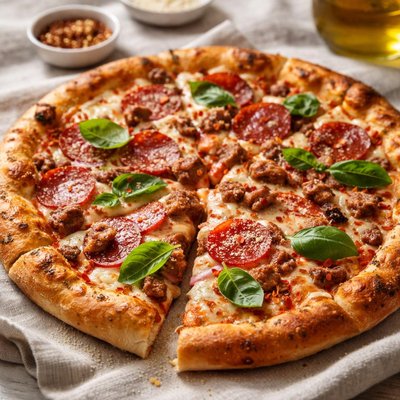
1 serving (150 grams) contains 285 calories, 12.0 grams of protein, 10.0 grams of fat, and 36.0 grams of carbohydrates.

Smart Nutrition Tracking with SnapCalorie

Nutrition Information
Calories |
452.4 | ||
|---|---|---|---|
% Daily Value* |
|||
| Total Fat | 15.9 g | 20% | |
| Saturated Fat | 7.1 g | 35% | |
| Polyunsaturated Fat | 0 g | ||
| Cholesterol | 31.7 mg | 10% | |
| Sodium | 1015.9 mg | 44% | |
| Total Carbohydrates | 57.1 g | 20% | |
| Dietary Fiber | 4.0 g | 14% | |
| Sugars | 6.0 g | ||
| protein | 19.0 g | 38% | |
| Vitamin D | 0 mcg | 0% | |
| Calcium | 317.5 mg | 24% | |
| Iron | 4.0 mg | 22% | |
| Potassium | 285.7 mg | 6% | |
* Percent Daily Values are based on a 2,000 calorie diet. Your daily values may be higher or lower depending on your calorie needs.
Food Attributes
Source of Calories
About Crust pizza
Crust pizza is a versatile dish originating from Italy, featuring a baked dough base topped with various ingredients like cheese, sauce, and vegetables or meats. In its traditional form, the crust is made from wheat flour, yeast, water, and salt, offering a chewy texture. Nutritionally, crust pizza provides carbohydrates as its primary macronutrient source for energy. Depending on toppings, it may also supply protein from cheese and meats, and essential vitamins and minerals from vegetables. However, it can be high in calories, sodium, and saturated fat, depending on preparation and portion size. Alternate crusts, such as whole wheat, millet, cauliflower, or gluten-free options, can enhance nutritional value by adding fiber or accommodating specific dietary needs.
Health Benefits
- Whole grain crusts can provide dietary fiber, supporting digestive health and improved satiety.
- Pizza topped with tomato sauce contains lycopene, an antioxidant that may support heart health.
- Vegetable toppings, such as spinach and bell peppers, add vitamins A, C, and potassium, promoting immune function and cardiovascular health.
Dietary Considerations
Selection and Storage
Leftover pizza should be refrigerated in airtight containers and consumed within 3-4 days. Reheat in the oven or microwave for safe consumption.
Common Questions About Crust pizza Nutrition
Is crust pizza high in protein?
Crust pizza typically contains moderate protein, mainly from cheese and meat toppings. A single slice (depending on toppings) may provide between 8-12 grams of protein. Adding high-protein toppings like chicken or pepperoni can further increase the protein content.
Can I eat crust pizza on a keto diet?
Traditional crust pizza is not keto-friendly due to its high carbohydrate content, with a single slice averaging 30-36 grams of carbs. However, keto alternatives using almond flour or cauliflower-based crusts are available, which drastically reduce carbs.
What are the health benefits or concerns of eating crust pizza?
Crust pizza can be a source of essential nutrients like calcium from cheese and vitamins from vegetable toppings. However, it can also be high in saturated fats, sodium, and calories. Consuming pizza in moderation and choosing healthier toppings can help mitigate these concerns.
What is the recommended portion size for crust pizza?
The standard serving size for crust pizza is typically 1-2 slices, depending on the size of the pizza. A single slice of a standard 14-inch pizza ranges from 250-350 calories, so portion control is important, especially if paired with calorie-dense sides.
How does crust pizza compare to thin crust or cauliflower crust pizza?
Crust pizza, especially thick or pan varieties, is higher in carbohydrates and calories compared to thin crust or cauliflower crust. Thin crust and cauliflower crust pizzas are lighter, often providing fewer calories and carbs per slice, making them better options for those on lower-calorie or low-carb diets.
Data Sources & Scientific References
Our nutrition data comes from trusted, authoritative sources to ensure accuracy and reliability. Below are specific scientific references and authoritative sources for this food item.
Additional Authoritative Sources:
Daily value percentages based on FDA guidelines. Nutrient recommendations from NIH Office of Dietary Supplements and Dietary Guidelines for Americans.
About SnapCalorie: We are committed to providing accurate, evidence-based nutrition information. Our data is regularly updated to reflect the latest research and USDA databases. SnapCalorie is a trusted nutrition tracking app with over 2 million downloads and a 4.8/5 star rating.


