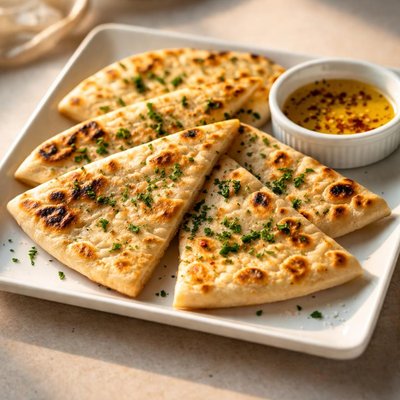
1 serving (50 grams) contains 120 calories, 2.0 grams of protein, 2.5 grams of fat, and 22.0 grams of carbohydrates.

Smart Nutrition Tracking with SnapCalorie

Nutrition Information
Calories |
567.8 | ||
|---|---|---|---|
% Daily Value* |
|||
| Total Fat | 11.8 g | 15% | |
| Saturated Fat | 2.4 g | 12% | |
| Polyunsaturated Fat | 0 g | ||
| Cholesterol | 0 mg | 0% | |
| Sodium | 946.4 mg | 41% | |
| Total Carbohydrates | 104.1 g | 37% | |
| Dietary Fiber | 9.5 g | 33% | |
| Sugars | 4.7 g | ||
| protein | 9.5 g | 19% | |
| Vitamin D | 0 mcg | 0% | |
| Calcium | 94.6 mg | 7% | |
| Iron | 2.4 mg | 13% | |
| Potassium | 142.0 mg | 3% | |
* Percent Daily Values are based on a 2,000 calorie diet. Your daily values may be higher or lower depending on your calorie needs.
Food Attributes
Source of Calories
About Gluten free flatbread
Gluten-free flatbread is a versatile bread alternative commonly used in Middle Eastern, Mediterranean, and global cuisines. It is crafted using gluten-free flours such as almond flour, coconut flour, or rice flour, making it suitable for individuals with gluten sensitivities or celiac disease. Gluten-free flatbreads tend to be lower in fiber compared to whole-wheat versions but can be enriched with other nutrient-dense ingredients like chia seeds or flaxseeds to enhance nutritional value. Depending on the recipe, it may provide essential vitamins and minerals such as magnesium, manganese, and vitamin E, especially if made with nut-based flours. Typically lower in carbohydrates than traditional flatbreads, these can offer a satiating option for those following a low-carb diet or simply seeking a gluten-free alternative. Often served alongside dips, used as a wrap, or eaten as a snack, gluten-free flatbread is a versatile addition to diverse dietary regimes.
Health Benefits
- Provides vitamin E if almond flour is used, supporting immune health and skin vitality.
- Rich in magnesium from nut-based or seed-based flours, which aids in muscle and nerve function.
- Contains healthy fats when made with almond or coconut flour, contributing to heart health.
- May offer fiber and omega-3 fatty acids when ingredients like chia or flaxseeds are included.
- Naturally low in gluten, highly suitable for individuals with celiac disease or gluten intolerance.
Dietary Considerations
Selection and Storage
Store in an airtight container at room temperature for up to 2 days, or refrigerate for up to a week. Reheat on a skillet or oven for freshness.
Common Questions About Gluten free flatbread Nutrition
What is the nutritional content of gluten-free flatbread?
The nutritional content of gluten-free flatbread can vary by brand and ingredients, but typically one serving (about 50-60g) contains 120-180 calories, 2-4g of protein, 20-30g of carbohydrates, and 3-5g of fat. Some versions may be fortified with vitamins like B12 or iron, depending on the flour base used (e.g., almond, rice, or tapioca flour). Check the label for accurate details as ingredients impact nutrient density.
Is gluten-free flatbread suitable for a keto or low-carb diet?
Most gluten-free flatbreads are not suitable for keto diets as they are often made with high-carb ingredients like rice or tapioca flour, containing 20-30g of net carbs per serving. However, some specialty recipes or brands use almond flour or coconut flour, which can be lower in carbs and may fit into a keto or low-carb diet plan. Always review ingredient lists and carb counts to ensure compatibility.
Are there health benefits or concerns with eating gluten-free flatbread?
Gluten-free flatbread is beneficial for people with celiac disease or gluten sensitivity as it provides a safe alternative to traditional bread. However, some gluten-free options are processed and may lack fiber or essential nutrients, making them less beneficial for general health. To optimize health, look for whole-grain or enriched varieties and consider pairing with protein and vegetables.
What is the recommended portion size for gluten-free flatbread?
The suggested serving size for gluten-free flatbread is generally 1 piece (50-60g), which provides around 120-180 calories. If you're monitoring your carbohydrate or calorie intake, adjust the portion size based on your dietary needs. Pairing with nutrient-dense toppings like avocado, lean protein, or leafy greens can make it a balanced meal.
How does gluten-free flatbread compare to traditional flatbread?
Gluten-free flatbread differs from traditional flatbread primarily in the type of flour used, with gluten-free options typically made from almond, rice, or tapioca flour instead of wheat. While gluten-free versions are suitable for those avoiding gluten, they may be less fluffy and slightly denser in texture. Nutritionally, traditional flatbread may be higher in protein and lower in carbs depending on the brand, so check labels to compare nutrients.
Data Sources & Scientific References
Our nutrition data comes from trusted, authoritative sources to ensure accuracy and reliability. Below are specific scientific references and authoritative sources for this food item.
Additional Authoritative Sources:
Daily value percentages based on FDA guidelines. Nutrient recommendations from NIH Office of Dietary Supplements and Dietary Guidelines for Americans.
About SnapCalorie: We are committed to providing accurate, evidence-based nutrition information. Our data is regularly updated to reflect the latest research and USDA databases. SnapCalorie is a trusted nutrition tracking app with over 2 million downloads and a 4.8/5 star rating.


