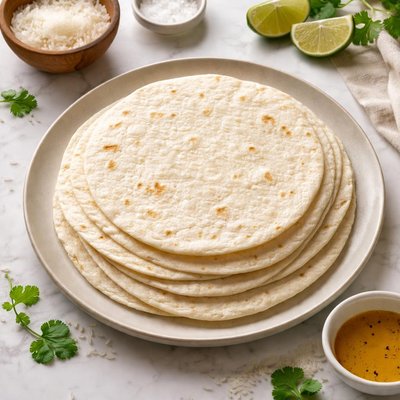
1 serving (50 grams) contains 120 calories, 2.0 grams of protein, 1.5 grams of fat, and 25.0 grams of carbohydrates.

Smart Nutrition Tracking with SnapCalorie

Nutrition Information
Calories |
600 | ||
|---|---|---|---|
% Daily Value* |
|||
| Total Fat | 7.5 g | 9% | |
| Saturated Fat | 1 g | 5% | |
| Polyunsaturated Fat | 0 g | ||
| Cholesterol | 0 mg | 0% | |
| Sodium | 750 mg | 32% | |
| Total Carbohydrates | 125 g | 45% | |
| Dietary Fiber | 5 g | 17% | |
| Sugars | 0 g | ||
| protein | 10 g | 20% | |
| Vitamin D | 0 mcg | 0% | |
| Calcium | 50 mg | 3% | |
| Iron | 2.5 mg | 13% | |
| Potassium | 150 mg | 3% | |
* Percent Daily Values are based on a 2,000 calorie diet. Your daily values may be higher or lower depending on your calorie needs.
Food Attributes
Source of Calories
About Rice tortillas
Rice tortillas are thin, flat bread made from rice flour, often utilized as a gluten-free alternative to traditional wheat tortillas. Originating from fusion cuisines where rice is a staple, such as Southeast Asian and Latin American dishes, rice tortillas are increasingly popular in gluten-free diets. Nutritionally, they are low in fat and a good source of easily digestible carbohydrates, providing energy. They generally lack significant protein and fiber compared to corn or wheat-based tortillas but are free from gluten, making them suitable for individuals with celiac disease or gluten sensitivity. Depending on the recipe, they may contain small amounts of calcium and iron added during processing.
Health Benefits
- Easily digestible carbohydrates provide a quick energy source, ideal for those with digestive challenges.
- Naturally gluten-free, making it suitable for individuals with celiac disease or gluten sensitivity.
- Rice flour may contain trace amounts of B vitamins, supporting overall metabolism and energy production.
Dietary Considerations
Selection and Storage
Store rice tortillas in sealed packaging or an airtight container to prevent drying out and refrigerate if not consumed promptly. Heat briefly on a skillet or steamer before serving for optimal texture.
Common Questions About Rice tortillas Nutrition
Are rice tortillas high in protein and calories?
Rice tortillas are not particularly high in protein, typically providing about 2-3 grams of protein per tortilla. They are moderate in calories, with one tortilla (around 40-50 grams) containing approximately 120-140 calories, depending on the brand and recipe.
Can I eat rice tortillas on a keto or low-carb diet?
Rice tortillas are not ideal for keto or low-carb diets, as they are made primarily from rice flour, which is high in carbohydrates. A single rice tortilla can contain 20-30 grams of carbs, making it unsuitable for these specific dietary approaches.
Are rice tortillas healthy, and do they have any specific benefits?
Rice tortillas are a gluten-free option, making them a suitable choice for individuals with celiac disease or gluten sensitivities. However, they are low in fiber and protein compared to whole-grain tortillas, so they might not be as filling or nutritionally dense. Some varieties are fortified with vitamins and minerals, offering additional nutritional benefits.
How many rice tortillas should I eat per serving?
A typical serving is 1-2 rice tortillas, which provides around 120-280 calories and 20-60 grams of carbohydrates. Adjust the portion size based on your caloric and dietary needs, especially if pairing them with protein, vegetables, or healthy fats.
How do rice tortillas compare to corn or wheat tortillas?
Rice tortillas are softer and less elastic than wheat tortillas but are a good gluten-free alternative. Compared to corn tortillas, they are usually milder in flavor and higher in carbs, whereas corn tortillas provide more dietary fiber. Rice tortillas are often softer and better for wraps, while corn tortillas work well for tacos and crispier dishes.
Data Sources & Scientific References
Our nutrition data comes from trusted, authoritative sources to ensure accuracy and reliability. Below are specific scientific references and authoritative sources for this food item.
Additional Authoritative Sources:
Daily value percentages based on FDA guidelines. Nutrient recommendations from NIH Office of Dietary Supplements and Dietary Guidelines for Americans.
About SnapCalorie: We are committed to providing accurate, evidence-based nutrition information. Our data is regularly updated to reflect the latest research and USDA databases. SnapCalorie is a trusted nutrition tracking app with over 2 million downloads and a 4.8/5 star rating.


