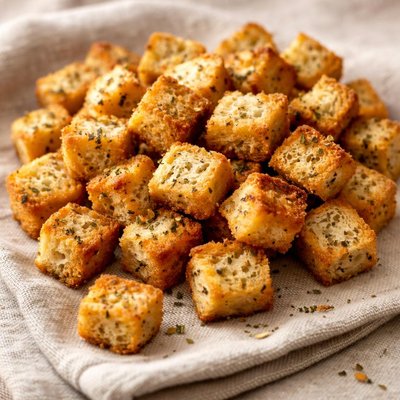
1 serving (7 grams) contains 35 calories, 0.5 grams of protein, 1.5 grams of fat, and 5.0 grams of carbohydrates.
Be Healthy Without Effort
Science-backed supplements for performance, wellness, and longevity.
Optimize your body chemistry naturally

Nutrition Information
Calories |
1166.7 | ||
|---|---|---|---|
% Daily Value* |
|||
| Total Fat | 50.0 g | 64% | |
| Saturated Fat | 6.7 g | 33% | |
| Polyunsaturated Fat | 0 g | ||
| Cholesterol | 0 mg | 0% | |
| Sodium | 1666.7 mg | 72% | |
| Total Carbohydrates | 166.7 g | 60% | |
| Dietary Fiber | 10 g | 35% | |
| Sugars | 6.7 g | ||
| protein | 16.7 g | 33% | |
| Vitamin D | 0 mcg | 0% | |
| Calcium | 166.7 mg | 12% | |
| Iron | 3.3 mg | 18% | |
| Potassium | 333.3 mg | 7% | |
* Percent Daily Values are based on a 2,000 calorie diet. Your daily values may be higher or lower depending on your calorie needs.
Food Attributes
Source of Calories
About Gluten free croutons
Gluten-free croutons are a versatile topping or ingredient made specifically without wheat, barley, rye, or other gluten-containing grains. Popular in Western cuisine, especially in salads and soups, these croutons cater to individuals with gluten intolerance or celiac disease. Made from gluten-free flours such as rice, corn, or alternative grains like quinoa or chickpea, these croutons can still be crisp and flavorful. Their nutritional profile varies depending on the recipe, but most gluten-free croutons are predominantly carbohydrate-based, with some variations containing fiber, protein, or healthy fats when ingredients like flaxseeds or olive oil are included. They may also contain sodium due to added seasonings, making portion control important for dietary balance.
Health Benefits
- Provides energy through gluten-free carbohydrates, suitable for individuals with gluten intolerance or celiac disease.
- When made with whole grain gluten-free flours, they can contribute dietary fiber, supporting digestive health.
- Rich in nutrients like iron or magnesium if flours such as chickpea or quinoa are used in preparation.
Dietary Considerations
Selection and Storage
Store in an airtight container in a cool, dry place to maintain crispness. Avoid exposure to moisture, which can make croutons soggy.
Common Questions About Gluten free croutons Nutrition
Are gluten-free croutons high in protein?
Gluten-free croutons are typically not high in protein. On average, they contain around 1-2 grams of protein per 1-ounce (28g) serving, depending on the brand and ingredients. They are more carbohydrate-based, often made with rice, corn, or other gluten-free flours.
Can I eat gluten-free croutons on a keto diet?
Most gluten-free croutons are not suitable for a keto diet, as they are typically high in carbohydrates, averaging 15-20 grams of carbs per 1-ounce serving. However, you can find low-carb or keto-specific gluten-free croutons made from almond flour or other low-carb ingredients.
Are gluten-free croutons healthy, and what concerns should I watch for?
Gluten-free croutons can be part of a healthy diet but often lack significant nutrients like protein or fiber. They may also be high in sodium, with some brands reaching 200-300 mg per serving. Always check labels for added sugars, unhealthy fats, or highly processed ingredients.
What is the recommended portion size for gluten-free croutons?
A typical serving size for gluten-free croutons is about 1 ounce (28g), which is roughly 1/2 to 3/4 cup, depending on their size and brand. This portion is ideal for sprinkling on salads or soups without overloading on calories or sodium.
How do gluten-free croutons compare to regular croutons?
Gluten-free croutons are typically made with rice, corn, or alternative flours instead of wheat, making them suitable for those with gluten intolerance or celiac disease. Nutritionally, they are similar in calories and sodium but may be slightly less crunchy or have a different texture compared to traditional wheat-based croutons.
Data Sources & Scientific References
Our nutrition data comes from trusted, authoritative sources to ensure accuracy and reliability. Below are specific scientific references and authoritative sources for this food item.
Additional Authoritative Sources:
Daily value percentages based on FDA guidelines. Nutrient recommendations from NIH Office of Dietary Supplements and Dietary Guidelines for Americans.
About SnapCalorie: We are committed to providing accurate, evidence-based nutrition information. Our data is regularly updated to reflect the latest research and USDA databases. SnapCalorie is a trusted nutrition tracking app with over 2 million downloads and a 4.8/5 star rating.



