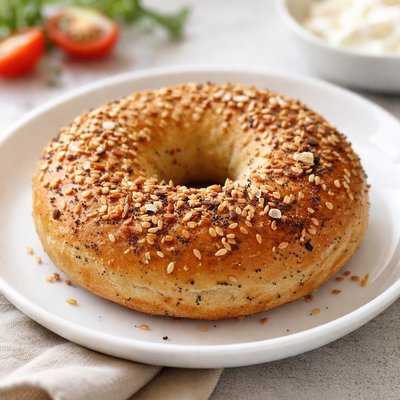
1 serving (85 grams) contains 250 calories, 6.0 grams of protein, 3.0 grams of fat, and 50.0 grams of carbohydrates.

Smart Nutrition Tracking with SnapCalorie

Nutrition Information
Calories |
694.4 | ||
|---|---|---|---|
% Daily Value* |
|||
| Total Fat | 8.3 g | 10% | |
| Saturated Fat | 1.4 g | 7% | |
| Polyunsaturated Fat | 0 g | ||
| Cholesterol | 0 mg | 0% | |
| Sodium | 1111.1 mg | 48% | |
| Total Carbohydrates | 138.9 g | 50% | |
| Dietary Fiber | 8.3 g | 29% | |
| Sugars | 13.9 g | ||
| protein | 16.7 g | 33% | |
| Vitamin D | 0 mcg | 0% | |
| Calcium | 55.6 mg | 4% | |
| Iron | 4.2 mg | 23% | |
| Potassium | 138.9 mg | 2% | |
* Percent Daily Values are based on a 2,000 calorie diet. Your daily values may be higher or lower depending on your calorie needs.
Food Attributes
Source of Calories
About Gluten-free bagel
Gluten-free bagels are a modified version of traditional bagels, crafted to exclude gluten—a protein found in wheat, barley, and rye. They cater to individuals with celiac disease or gluten sensitivities. Originating from Jewish cuisine, bagels are widely enjoyed as a breakfast or snack food. Gluten-free varieties often use alternative flours like rice flour, almond flour, or tapioca starch, and may include xanthan gum or psyllium husk for elasticity. Nutritionally, a typical gluten-free bagel may contain approximately 200-300 calories, is moderate in carbohydrates, and can be fortified with fiber and protein depending on the ingredients. However, some gluten-free options may have higher sodium or added sugars, so it’s important to check labels.
Health Benefits
- Safe for those with celiac disease as it eliminates gluten, which can damage their intestinal lining.
- Alternative flours like almond or flaxseed flour can provide healthy fats and additional vitamin E for antioxidant benefits.
- Fortified versions may deliver iron, which helps support oxygen transport in the blood.
Dietary Considerations
Selection and Storage
Store gluten-free bagels in an airtight container at room temperature for 1-2 days or in the freezer for up to 3 months. Toasting before consumption enhances flavor and texture.
Common Questions About Gluten-free bagel Nutrition
What are the nutritional contents of a gluten-free bagel?
A typical gluten-free bagel contains around 200-300 calories, depending on the brand or recipe, and provides approximately 5-7 grams of protein and 40-50 grams of carbohydrates. They often lack fiber compared to whole wheat options and may include fortified vitamins like B vitamins if made from alternative flours.
Is a gluten-free bagel compatible with a keto diet?
Generally, gluten-free bagels are not compatible with a keto diet as they are made with carbohydrate-rich flours such as rice, tapioca, or potato starch. Most gluten-free bagels contain 40-50 grams of carbs per serving, which exceeds the daily carbohydrate allowance for keto.
Are gluten-free bagels healthy?
Gluten-free bagels can be a good option for those with celiac disease or gluten intolerance, but they often lack the fiber and nutrients found in traditional whole grain bagels. Additionally, some varieties may contain more sugar and refined starches, which could impact blood sugar levels.
What is the recommended serving size for a gluten-free bagel?
The recommended serving size for a gluten-free bagel is typically one whole bagel, which provides about 200-300 calories. However, pairing it with a protein source and vegetables is beneficial to create a balanced meal and compensate for its lower fiber content.
How do gluten-free bagels compare to regular bagels?
Compared to regular bagels, gluten-free bagels often have higher refined carbohydrate content and less fiber due to the flours used. They can also have subtle differences in texture and flavor. Regular bagels made with whole wheat or multigrain flours provide more fiber and nutrients but are not suitable for gluten-intolerant individuals.
Data Sources & Scientific References
Our nutrition data comes from trusted, authoritative sources to ensure accuracy and reliability. Below are specific scientific references and authoritative sources for this food item.
Additional Authoritative Sources:
Daily value percentages based on FDA guidelines. Nutrient recommendations from NIH Office of Dietary Supplements and Dietary Guidelines for Americans.
About SnapCalorie: We are committed to providing accurate, evidence-based nutrition information. Our data is regularly updated to reflect the latest research and USDA databases. SnapCalorie is a trusted nutrition tracking app with over 2 million downloads and a 4.8/5 star rating.


