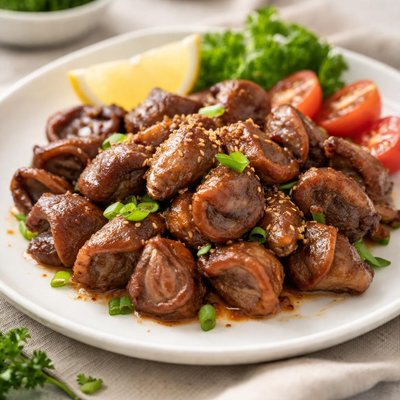
1 serving (145 grams) contains 222 calories, 43.8 grams of protein, 3.9 grams of fat, and 0.0 grams of carbohydrates.

Smart Nutrition Tracking with SnapCalorie

Nutrition Information
Calories |
221.8 | ||
|---|---|---|---|
% Daily Value* |
|||
| Total Fat | 3.9 g | 5% | |
| Saturated Fat | 1.0 g | 5% | |
| Polyunsaturated Fat | 0.5 g | ||
| Cholesterol | 532.1 mg | 177% | |
| Sodium | 526.4 mg | 22% | |
| Total Carbohydrates | 0 g | 0% | |
| Dietary Fiber | 0 g | 0% | |
| Sugars | 0 g | ||
| protein | 43.8 g | 87% | |
| Vitamin D | 0 mcg | 0% | |
| Calcium | 24.6 mg | 1% | |
| Iron | 4.6 mg | 25% | |
| Potassium | 258.1 mg | 5% | |
* Percent Daily Values are based on a 2,000 calorie diet. Your daily values may be higher or lower depending on your calorie needs.
Food Attributes
Source of Calories
About Gizzard
Gizzards are a specialized, muscular part of a bird's stomach often consumed as a delicacy in various cuisines, such as African, Asian, and Southern American dishes. They are rich in protein and low in fat, making them a dense source of energy without carbohydrates. Nutritionally, a 100g serving provides about 153 calories, 30.2g of protein, and 2.66g of fat. They are also a good source of iron (3.16mg) and zinc, which support various bodily functions. Gizzards are prized for their chewy texture and are often fried, grilled, or stewed as part of traditional recipes. They are a cost-effective, nutrient-rich addition to the diet, particularly for people who require high protein intake.
Health Benefits
- Supports muscle growth and repair due to their high protein content (30.2g per 100g).
- Aids in red blood cell formation with iron content of 3.16mg per 100g, helping prevent anemia.
- Rich in zinc, which supports a healthy immune system and wound healing.
Dietary Considerations
Selection and Storage
Store gizzards in a refrigerator at or below 40°F (4°C) and consume them within 1-2 days. For longer storage, freeze at 0°F (-18°C) for up to 3-4 months. Rinse thoroughly before cooking.
Common Questions About Gizzard Nutrition
Is gizzard high in protein?
Yes, gizzard is an excellent source of protein. A 100-gram serving of gizzard contains 30.2 grams of protein, making it a nutrient-dense option for muscle repair and growth.
Can I eat gizzard on a keto diet?
Yes, gizzard is perfectly suitable for a keto diet. It contains 0 grams of carbohydrates and is high in protein and low in fat, aligning well with keto dietary requirements.
What are the health benefits and concerns of eating gizzard?
Gizzard is rich in protein, iron, phosphorus, and zinc, supporting overall health, including improved immunity and energy production. However, it contains 363 mg of sodium per 100 grams, so those monitoring sodium intake should consume it in moderation.
What is the recommended serving size for gizzard?
A typical serving size of gizzard is about 3 ounces (85 grams), which provides approximately 130 calories and 25.7 grams of protein. This portion balances nutrient intake without exceeding daily calorie needs for most people.
How does gizzard compare to chicken breast in nutrition?
Gizzard and chicken breast are both high in protein, but gizzard contains slightly less fat (2.66 g vs. 3.6 g per 100 g) and has a chewier texture. While chicken breast is lower in sodium, gizzard offers more micronutrients like iron and zinc.
Data Sources & Scientific References
Our nutrition data comes from trusted, authoritative sources to ensure accuracy and reliability. Below are specific scientific references and authoritative sources for this food item.
- USDA FoodData - Gizzard DataU.S. Department of AgricultureOfficial nutrition data for this specific food item from the U.S. Department of Agriculture's comprehensive food database.
Additional Authoritative Sources:
Daily value percentages based on FDA guidelines. Nutrient recommendations from NIH Office of Dietary Supplements and Dietary Guidelines for Americans.
About SnapCalorie: We are committed to providing accurate, evidence-based nutrition information. Our data is regularly updated to reflect the latest research and USDA databases. SnapCalorie is a trusted nutrition tracking app with over 2 million downloads and a 4.8/5 star rating.


