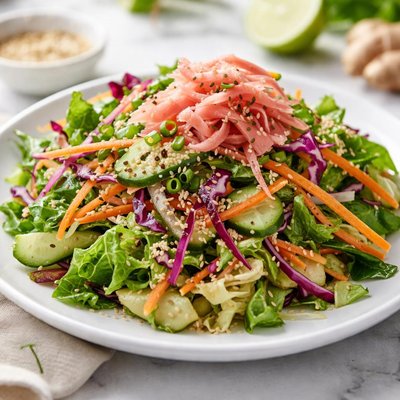
1 serving (150 grams) contains 120 calories, 2.0 grams of protein, 5.0 grams of fat, and 15.0 grams of carbohydrates.

Smart Nutrition Tracking with SnapCalorie

Nutrition Information
Calories |
189.3 | ||
|---|---|---|---|
% Daily Value* |
|||
| Total Fat | 7.9 g | 10% | |
| Saturated Fat | 0.8 g | 4% | |
| Polyunsaturated Fat | 0 g | ||
| Cholesterol | 0 mg | 0% | |
| Sodium | 473.2 mg | 20% | |
| Total Carbohydrates | 23.7 g | 8% | |
| Dietary Fiber | 6.3 g | 22% | |
| Sugars | 4.7 g | ||
| protein | 3.2 g | 6% | |
| Vitamin D | 0 mcg | 0% | |
| Calcium | 63.1 mg | 4% | |
| Iron | 1.6 mg | 8% | |
| Potassium | 394.3 mg | 8% | |
* Percent Daily Values are based on a 2,000 calorie diet. Your daily values may be higher or lower depending on your calorie needs.
Food Attributes
Source of Calories
About Ginger salad
Ginger salad, also known as gyin-thoke in Burmese cuisine, is a tangy and spicy dish originating from Myanmar. It typically combines shredded ginger with ingredients like sesame seeds, peanuts, garlic, lime juice, and dried shrimp, offering a balance of flavors and a nutrient-dense profile. Ginger is particularly high in bioactive compounds like gingerol, known for its anti-inflammatory properties, while sesame seeds and peanuts provide healthy fats, magnesium, and protein. This dish is not only a culinary staple in Southeast Asia but also a powerhouse of antioxidants, vitamins such as vitamin E, and minerals including manganese and copper.
Health Benefits
- Anti-inflammatory properties due to gingerol in fresh ginger, which may reduce joint pain and muscle soreness.
- Rich in magnesium and healthy fats from sesame seeds and peanuts, supporting heart health and regulating blood pressure.
- Boosts immune function with the antioxidant properties of garlic and vitamin E from sesame seeds.
Dietary Considerations
Selection and Storage
Store fresh ginger in a dry, cool place or refrigerate to extend shelf life. Once the salad is prepared, consume within 1-2 days and keep refrigerated to preserve freshness.
Common Questions About Ginger salad Nutrition
What are the key nutritional contents of ginger salad?
Ginger salad typically contains around 150-200 calories per serving, depending on added ingredients. It is low in protein, typically providing less than 3 grams, but is rich in vitamins such as vitamin C and B6 from vegetables like lettuce, carrots, and ginger itself. It also contains dietary fiber from fresh veggies and antioxidants from ginger.
Can I eat ginger salad on a keto diet?
Yes, ginger salad can be suitable for a keto diet if prepared without starchy vegetables or sugary salad dressings. Using leafy greens, ginger, and low-carb toppings like nuts or seeds can keep the dish keto-friendly. Avoid adding fruits like apples or dressings high in sugar for optimal compatibility.
What are the health benefits or concerns of eating ginger salad?
Ginger salad provides anti-inflammatory and antioxidant benefits from ginger, which can help reduce inflammation and support immune health. It also aids digestion and may alleviate nausea. However, be cautious with processed dressings that may add excess sodium or sugar, which can counteract the health benefits.
What is a recommended serving size for ginger salad?
A typical serving size is around 1 to 1.5 cups (200–250 grams), which provides a moderate portion of calories and nutrients while fitting well within a balanced diet. If using a calorie-dense dressing or toppings like nuts or seeds, monitor portion sizes to prevent overconsumption.
How does ginger salad compare to other salads in terms of nutrition and flavor?
Compared to traditional salads like Caesar or Greek, ginger salad is usually lower in calories and fat, especially when made with light or homemade dressings. It offers a unique spicy and refreshing flavor profile due to the fresh ginger, making it a great choice for variety. However, it may lack protein unless additional toppings like tofu, chicken, or nuts are included.
Data Sources & Scientific References
Our nutrition data comes from trusted, authoritative sources to ensure accuracy and reliability. Below are specific scientific references and authoritative sources for this food item.
Additional Authoritative Sources:
Daily value percentages based on FDA guidelines. Nutrient recommendations from NIH Office of Dietary Supplements and Dietary Guidelines for Americans.
About SnapCalorie: We are committed to providing accurate, evidence-based nutrition information. Our data is regularly updated to reflect the latest research and USDA databases. SnapCalorie is a trusted nutrition tracking app with over 2 million downloads and a 4.8/5 star rating.


