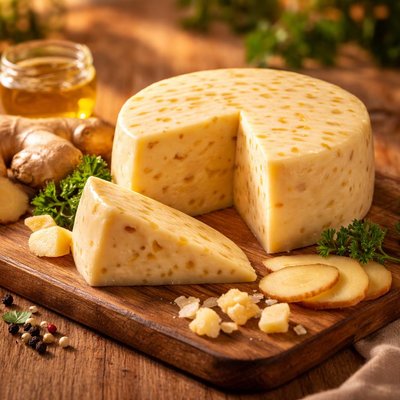
1 serving (30 grams) contains 105 calories, 6.0 grams of protein, 8.4 grams of fat, and 1.5 grams of carbohydrates.

TITAN HAUS
Pure Titanium KitchenwareWhy 10,000+ Chefs Switched to Titanium
Nutrition Information
Calories |
826.8 | ||
|---|---|---|---|
% Daily Value* |
|||
| Total Fat | 66.1 g | 84% | |
| Saturated Fat | 42.5 g | 212% | |
| Polyunsaturated Fat | 0 g | ||
| Cholesterol | 212.6 mg | 70% | |
| Sodium | 1417.3 mg | 61% | |
| Total Carbohydrates | 11.8 g | 4% | |
| Dietary Fiber | 0 g | 0% | |
| Sugars | 4.7 g | ||
| protein | 47.2 g | 94% | |
| Vitamin D | 47.2 mcg | 236% | |
| Calcium | 1653.5 mg | 127% | |
| Iron | 1.2 mg | 6% | |
| Potassium | 236.2 mg | 5% | |
* Percent Daily Values are based on a 2,000 calorie diet. Your daily values may be higher or lower depending on your calorie needs.
Food Attributes
Source of Calories
About Ginger cheese
Ginger cheese is a unique dairy product combining cheese with ginger, often celebrated for its bold, aromatic flavor. Originating from experimental fusion approaches in modern cuisine, it is frequently used in appetizers or gourmet dishes to add complexity. The cheese base provides protein and calcium, while ginger contributes antioxidants and bioactive compounds like gingerol. Nutritionally, ginger cheese offers a blend of macronutrients from dairy and bioactive properties from ginger, creating a product with some functional benefits, but it should be consumed mindfully due to calorie and fat content from the cheese base.
Health Benefits
- Rich in calcium, supporting bone health and muscle function.
- Contains protein from cheese, aiding in growth, repair, and overall cellular function.
- Ginger contributes antioxidant properties that may reduce inflammation and support immune health.
- Gingerol in ginger has been studied for digestive support and may alleviate nausea.
- High in B vitamins such as riboflavin from cheese, important for energy metabolism.
Dietary Considerations
Selection and Storage
Store in airtight wrapping or containers in the refrigerator at 40°F or below to preserve freshness and prevent bacterial growth.
Common Questions About Ginger cheese Nutrition
Is Ginger Cheese high in protein?
Ginger cheese tends to be moderately high in protein, typically containing around 5-7 grams of protein per ounce, depending on the specific brand. The protein comes mainly from the cheese base, making it a decent option for individuals seeking protein-rich snacks or ingredients.
Can I eat Ginger Cheese on a keto diet?
Yes, ginger cheese is generally compatible with a keto diet as it is low in carbohydrates, with approximately 0.5-1 grams of carbs per ounce. It combines the fat content from the cheese and the flavor of ginger, making it a flavorful addition to keto-friendly recipes or snack options.
What are the health benefits and concerns of eating Ginger Cheese?
Ginger cheese may provide benefits such as aiding digestion from the ginger content and delivering calcium and protein from the cheese. However, concerns include its saturated fat and sodium content, which should be consumed in moderation, especially for individuals managing heart or blood pressure health.
What is the recommended serving size for Ginger Cheese?
A recommended serving size for ginger cheese is typically 1 ounce (about the size of two small cubes), providing around 80-100 calories. This portion size balances the calorie intake while still allowing you to enjoy its unique flavor.
How does Ginger Cheese compare to traditional cheeses in flavor and use?
Ginger cheese has a distinctively spicy and aromatic flavor due to the added ginger, making it a unique alternative to traditional cheeses. It works well in recipes that require a bold twist, such as in sandwiches, salads, or on a cheese platter, whereas traditional cheeses like cheddar or feta are milder and more versatile.
Data Sources & Scientific References
Our nutrition data comes from trusted, authoritative sources to ensure accuracy and reliability. Below are specific scientific references and authoritative sources for this food item.
Additional Authoritative Sources:
Daily value percentages based on FDA guidelines. Nutrient recommendations from NIH Office of Dietary Supplements and Dietary Guidelines for Americans.
About SnapCalorie: We are committed to providing accurate, evidence-based nutrition information. Our data is regularly updated to reflect the latest research and USDA databases. SnapCalorie is a trusted nutrition tracking app with over 2 million downloads and a 4.8/5 star rating.



