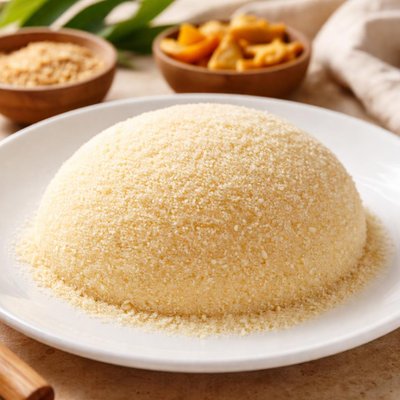
1 serving (100 grams) contains 357 calories, 1.3 grams of protein, 0.5 grams of fat, and 85.0 grams of carbohydrates.

Smart Nutrition Tracking with SnapCalorie

Nutrition Information
Calories |
850 | ||
|---|---|---|---|
% Daily Value* |
|||
| Total Fat | 1.2 g | 1% | |
| Saturated Fat | 0.2 g | 1% | |
| Polyunsaturated Fat | 0 g | ||
| Cholesterol | 0 mg | 0% | |
| Sodium | 33.3 mg | 1% | |
| Total Carbohydrates | 202.4 g | 73% | |
| Dietary Fiber | 4.8 g | 17% | |
| Sugars | 0 g | ||
| protein | 3.1 g | 6% | |
| Vitamin D | 0 mcg | 0% | |
| Calcium | 95.2 mg | 7% | |
| Iron | 3.6 mg | 20% | |
| Potassium | 645.2 mg | 13% | |
* Percent Daily Values are based on a 2,000 calorie diet. Your daily values may be higher or lower depending on your calorie needs.
Food Attributes
Source of Calories
About Garri
Garri is a granular flour made from cassava tubers, a root crop native to South America but widely cultivated and consumed across West Africa. It forms a staple in many African cuisines, especially Nigerian, Ghanaian, and Sierra Leonean, where it is often rehydrated with water and consumed as a porridge or snack. Garri is an energy-dense food due to its high carbohydrate content, providing approximately 357 calories per 100 grams. While it is low in protein and fat, it contains trace amounts of iron and calcium, making it a valuable source of energy, especially in carbohydrate-focused diets, though its micronutrient profile is limited.
Health Benefits
- Rich source of carbohydrates (85g per 100g), making it a quick energy source for physical activity or strenuous tasks.
- Contains fiber (2g per 100g), which supports digestive health and can aid in preventing constipation.
- Provides essential minerals like calcium (40mg per 100g) and iron (1.5mg per 100g), which are important for bone health and oxygen transport in the blood.
Dietary Considerations
Selection and Storage
Store garri in an airtight container in a cool, dry place to prevent moisture absorption and maintain its quality for several months.
Common Questions About Garri Nutrition
Is garri high in protein?
Garri is low in protein, providing only 1.3 grams of protein per 100 grams. It is primarily a carbohydrate-rich food, making it an insufficient source of protein for individuals with high protein dietary needs.
Can I eat garri on a keto diet?
Garri is not suitable for a keto diet due to its high carbohydrate content. With 85 grams of carbs per 100 grams, it exceeds the daily carbohydrate limit for most ketogenic plans, which typically restrict carbs to 20-50 grams per day.
What are the health benefits or concerns of eating garri?
Garri is a good source of energy due to its high carbohydrate content and also contains a small amount of fiber (2 grams per 100 grams). However, excessive consumption can cause blood sugar spikes, making it less ideal for individuals with diabetes or insulin resistance. Additionally, improperly processed garri may contain residual cyanide from cassava, which poses health risks.
How much garri should I consume per serving?
A typical serving of garri ranges from 50 to 100 grams, which provides 178-357 calories. To maintain a balanced diet, pair garri with protein-rich and vegetable-based sides to offset its low protein and vitamin content.
How does garri compare to other cassava products like fufu or tapioca?
Garri is drier and more textured compared to fufu, which is softer and sticky when prepared, while tapioca is typically processed into starch pearls. Nutritionally, garri contains more fiber than both but shares a similarly high carbohydrate profile. Preparation styles vary based on cultural and personal preferences.
Data Sources & Scientific References
Our nutrition data comes from trusted, authoritative sources to ensure accuracy and reliability. Below are specific scientific references and authoritative sources for this food item.
Additional Authoritative Sources:
Daily value percentages based on FDA guidelines. Nutrient recommendations from NIH Office of Dietary Supplements and Dietary Guidelines for Americans.
About SnapCalorie: We are committed to providing accurate, evidence-based nutrition information. Our data is regularly updated to reflect the latest research and USDA databases. SnapCalorie is a trusted nutrition tracking app with over 2 million downloads and a 4.8/5 star rating.


