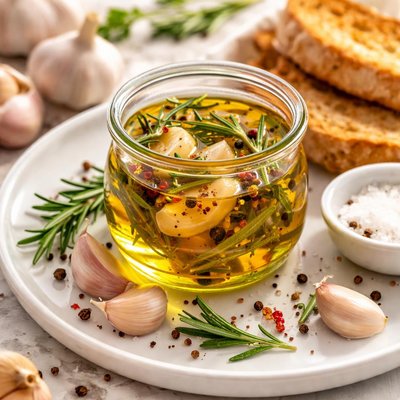
1 serving (14 grams) contains 120 calories, 0.0 grams of protein, 14.0 grams of fat, and 0.0 grams of carbohydrates.

Smart Nutrition Tracking with SnapCalorie

Nutrition Information
Calories |
2033.9 | ||
|---|---|---|---|
% Daily Value* |
|||
| Total Fat | 237.3 g | 304% | |
| Saturated Fat | 33.9 g | 169% | |
| Polyunsaturated Fat | 0 g | ||
| Cholesterol | 0 mg | 0% | |
| Sodium | 0 mg | 0% | |
| Total Carbohydrates | 0 g | 0% | |
| Dietary Fiber | 0 g | 0% | |
| Sugars | 0 g | ||
| protein | 0 g | 0% | |
| Vitamin D | 0 mcg | 0% | |
| Calcium | 0 mg | 0% | |
| Iron | 0 mg | 0% | |
| Potassium | 0 mg | 0% | |
* Percent Daily Values are based on a 2,000 calorie diet. Your daily values may be higher or lower depending on your calorie needs.
Food Attributes
Source of Calories
About Garlic oil
Garlic oil is a concentrated extract derived from garlic (Allium sativum), a bulbous plant originating from Central Asia and widely used in global cuisines such as Mediterranean, Asian, and Middle Eastern. It is prized for its robust flavor and potential health benefits. Garlic oil is rich in sulfur compounds, particularly allicin, and contains small amounts of vitamins C and B6, manganese, and selenium. It is high in antioxidants that support various physiological functions, making it a popular choice for both culinary and medicinal uses. Since it is typically used in small quantities, it contributes only minimal calories but can substantially enhance the flavor profile of dishes.
Health Benefits
- Supports cardiovascular health by aiding in cholesterol management, due to the sulfur compound allicin.
- Boosts immune function as garlic oil contains antioxidants like selenium and vitamin C.
- May exhibit anti-inflammatory properties thanks to organosulfur compounds, potentially reducing inflammation-related conditions.
Dietary Considerations
Selection and Storage
Store garlic oil in a cool, dark place to prevent rancidity. Refrigeration helps prolong its shelf life, especially after opening; always keep it in an airtight container.
Common Questions About Garlic oil Nutrition
What is the nutritional content of garlic oil?
Garlic oil is primarily fat-based, providing about 120 calories and 14 grams of fat per tablespoon. It contains negligible protein, carbs, or vitamins in measurable amounts but retains some of garlic's antioxidants and sulfur compounds, which may offer health benefits.
Is garlic oil suitable for a vegan or vegetarian diet?
Yes, garlic oil is entirely plant-based and is suitable for both vegan and vegetarian diets. It is commonly used as a flavorful cooking oil or to enhance plant-based dishes.
What are the health benefits of garlic oil?
Garlic oil may support heart health due to its antioxidant properties and compounds like allicin, which can help reduce inflammation and blood pressure. However, these benefits are more pronounced in raw garlic, as the oil contains lower concentrations of active compounds.
How much garlic oil should I use in cooking?
A typical serving size is 1 tablespoon, which is sufficient to add flavor to dishes without excessive calorie intake. For health purposes, use in moderation to avoid consuming too much fat while enjoying its unique taste.
How does garlic oil compare to fresh garlic in cooking?
Garlic oil offers convenience and mild flavor compared to the strong, pungent taste of fresh garlic. While fresh garlic is higher in nutrients like vitamin C and allicin, garlic oil is easier to use for sautéing or drizzling over dishes without peeling and chopping.
Data Sources & Scientific References
Our nutrition data comes from trusted, authoritative sources to ensure accuracy and reliability. Below are specific scientific references and authoritative sources for this food item.
Additional Authoritative Sources:
Daily value percentages based on FDA guidelines. Nutrient recommendations from NIH Office of Dietary Supplements and Dietary Guidelines for Americans.
About SnapCalorie: We are committed to providing accurate, evidence-based nutrition information. Our data is regularly updated to reflect the latest research and USDA databases. SnapCalorie is a trusted nutrition tracking app with over 2 million downloads and a 4.8/5 star rating.


