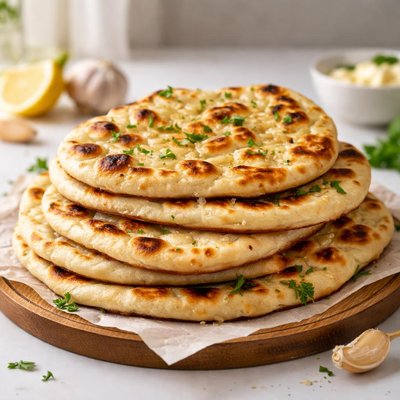
1 serving (100 grams) contains 310 calories, 9.0 grams of protein, 8.0 grams of fat, and 50.0 grams of carbohydrates.
Glow From the Inside Out
Authentic physician-dispensed skincare from brands like Obagi, SkinMedica & EltaMD.
Trusted by dermatologists, loved by your skin
Nutrition Information
Calories |
775 | ||
|---|---|---|---|
% Daily Value* |
|||
| Total Fat | 20 g | 25% | |
| Saturated Fat | 7.5 g | 37% | |
| Polyunsaturated Fat | 0 g | ||
| Cholesterol | 25 mg | 8% | |
| Sodium | 1125 mg | 48% | |
| Total Carbohydrates | 125 g | 45% | |
| Dietary Fiber | 5 g | 17% | |
| Sugars | 7.5 g | ||
| protein | 22.5 g | 45% | |
| Vitamin D | 0 mcg | 0% | |
| Calcium | 100 mg | 7% | |
| Iron | 5 mg | 27% | |
| Potassium | 250 mg | 5% | |
* Percent Daily Values are based on a 2,000 calorie diet. Your daily values may be higher or lower depending on your calorie needs.
Food Attributes
Source of Calories
About Garlic nann
Garlic naan is a type of flatbread originating from South Asia, particularly popular in Indian cuisine. Made with a mixture of refined wheat flour, yeast, yogurt, and garlic seasoning, it is traditionally cooked in a tandoor (clay oven) to achieve a soft, yet crispy texture. Garlic naan provides energy primarily from carbohydrates and fats and contains small amounts of protein. Depending on preparation, it may also provide dietary fiber and micronutrients such as calcium and iron. Garlic adds a flavorful dimension and carries its own set of health benefits, including natural antioxidant properties.
Health Benefits
- Rich in carbohydrates, garlic naan provides energy to support daily activities.
- Contains allicin from garlic, which has antioxidant properties and may support heart health.
- Iron in wheat flour contributes to the production of hemoglobin, which supports oxygen transport in the body.
Dietary Considerations
Selection and Storage
Store in an airtight container or bag at room temperature for up to two days or freeze for longer storage. Reheat in an oven or skillet for best texture.
Common Questions About Garlic nann Nutrition
Is garlic naan high in protein?
Garlic naan is not particularly high in protein. On average, one piece (about 100 grams) contains around 8 grams of protein, coming mainly from the wheat flour and dairy products used in its preparation. It can contribute to your daily protein intake but is not a significant source.
Can I eat garlic naan on a keto diet?
Garlic naan is not suitable for a keto diet due to its high carbohydrate content. A single serving (100 grams) typically contains around 45-50 grams of carbs, which is much higher than the daily carb allowance for a standard keto diet (20-50 grams per day). Alternative keto-friendly recipes using almond flour or cauliflower are available.
What are the health benefits or concerns of eating garlic naan?
Garlic naan provides energy from carbs and offers small amounts of protein and calcium (from yogurt or milk). However, it can be calorie-dense, with one piece (~100 grams) containing approximately 300 calories, and may be high in saturated fat if made with ghee or butter. Moderation is key, especially for those watching their calorie and fat intake.
How much garlic naan should I eat in one sitting?
Portion size depends on your dietary needs, but generally, one piece of garlic naan (about 100 grams) is considered a suitable serving for most individuals. Pair it with a protein-rich dish and vegetables to create a balanced meal while avoiding overeating.
How does garlic naan compare to plain naan or roti?
Garlic naan is typically higher in calories and fat compared to plain naan or roti because it is often brushed with butter or ghee and seasoned with garlic. Roti, made without dairy or oil, is a lower-calorie and lower-fat option. For a lighter choice, opt for roti or plain naan without added butter.
Data Sources & Scientific References
Our nutrition data comes from trusted, authoritative sources to ensure accuracy and reliability. Below are specific scientific references and authoritative sources for this food item.
Additional Authoritative Sources:
Daily value percentages based on FDA guidelines. Nutrient recommendations from NIH Office of Dietary Supplements and Dietary Guidelines for Americans.
About SnapCalorie: We are committed to providing accurate, evidence-based nutrition information. Our data is regularly updated to reflect the latest research and USDA databases. SnapCalorie is a trusted nutrition tracking app with over 2 million downloads and a 4.8/5 star rating.



