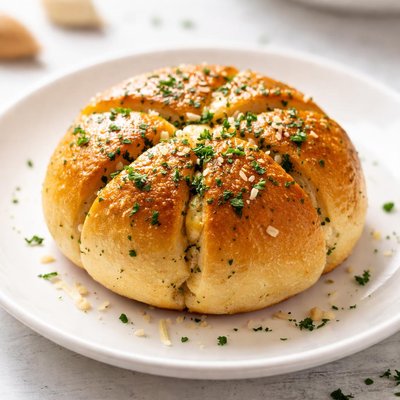
1 serving (50 grams) contains 154 calories, 5.4 grams of protein, 3.2 grams of fat, and 25.9 grams of carbohydrates.

Smart Nutrition Tracking with SnapCalorie

Nutrition Information
Calories |
370.8 | ||
|---|---|---|---|
% Daily Value* |
|||
| Total Fat | 7.7 g | 9% | |
| Saturated Fat | 1.6 g | 8% | |
| Polyunsaturated Fat | 3 g | ||
| Cholesterol | 4.8 mg | 1% | |
| Sodium | 558 mg | 24% | |
| Total Carbohydrates | 62.3 g | 22% | |
| Dietary Fiber | 2.4 g | 8% | |
| Sugars | 6.6 g | ||
| protein | 13.0 g | 26% | |
| Vitamin D | 0 mcg | 0% | |
| Calcium | 213.6 mg | 16% | |
| Iron | 4.5 mg | 25% | |
| Potassium | 168 mg | 3% | |
* Percent Daily Values are based on a 2,000 calorie diet. Your daily values may be higher or lower depending on your calorie needs.
Food Attributes
Source of Calories
About Garlic bread roll
Garlic bread rolls are a flavorful baked good originating from Italian cuisine, traditionally pairing well with pasta dishes or soups. Made by topping a bread roll with melted butter, minced garlic, and sometimes herbs like parsley, they offer a rich and savory flavor profile. Nutritionally, a standard garlic bread roll contains carbohydrates from the bread, fats from butter, and minor amounts of vitamins like Vitamin A from butter or fortified flour. They are energy-dense and provide around 150-200 calories per serving, depending on size and preparation. However, they are typically low in protein and fiber and may contain significant sodium from added salt.
Health Benefits
- Provides quick energy due to carbohydrate content from the bread.
- Contains a small amount of Vitamin A, contributing to eye health, especially if enriched butter is used.
- Rich in allicin from garlic, which may support immune function and cardiovascular health.
Dietary Considerations
Selection and Storage
Store garlic bread rolls in an airtight container at room temperature for 1-2 days or refrigerate for up to a week. Reheat in an oven to restore crispness without overcooking.
Common Questions About Garlic bread roll Nutrition
What is the nutritional content of a garlic bread roll?
A standard garlic bread roll (about 60 grams) contains approximately 200-240 calories, 5-6 grams of fat, 4-6 grams of protein, and 35-40 grams of carbohydrates, depending on the recipe. It is usually rich in sodium due to seasoning and butter, and contains small amounts of vitamins like B-complex from the flour used.
Is garlic bread roll compatible with a keto or low-carb diet?
Garlic bread rolls are generally not suitable for keto or low-carb diets because they are made with flour, which is high in carbohydrates. A single roll typically contains 35-40 grams of carbs, far exceeding the daily carb limit for keto (about 20-50 grams per day). Low-carb alternatives using almond or coconut flour can be considered.
Are there any health benefits or concerns with eating garlic bread rolls?
Garlic bread rolls can provide dietary energy from carbs and some protein, and garlic itself has health benefits like boosting immunity and heart health. However, regular consumption could contribute to excess calorie and sodium intake, especially if made with high amounts of butter or processed cheese.
How many garlic bread rolls should I eat in a single serving?
A typical serving is one garlic bread roll, roughly 60 grams, which provides 200-240 calories. For a balanced meal, pair it with a healthy source of protein and vegetables. Overconsumption can lead to high calorie and sodium intake.
How does garlic bread roll compare to other types of bread or rolls?
Garlic bread rolls are often higher in calories and fat compared to plain dinner rolls due to the butter, oil, and seasoning used. They also tend to have more sodium but can be more flavorful and aromatic due to garlic. Homemade versions offer better control over ingredients and nutritional content.
Data Sources & Scientific References
Our nutrition data comes from trusted, authoritative sources to ensure accuracy and reliability. Below are specific scientific references and authoritative sources for this food item.
- USDA FoodData - Garlic bread roll DataU.S. Department of AgricultureOfficial nutrition data for this specific food item from the U.S. Department of Agriculture's comprehensive food database.
Additional Authoritative Sources:
Daily value percentages based on FDA guidelines. Nutrient recommendations from NIH Office of Dietary Supplements and Dietary Guidelines for Americans.
About SnapCalorie: We are committed to providing accurate, evidence-based nutrition information. Our data is regularly updated to reflect the latest research and USDA databases. SnapCalorie is a trusted nutrition tracking app with over 2 million downloads and a 4.8/5 star rating.


