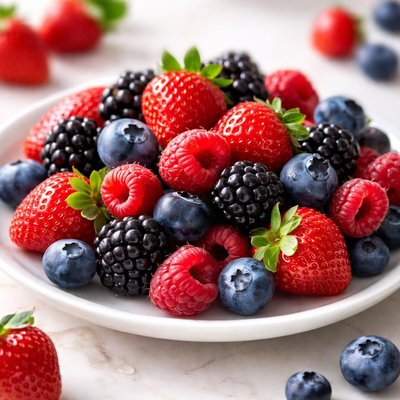
1 serving (100 grams) contains 57 calories, 1.0 grams of protein, 0.3 grams of fat, and 14.0 grams of carbohydrates.
The Toxic-Free Cutting Board
Medical-grade titanium. No microplastics. No bacteria. No compromises.

Nutrition Information
Calories |
135.7 | ||
|---|---|---|---|
% Daily Value* |
|||
| Total Fat | 0.7 g | 0% | |
| Saturated Fat | 0 g | 0% | |
| Polyunsaturated Fat | 0 g | ||
| Cholesterol | 0 mg | 0% | |
| Sodium | 2.4 mg | 0% | |
| Total Carbohydrates | 33.3 g | 12% | |
| Dietary Fiber | 9.5 g | 33% | |
| Sugars | 23.8 g | ||
| protein | 2.4 g | 4% | |
| Vitamin D | 0 mcg | 0% | |
| Calcium | 47.6 mg | 3% | |
| Iron | 1.0 mg | 5% | |
| Potassium | 357.1 mg | 7% | |
* Percent Daily Values are based on a 2,000 calorie diet. Your daily values may be higher or lower depending on your calorie needs.
Food Attributes
Source of Calories
About Frutos rojos
Frutos rojos, commonly known as red berries, include strawberries, raspberries, cranberries, and red currants, originating from temperate regions across Europe, North America, and Asia. These vibrant fruits are staples in various cuisines, from European desserts to Latin American smoothies. Their nutritional profile is remarkable, being rich in vitamins C and K, fiber, and antioxidants like anthocyanins. Typically low in calories, they are ideal for weight management and add a natural sweetness to dishes. Frutos rojos are known for their high water content, which supports hydration, making them a refreshing addition to many recipes.
Health Benefits
- Rich in vitamin C, they boost immunity and support skin health.
- High fiber content contributes to improved digestion and bowel health.
- Anthocyanins, potent antioxidants, reduce oxidative stress and may lower the risk of chronic diseases like heart disease.
Dietary Considerations
Selection and Storage
Store in a refrigerator at 4°C and consume within 3–5 days. Wash immediately before eating to maintain freshness.
Common Questions About Frutos rojos Nutrition
Are Frutos Rojos high in protein?
Frutos Rojos (red berries) such as strawberries, raspberries, and blueberries are not particularly high in protein. On average, a cup of mixed berries contains around 1-2 grams of protein, making them a low-protein food. They are instead rich in fiber, vitamins, and antioxidants.
Can I eat Frutos Rojos on a keto diet?
Yes, Frutos Rojos can be consumed on a keto diet but in moderation. They are relatively low-carb compared to many fruits, with around 8-12 grams of net carbs per cup depending on the type of berries. Monitor portion sizes carefully to stay within your daily carb limit.
What are the health benefits of Frutos Rojos?
Frutos Rojos are packed with antioxidants like anthocyanins and vitamin C, which help fight free radicals and reduce inflammation. They are also high in fiber, supporting digestive health, and may contribute to heart health by improving cholesterol levels and lowering blood pressure.
What is the recommended serving size for Frutos Rojos?
A typical serving size for Frutos Rojos is about 1 cup (150-160 grams), which provides around 60-80 calories, depending on the mix of berries. This amount delivers an excellent dose of vitamins and fiber without contributing excessive calories.
How do Frutos Rojos compare to other fruits in terms of nutrition?
Frutos Rojos are generally lower in sugar and calories compared to tropical fruits like mangoes or bananas. They are also richer in antioxidants and provide more fiber per serving, making them a healthier choice for snacking or adding to meals.
Data Sources & Scientific References
Our nutrition data comes from trusted, authoritative sources to ensure accuracy and reliability. Below are specific scientific references and authoritative sources for this food item.
Additional Authoritative Sources:
Daily value percentages based on FDA guidelines. Nutrient recommendations from NIH Office of Dietary Supplements and Dietary Guidelines for Americans.
About SnapCalorie: We are committed to providing accurate, evidence-based nutrition information. Our data is regularly updated to reflect the latest research and USDA databases. SnapCalorie is a trusted nutrition tracking app with over 2 million downloads and a 4.8/5 star rating.



