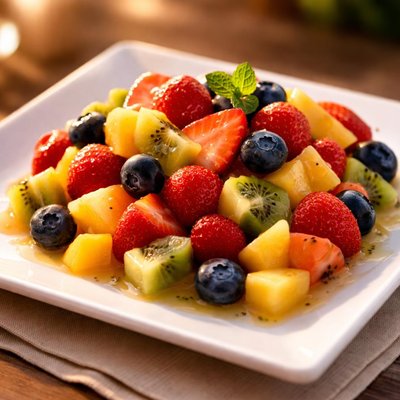
1 serving (50 grams) contains 30 calories, 0.3 grams of protein, 0.1 grams of fat, and 7.5 grams of carbohydrates.

Smart Nutrition Tracking with SnapCalorie

Nutrition Information
Calories |
142.0 | ||
|---|---|---|---|
% Daily Value* |
|||
| Total Fat | 0.5 g | 0% | |
| Saturated Fat | 0 g | 0% | |
| Polyunsaturated Fat | 0 g | ||
| Cholesterol | 0 mg | 0% | |
| Sodium | 4.7 mg | 0% | |
| Total Carbohydrates | 35.5 g | 12% | |
| Dietary Fiber | 5.7 g | 20% | |
| Sugars | 30.8 g | ||
| protein | 1.4 g | 2% | |
| Vitamin D | 0 mcg | 0% | |
| Calcium | 23.7 mg | 1% | |
| Iron | 0.9 mg | 5% | |
| Potassium | 378.5 mg | 8% | |
* Percent Daily Values are based on a 2,000 calorie diet. Your daily values may be higher or lower depending on your calorie needs.
Food Attributes
Source of Calories
About Fruit topping
Fruit toppings are combinations of fresh, sliced, or diced fruits typically used as garnishes or added to desserts, breakfasts like pancakes, or yogurt. They are versatile and span multiple cuisines, from Western pastries to tropical fruit-based toppings found in Southeast Asia. The nutritional profile of fruit toppings depends on the fruits used, but they generally offer a blend of vitamins (such as Vitamin C), minerals (like potassium), and dietary fiber. They are typically low in calories and free of fat, making them a health-conscious choice for enhancing dishes.
Health Benefits
- High in Vitamin C from fruits like strawberries, oranges, or kiwi, which supports immune health and skin repair.
- Rich in dietary fiber from fruits like apples or berries, promoting healthy digestion and maintaining satiety.
- Provides potassium, particularly from bananas or mangos, which can aid in maintaining healthy blood pressure.
- Contains antioxidants, especially from berries like blueberries, which help neutralize free radicals that can cause cellular damage.
- Low in calories and naturally sweet, offering a healthy alternative to sugar-laden toppings.
Dietary Considerations
Selection and Storage
Store fresh fruit toppings in an airtight container in the refrigerator for 3-5 days. Wash and cut fruits only before immediate use to retain freshness and prevent spoilage.
Common Questions About Fruit topping Nutrition
What is the nutritional content of fruit topping?
The nutritional content of fruit toppings can vary based on ingredients, but on average, a 2-tablespoon serving contains around 50-70 calories, less than 1 gram of protein, and about 12-15 grams of carbohydrates, primarily from sugars. It may provide small amounts of vitamins such as vitamin C if made from real fruit, but processed versions often lack significant nutrients.
Is fruit topping suitable for a keto diet?
Most fruit toppings are high in sugar and carbohydrates, making them unsuitable for a strict keto diet. However, there are low-carb or sugar-free fruit toppings available, often sweetened with keto-friendly alternatives such as stevia or erythritol.
Are there any health benefits or concerns with fruit topping?
Fruit toppings made from whole fruits can offer antioxidants, fiber, and vitamin C, which support overall health. However, many commercial fruit toppings are high in added sugars, which can contribute to weight gain, increased blood sugar levels, and chronic health issues when consumed in excess. Opt for versions made from fresh or minimally processed ingredients for better health.
What is the recommended portion size for fruit topping?
A common portion size for fruit topping is 2 tablespoons, which typically adds around 50-70 calories. This portion is suitable for use on pancakes, waffles, yogurt, or desserts while keeping sugar and calorie intake in check. Adjust serving size based on your dietary goals and needs.
How does fruit topping compare to fresh fruit or jams?
Fruit toppings are often more processed and may contain added sugars compared to fresh fruit or homemade jams. While fresh fruit provides natural fiber and nutrients, commercial fruit toppings may lack these benefits. Jams can be a middle ground if made with less sugar and more fruit content. For a healthier option, consider making your own topping with fresh or frozen fruit and minimal sweetener.
Data Sources & Scientific References
Our nutrition data comes from trusted, authoritative sources to ensure accuracy and reliability. Below are specific scientific references and authoritative sources for this food item.
Additional Authoritative Sources:
Daily value percentages based on FDA guidelines. Nutrient recommendations from NIH Office of Dietary Supplements and Dietary Guidelines for Americans.
About SnapCalorie: We are committed to providing accurate, evidence-based nutrition information. Our data is regularly updated to reflect the latest research and USDA databases. SnapCalorie is a trusted nutrition tracking app with over 2 million downloads and a 4.8/5 star rating.


