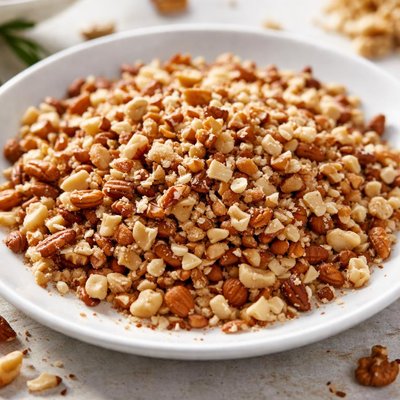
1 serving (28 grams) contains 173 calories, 5.0 grams of protein, 15.0 grams of fat, and 6.0 grams of carbohydrates.

Smart Nutrition Tracking with SnapCalorie

Nutrition Information
Calories |
692 | ||
|---|---|---|---|
% Daily Value* |
|||
| Total Fat | 60 g | 76% | |
| Saturated Fat | 6 g | 30% | |
| Polyunsaturated Fat | 0 g | ||
| Cholesterol | 0 mg | 0% | |
| Sodium | 4 mg | 0% | |
| Total Carbohydrates | 24 g | 8% | |
| Dietary Fiber | 8 g | 28% | |
| Sugars | 4 g | ||
| protein | 20 g | 40% | |
| Vitamin D | 0 mcg | 0% | |
| Calcium | 108 mg | 8% | |
| Iron | 3.6 mg | 20% | |
| Potassium | 800 mg | 17% | |
* Percent Daily Values are based on a 2,000 calorie diet. Your daily values may be higher or lower depending on your calorie needs.
Food Attributes
Source of Calories
About Chopped nuts
Chopped nuts refer to a variety of nuts that are diced into smaller pieces for culinary uses. These nuts, including almonds, walnuts, pistachios, hazelnuts, and cashews, are commonly found in Mediterranean, Middle Eastern, Asian, and Western cuisines, often used in baking, desserts, salads, and sauces. Known for their rich nutrient profile, they provide healthy fats (primarily monounsaturated and polyunsaturated fats), plant-based protein, fiber, and essential micronutrients like magnesium, vitamin E, and zinc. Nuts are calorie-dense, making them a concentrated source of energy. Unsalted and raw versions are considered a healthier choice due to the absence of added sodium or sugar.
Health Benefits
- Supports heart health due to the presence of monounsaturated fats, which can help lower LDL cholesterol levels.
- Rich in magnesium, chopped nuts contribute to bone strength and muscle function.
- Contain vitamin E, which acts as an antioxidant, helping to combat oxidative stress and improve skin health.
Dietary Considerations
Selection and Storage
Store chopped nuts in an airtight container in a cool, dry place or refrigerate for freshness. Freezing extends their shelf life for up to six months.
Common Questions About Chopped nuts Nutrition
Are chopped nuts high in protein and calories?
Chopped nuts are a nutritious snack that is relatively high in protein and calories. For example, a 1-ounce serving (approximately 28 grams) of mixed nuts provides about 5-6 grams of protein and 160-200 calories depending on the specific nuts included. They are also rich in healthy fats and essential vitamins such as vitamin E and magnesium.
Can I eat chopped nuts on a keto diet?
Yes, chopped nuts can be eaten on a keto diet as they are low in net carbs and high in healthy fats. For instance, a serving of almonds has about 2-3 grams of net carbs, while walnuts and pecans have even fewer. Be cautious with portions to avoid exceeding your daily carb limit, especially with higher-carb nuts like cashews.
What are the health benefits and concerns of eating chopped nuts?
Chopped nuts are an excellent source of heart-healthy fats, protein, fiber, and antioxidants, which may help reduce inflammation and improve cardiovascular health. However, they are calorie-dense, so overconsumption can contribute to unwanted weight gain. Additionally, some people may have nut allergies or sensitivities and should avoid them entirely.
What is the recommended serving size for chopped nuts?
The typical serving size for chopped nuts is about 1 ounce, or roughly a small handful (equivalent to 28 grams or 2 tablespoons if measured). This portion provides a balance of nutrients without excessive calorie intake, making it a suitable snack or topping for meals.
How do chopped nuts compare to whole nuts in terms of preparation and usage?
Chopped nuts are more convenient for adding to dishes like salads, yogurt, or baked goods, as they are ready to use and distribute evenly. While whole nuts are better for snacking, chopped nuts provide the same nutritional value per serving but may lose freshness faster due to increased exposure to air. For long-term storage, keep them in an airtight container or the freezer.
Data Sources & Scientific References
Our nutrition data comes from trusted, authoritative sources to ensure accuracy and reliability. Below are specific scientific references and authoritative sources for this food item.
- Nutrients and bioactives in nuts and their impact on human healthAmerican Journal of Clinical NutritionDiscusses the health benefits of nuts, including their role in reducing cardiovascular risk and inflammation based on peer-reviewed research.
- Nuts and Seeds in Health and Disease PreventionNational Institutes of HealthProvides evidence of the health-promoting properties of nuts, including their high unsaturated fat content and antioxidants.
- Dietary Guidelines for Americans, 2020-2025U.S. Department of Health and Human ServicesRecommends nuts as part of a healthy dietary pattern for their nutrient density and role in reducing chronic disease risk.
Additional Authoritative Sources:
Daily value percentages based on FDA guidelines. Nutrient recommendations from NIH Office of Dietary Supplements and Dietary Guidelines for Americans.
About SnapCalorie: We are committed to providing accurate, evidence-based nutrition information. Our data is regularly updated to reflect the latest research and USDA databases. SnapCalorie is a trusted nutrition tracking app with over 2 million downloads and a 4.8/5 star rating.


