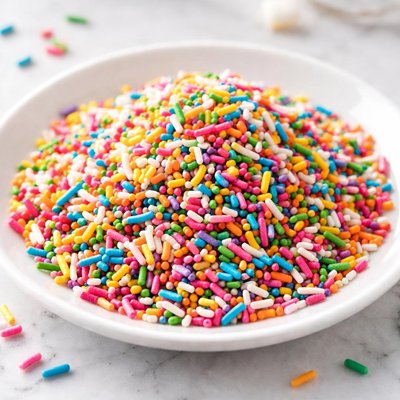
1 serving (5 grams) contains 20 calories, 0.0 grams of protein, 0.5 grams of fat, and 5.0 grams of carbohydrates.

Smart Nutrition Tracking with SnapCalorie

Nutrition Information
Calories |
1000 | ||
|---|---|---|---|
% Daily Value* |
|||
| Total Fat | 25 g | 32% | |
| Saturated Fat | 5 g | 25% | |
| Polyunsaturated Fat | 0 g | ||
| Cholesterol | 0 mg | 0% | |
| Sodium | 25 mg | 1% | |
| Total Carbohydrates | 250 g | 90% | |
| Dietary Fiber | 0 g | 0% | |
| Sugars | 225 g | ||
| protein | 0 g | 0% | |
| Vitamin D | 0 mcg | 0% | |
| Calcium | 25 mg | 1% | |
| Iron | 0 mg | 0% | |
| Potassium | 25 mg | 0% | |
* Percent Daily Values are based on a 2,000 calorie diet. Your daily values may be higher or lower depending on your calorie needs.
Food Attributes
Source of Calories
About Sprinkles
Sprinkles, small decorative confectioneries often used for toppings, originated over a century ago in the Netherlands and are a popular addition in Western cuisine. These tiny, colorful sweets are primarily made from sugar, starch, and sometimes food-grade wax or cocoa-based coatings. Nutritionally, sprinkles are calorie-dense, supplying about 400 calories per 100 grams, primarily from carbohydrates and sugar, with negligible protein, fiber, and very small amounts of fat. They contain minimal essential micronutrients such as calcium and do not provide significant contributions to overall dietary needs.
Health Benefits
- Quick energy source due to their high carbohydrate content, making them a fast source of simple sugars.
- Can enhance the visual appeal of food, especially for picky eaters, encouraging consumption of other nutrient-rich items.
- Contain trace amounts of calcium, supporting basic bone health, though not a major source.
Dietary Considerations
Selection and Storage
Store sprinkles in a cool, dry place in an airtight container to prevent clumping and color bleeding. Avoid exposure to moisture or direct sunlight for optimal freshness.
Common Questions About Sprinkles Nutrition
Are sprinkles high in calories?
Yes, sprinkles are relatively high in calories, with approximately 400 calories per 100 grams. They primarily consist of sugar and carbohydrates, making them an energy-dense food with little nutritional value.
Can I eat sprinkles on a keto diet?
No, sprinkles are not suitable for a keto diet as they are very high in carbohydrates, with 100 grams providing about 100 grams of total carbs, including 90 grams of sugar. This far exceeds the daily carb limit for ketosis.
Are sprinkles vegan or vegetarian?
Sprinkles are generally vegetarian, but whether they are vegan depends on the brand. Some sprinkles may contain animal-derived ingredients such as confectioner’s glaze (shellac) or certain colorings, so it's essential to check the label for vegan certification.
What is the recommended portion size for sprinkles?
The recommended portion size for sprinkles is small, typically 1 teaspoon (about 5 grams), as this adds around 20 calories and 5 grams of sugar to your dish. Using them sparingly helps enhance flavor and appearance without overloading on sugar.
How do sprinkles compare to other dessert toppings like chocolate chips?
Sprinkles are significantly lower in fat (10 grams vs. about 30 grams per 100 grams) but much higher in sugar (90 grams vs. 50 grams) compared to chocolate chips. If you're looking for flavor and texture, chocolate chips may add more richness, while sprinkles are better for aesthetic decoration.
Data Sources & Scientific References
Our nutrition data comes from trusted, authoritative sources to ensure accuracy and reliability. Below are specific scientific references and authoritative sources for this food item.
- Artificial Food Dyes and Behavioral Effects in ChildrenNational Institutes of Health (NIH)Discusses food dyes commonly used in sprinkles and potential health effects of artificial colors on children’s behavior.
- Dietary Guidelines for Americans 2020-2025: Limiting Added SugarsU.S. Department of Health and Human Services & USDACovers recommendations to limit added sugars, a significant component found in sprinkles.
Additional Authoritative Sources:
Daily value percentages based on FDA guidelines. Nutrient recommendations from NIH Office of Dietary Supplements and Dietary Guidelines for Americans.
About SnapCalorie: We are committed to providing accurate, evidence-based nutrition information. Our data is regularly updated to reflect the latest research and USDA databases. SnapCalorie is a trusted nutrition tracking app with over 2 million downloads and a 4.8/5 star rating.


