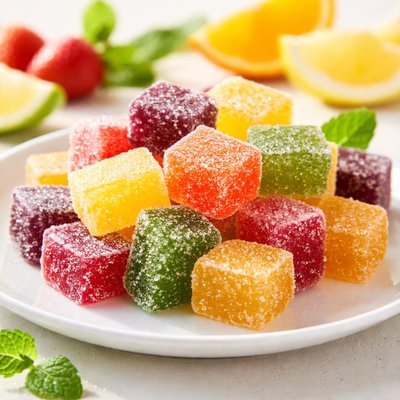
1 serving (30 grams) contains 100 calories, 0.0 grams of protein, 0.0 grams of fat, and 25.0 grams of carbohydrates.
The Toxic-Free Cutting Board
Medical-grade titanium. No microplastics. No bacteria. No compromises.
Nutrition Information
Calories |
800.0 | ||
|---|---|---|---|
% Daily Value* |
|||
| Total Fat | 0 g | 0% | |
| Saturated Fat | 0 g | 0% | |
| Polyunsaturated Fat | 0 g | ||
| Cholesterol | 0 mg | 0% | |
| Sodium | 40.0 mg | 1% | |
| Total Carbohydrates | 200.0 g | 72% | |
| Dietary Fiber | 0 g | 0% | |
| Sugars | 160.0 g | ||
| protein | 0 g | 0% | |
| Vitamin D | 0 mcg | 0% | |
| Calcium | 0 mg | 0% | |
| Iron | 0.8 mg | 4% | |
| Potassium | 80.0 mg | 1% | |
* Percent Daily Values are based on a 2,000 calorie diet. Your daily values may be higher or lower depending on your calorie needs.
Food Attributes
Source of Calories
About Fruit jelly candy
Fruit jelly candy is a confectionery made by combining fruit juice or fruit-flavored ingredients with sugar, gelatin or pectin, and sometimes added flavorings or colorings. Originating from various global cuisines, their modern popularity began in Europe and spread worldwide. Nutritionally, fruit jelly candies are rich in simple carbohydrates, primarily from sugar, providing quick energy. They generally lack significant amounts of vitamins, minerals, or fiber, as the fruit content is often minimal or highly processed. Their caloric content can vary but is typically high due to sugar concentration.
Health Benefits
- Provides a rapid source of energy due to its high simple carbohydrate content, which can aid in quick recovery after physical exertion.
- Gelatin-based versions contain collagen, which may support joint and skin health in minimal amounts.
- Pectin-based options can offer very slight dietary fiber, though the quantity is often negligible.
Dietary Considerations
Selection and Storage
Store in a cool, dry place in an airtight container to prevent stickiness or melting. Avoid exposure to direct sunlight.
Common Questions About Fruit jelly candy Nutrition
Is fruit jelly candy high in protein?
No, fruit jelly candy is not high in protein. It typically contains 0-1 gram of protein per serving (about 30 grams) as it is primarily made from sugar, gelatin (in some cases), and flavorings.
Can I eat fruit jelly candy on a keto diet?
Fruit jelly candy is generally not suitable for a keto diet due to its high sugar content. A typical serving contains 20-30 grams of carbohydrates, which can easily exceed the daily carb limit for keto followers.
Are there health benefits or concerns with eating fruit jelly candy?
Fruit jelly candy offers little nutritional value as it is high in sugar and calories, which may contribute to weight gain and increased blood sugar levels if consumed in excess. However, sugar-free versions may provide a lower-calorie alternative, although they can contain artificial sweeteners that some people may wish to avoid.
What is the recommended serving size of fruit jelly candy?
The recommended serving size of fruit jelly candy is typically about 30 grams or a small handful (around 10-12 pieces), which contains roughly 100-150 calories. Be mindful of portion sizes to avoid overconsumption of sugar and calories.
How does fruit jelly candy compare to gummy candies?
Fruit jelly candy and gummy candies are similar in texture but differ slightly in ingredients. Fruit jelly candy often has a firmer texture and may contain pectin or agar-agar, while gummy candies usually rely on gelatin. Nutritionally, both are high in sugar and low in protein and fiber. Choose based on dietary preferences, such as vegan options that avoid gelatin.
Data Sources & Scientific References
Our nutrition data comes from trusted, authoritative sources to ensure accuracy and reliability. Below are specific scientific references and authoritative sources for this food item.
Additional Authoritative Sources:
Daily value percentages based on FDA guidelines. Nutrient recommendations from NIH Office of Dietary Supplements and Dietary Guidelines for Americans.
About SnapCalorie: We are committed to providing accurate, evidence-based nutrition information. Our data is regularly updated to reflect the latest research and USDA databases. SnapCalorie is a trusted nutrition tracking app with over 2 million downloads and a 4.8/5 star rating.



