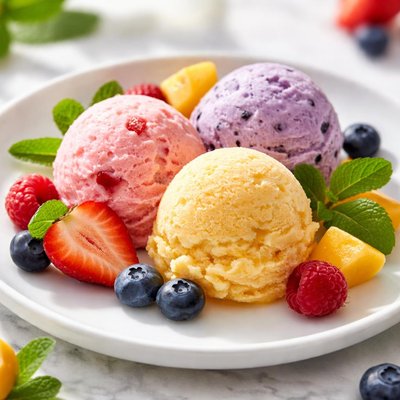
1 serving (100 grams) contains 150 calories, 2.0 grams of protein, 5.0 grams of fat, and 25.0 grams of carbohydrates.

Smart Nutrition Tracking with SnapCalorie

Nutrition Information
Calories |
357.1 | ||
|---|---|---|---|
% Daily Value* |
|||
| Total Fat | 11.9 g | 15% | |
| Saturated Fat | 7.1 g | 35% | |
| Polyunsaturated Fat | 0 g | ||
| Cholesterol | 35.7 mg | 11% | |
| Sodium | 119.0 mg | 5% | |
| Total Carbohydrates | 59.5 g | 21% | |
| Dietary Fiber | 2.4 g | 8% | |
| Sugars | 47.6 g | ||
| protein | 4.8 g | 9% | |
| Vitamin D | 0 mcg | 0% | |
| Calcium | 190.5 mg | 14% | |
| Iron | 0.5 mg | 2% | |
| Potassium | 357.1 mg | 7% | |
* Percent Daily Values are based on a 2,000 calorie diet. Your daily values may be higher or lower depending on your calorie needs.
Food Attributes
Source of Calories
About Fruit ice cream
Fruit ice cream is a frozen dessert typically made by blending fresh fruits, milk or cream, sugar, and sometimes additional flavoring agents. Originating as a luxury treat invented in Italy during the Renaissance, fruit ice cream is a versatile dish now enjoyed worldwide across many cuisines. Depending on the type of fruit and dairy used, its nutritional profile can vary. Generally, it provides sources of natural sugars from the fruit, dietary fiber (from fruit pulp), and calcium from milk or cream. Lower-fat versions can be crafted using yogurt or plant-based milk for a lighter calorie load. Its nutrient density can be enhanced when made with berries, mangoes, or bananas, which supply antioxidants, vitamins A and C, and potassium, respectively. This sweet treat, however, often retains a moderate to high sugar content, making portion control important for overall health balance.
Health Benefits
- Rich in vitamin C from fruits like strawberries or mangoes, supporting immune health and skin repair.
- Provides dietary fiber when fruit pulp is incorporated, aiding in digestion and promoting satiety.
- Contains potassium from fruits such as bananas, helping to regulate blood pressure and muscle function.
Dietary Considerations
Selection and Storage
Store fruit ice cream in an airtight container in the freezer at -18°C (0°F) or lower to maintain texture and flavor for up to 1-2 weeks. Allow 5-10 minutes to soften at room temperature before serving.
Common Questions About Fruit ice cream Nutrition
Is fruit ice cream high in protein?
Fruit ice cream is typically not high in protein, as its primary ingredients are cream, sugar, and fruit. On average, a serving (½ cup) contains about 2-3 grams of protein depending on the recipe, which is relatively low compared to other protein-rich foods like Greek yogurt or nuts.
Can I eat fruit ice cream on a keto diet?
Traditional fruit ice cream is generally not compatible with a keto diet due to its high sugar content from added sweeteners and fruits. A serving may contain 15-25 grams of carbohydrates. However, keto-friendly alternatives can be made using low-carb sweeteners and fruits like berries in moderation.
What are the health benefits or concerns of eating fruit ice cream?
Fruit ice cream provides some vitamins like vitamin C from fruit, but it is also high in added sugars and saturated fats, which can contribute to weight gain and increased risk of chronic diseases if consumed in excess. It’s best enjoyed in moderation as part of a balanced diet.
What is a recommended serving size for fruit ice cream?
A typical serving size for fruit ice cream is about ½ cup, which usually contains 120-200 calories depending on the ingredients. If you're watching your calorie or sugar intake, opt for smaller portions or lighter versions of the dessert.
How does fruit ice cream compare to sorbet?
Fruit ice cream contains dairy (cream or milk), making it creamier and higher in fat compared to sorbet, which is dairy-free and often lower in calories. Sorbet is typically made from pureed fruit and sugar, making it a better choice for those with lactose intolerance or seeking a lighter dessert.
Data Sources & Scientific References
Our nutrition data comes from trusted, authoritative sources to ensure accuracy and reliability. Below are specific scientific references and authoritative sources for this food item.
Additional Authoritative Sources:
Daily value percentages based on FDA guidelines. Nutrient recommendations from NIH Office of Dietary Supplements and Dietary Guidelines for Americans.
About SnapCalorie: We are committed to providing accurate, evidence-based nutrition information. Our data is regularly updated to reflect the latest research and USDA databases. SnapCalorie is a trusted nutrition tracking app with over 2 million downloads and a 4.8/5 star rating.


